
PHOTO
I’m enjoying having another go at reading The Odyssey. And I’m not the only one, apparently.
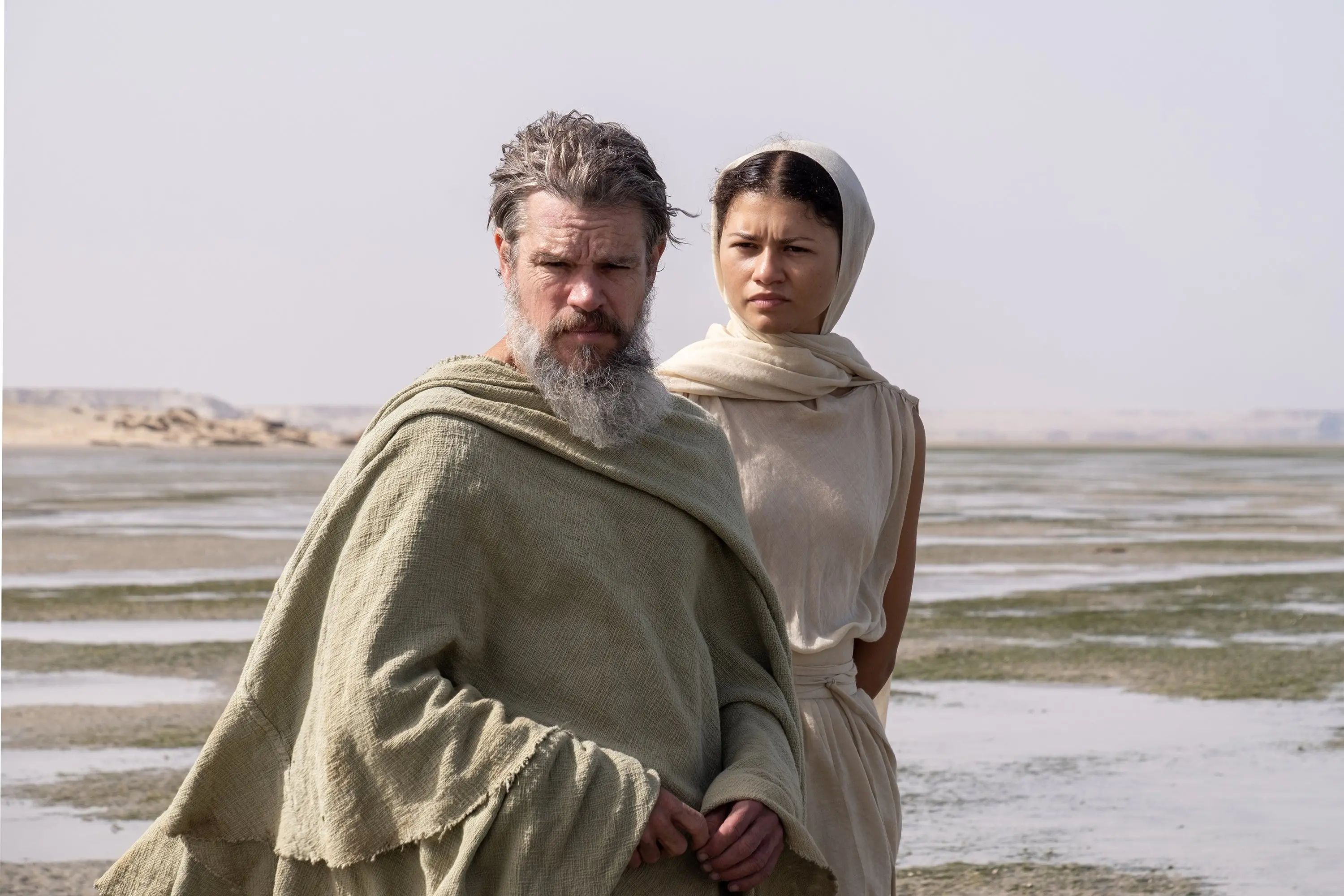
Sales of Emily Wilson’s modern translation of Homer’s epic have soared to become an unexpected bestseller in 2026, thanks to the recent release of Christopher Nolan’s blockbuster film adaptation.
It’s a wonder that this almost 3000-year-old Greek poem, which tells the story of Odysseus and his long journey home, still captures our imaginations and resonates so deeply.
Of course, the themes of the journey, adventure and misadventure, dangers and snares, the band of brothers, longing for home and the ones we love are timeless and universal, and echoes of Odysseus are detected all over the place (I’m also reading Tolkien’s The Hobbit with one of my kids, which is subtitled: ‘there and back again’).
Yet, despite the universal themes and appeal, there is much about Homer’s Odyssey that reads as very foreign and quite disturbing.
In the original, Odysseus’ progress is continually thwarted by capricious gods who see him as their plaything. Loyal companions are killed by the wayside, sometimes as a result of Odysseus’ recklessness and misjudgement—acceptable losses.
Odysseus’ love for his wife, Penelope, is sweet and affectionate, and apparently uncompromised by his many sexual liaisons, even though they extend his time away from her by a decade or so.
Odysseus’ hero status in the first place comes from his wiliness — he came up with the trick of the Trojan horse — which led to the slaughter of Troy.
Odysseus’ honour is everything and is in his world rightly and unquestioningly secured by violence. The glory is gory. Morally speaking, it’s a different world.
Nolan clearly felt the discomfort. Homer's Odysseus arrives home triumphantly, but alone. He reclaims his throne, but no thought is given to all his companions lost along the way.
Nolan's Odysseus is haunted by guilt over his men, confesses all he's done and lost, and chooses exile over his crown — a kind of penance.
Nolan portrays Odysseus as faithful to Penelope in practice as well as ``heart’’. And when Odysseus finally has the suitors at his mercy, the film has him hesitate: to kill them, he's told, would break ``Zeus' law’’ — which turns out to be more or less ``treat others as you would want to be treated’’.
That didn’t come from Homer. Nolan, it seems, felt something of what the historian Tom Holland (not Matt Damon's co-star in the film) once described: ``The more years I spent immersed in the study of classical antiquity, the more alien and unsettling I came to find it.’’
The preciousness of human persons, even the weak, even enemies. The ideal of sexual faithfulness, humility as a virtue, the abhorrence of indiscriminate slaughter . . .are perhaps not so universal as we often assume.
It would seem that many of our deepest moral instincts have been shaped by an even greater story — the great story that Tolkien called the ``true myth’’.
Jesus is a very different kind of hero: one who reveals a God who deals with his creatures with fatherly care.
Who gave us ``do unto others as you would have them do unto you’’. Who takes our treatment of others seriously, but also provides a way for atonement.
Whose triumph and glory derive from his humility and self-sacrifice. Whose journey home secures the safety of his followers.
Holland (the historian) concludes that all our instincts, our moral world, has been through a revolution: ``a revolution that has, at its molten heart, the image of a god dead on a cross’’ — the glory is grace.
In the brutal world of The Odyssey, home is the reward of the brave, the ruthless, the cunning—those worthy of honour.
Jesus, on the other hand, introduces us to a world of grace and offers us home as a gift.
As the famous hymn, Amazing Grace, goes: ``Through many dangers, toils, and snares I have already come; ’Tis grace has brought me safe thus far, and grace will lead me home.’’
Ben Hudson is the pastor at Grace Bible Church in Dunedin