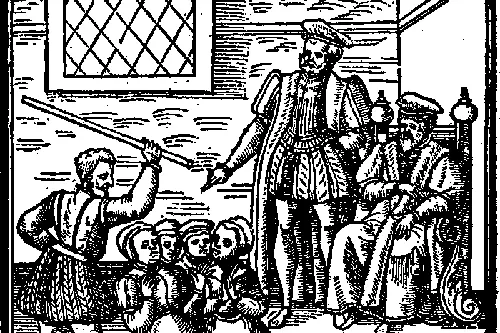
There is nothing I like more than visiting the seaside during the heat of summer. There’s just something about burying one’s toes in the sand, licking an overpriced ice cream in the sunshine, watching children build sandcastles on the beach. So it was that I found myself last week strolling along the promenade of North Berwick, a sleepy little fishing village, just to the east of Edinburgh. North Berwick has a number of claims to fame; the island of Fidra, for example, off the coast of the West Beach, was the inspiration for Robert Louis Stephenson’s Treasure Island. North Berwick is also home to the Bass Rock, a famous seabird nature reserve, and was recently designated ‘The Best Place to Live in Scotland’ by The Sunday Times. But there’s a darker side to this quiet little village, one that is hardly commemorated about the town. Mention the words ‘witch trial’ and for most people, the first image that comes to mind is Salem; pointy hats, black-clad Puritans, mass hysteria, and The Crucible. Thanks to Hollywood and Arthur Miller, this much is inevitable. Yet Salem’s infamous trials didn’t actually begin until 1692. More than a century before people were being hanged or crushed to death in colonial Massachusetts, Scotland was experiencing its own witch panic in the postcard-pretty seaside town of North Berwick. The North Berwick witch trials began in 1590, kickstarting one of Europe’s fiercest witch persecutions. Between the late sixteenth and early eighteenth centuries, an estimated 3800–4000 people were accused of witchcraft in Scotland, of whom around 2500 were executed (proportionally, a far higher rate than that of colonial New England). The North Berwick witch trials began when violent storms disrupted the voyage carrying James VI of Scotland and his new bride, Anne of Denmark, back from Scandinavia. Soon, rumours spread that the tempest had been deliberately conjured by witches in league with the Devil. James, who was already influenced by continental ideas about witchcraft and demonology, became utterly convinced that he had been the target of some devilish conspiracy. And so, several people, including the elderly healer Agnes Sampson and the servant Geillis Duncan, were tortured until they confessed to various impossible crimes, like raising sea gales, baptising cats, cavorting with the Devil at North Berwick Kirk, and plotting the King’s murder through magical means (namely, sailing into the Firth of Forth on a sieve to summon the storm). Indeed, James became directly involved in the investigations, lending unprecedented royal authority to the prosecutions. These coerced confessions fuelled an escalating wave of accusations that ensnared over 70 men and women, many of whom were imprisoned, tortured and ultimately executed. Beyond the countless lives ruined, the North Berwick witch trials helped to entrench the belief that witchcraft posed a genuine threat to both crown and church, and shaped Scottish witch-hunting for decades to come. The trials also intensified James VI’s already fervent belief in the dangers of witchcraft; his public obsession with the subject became a defining feature of his reign. As I wandered along the beach at North Berwick, listening to the gulls shriek above, I thought about why it is that Salem dominates the cultural imagination when it comes to witch trials, whereas Scotland’s witch trials have remained largely confined to the realm of local history. I believe the answer has less to do with the scale of the witch trials than with how societies construct historical memory; in the stories people choose to preserve. Of course, American cultural influence has elevated Salem into the global imagination. Arthur Miller’s superb play The Crucible (1953) cast the Salem trials as an allegory for McCarthyism and political persecution, thereby ensuring that generations of high school students understood the Salem witch trials not just as historical events, but as a universal warning about fear, conformity and state power. Whilst Scotland has produced excellent scholarship on its witch hunts, comparatively few cultural works on the topic have permeated the cultural consciousness. Salem has consciously embraced its history, with museums, memorials, guided tours and educational programmes focused on the witch trials. In contrast, North Berwick has traditionally foregrounded its coastal landscape, wildlife and leisure culture; it is a place one goes to bird-watch and stroll upon the beach. A visitor could meander through the town without ever learning that it was the site of one of Europe’s most influential witch persecutions. Indeed, across Scotland more broadly, commemorating those accused of witchcraft has gained momentum only in the past decades, following campaigns for a national pardon and greater public recognition of the victims. It wasn’t until March 2022 that the Scottish government apologised for the persecution of alleged witches during the sixteenth, seventeenth, and eighteenth centuries. The story of the North Berwick witch trials is rather more complicated and messy than that of Salem. Unlike Salem, which is often interpreted by historians as something of a local community crisis, the North Berwick trials were intricately tied up with the politics of monarchy, the Scottish Reformation, European demonology and the personal intervention of James VI. The complexity of this tale renders it a rich topic for historians but rather more difficult to distil into popular culture. And yet, the North Berwick witch trials were arguably more influential than those which occurred in Salem. James VI’s involvement in the trials directly informed his treatise Daemonologie (1597), which helped legitimise witch hunting throughout Britain. When James later ascended to the English throne, his ideas about witchcraft travelled south with him, shaping English attitudes towards witchcraft for decades. Without North Berwick, might there have ever been Salem as we know it? Jean Balchin is an ODT columnist who has started a new life in Edinburgh.