
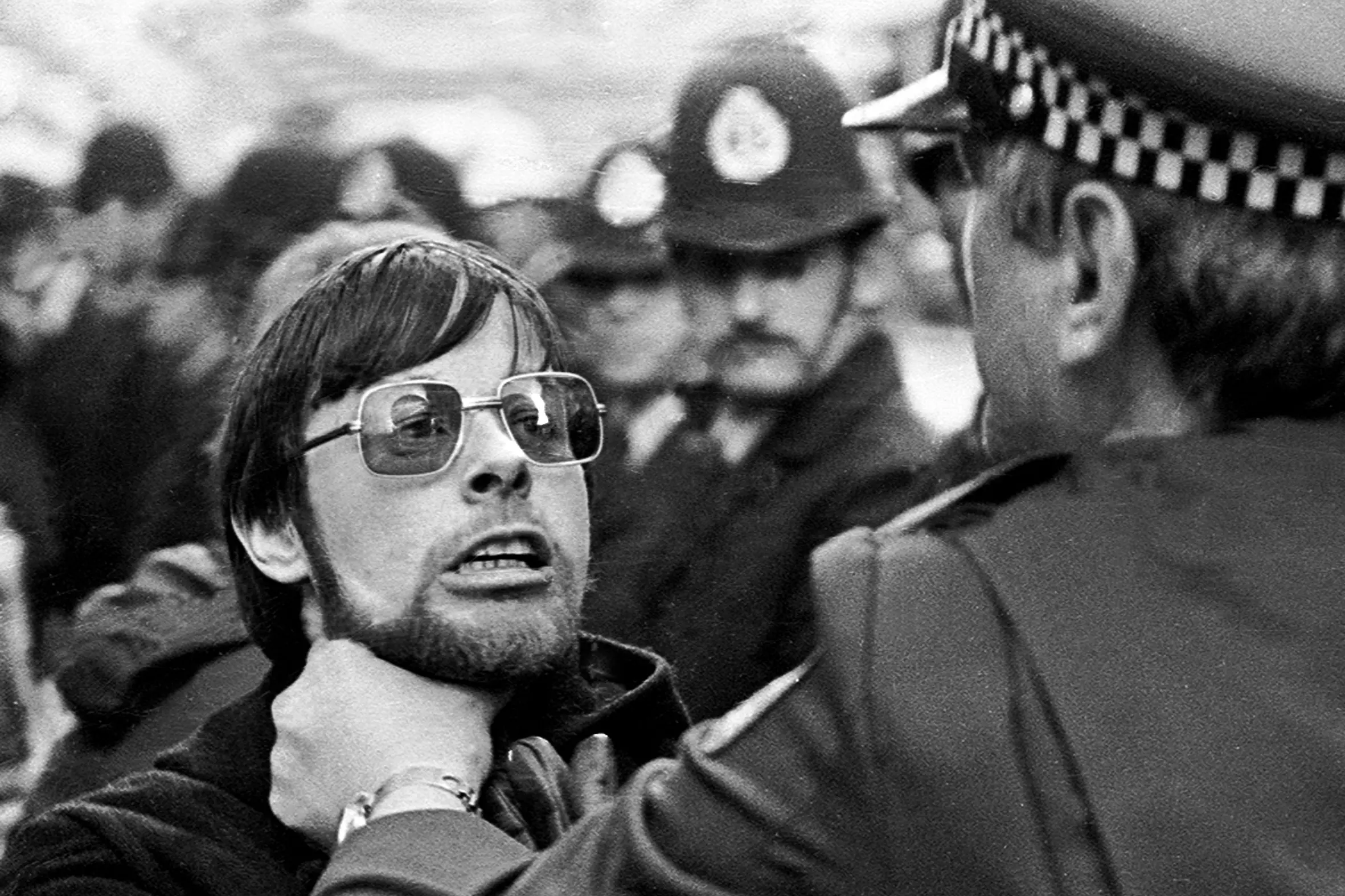
PHOTO
All that remains of Carisbrook Stadium is a 1926 brick structure in Neville St that gave turnstile admission to the ground’s terrace, a heritage-protected reminder of one of New Zealand’s most famous rugby (and cricket) venues.
Forty-five years ago today, on Tuesday August 11 1981, Carisbrook was the host for the Otago rugby match against South Africa, the seventh game of the Springbok Tour, a tour that took place in the midst of an ideologically divided country.
On one side, nationwide protests were carried out by New Zealanders opposed to playing sport with a country that practised racial segregation.
On the other side, staunch rugby supporters defended what they saw as their right to play sport with anyone, regardless of any political consequences.
According to a New Zealand Herald poll at the time, Dunedin had the highest opposition in the country to the tour, with 68% against and 27% for.
The Springboks were not due to arrive in New Zealand till July 19, but Dunedin hosted its first big protest march down George St in early May and an even bigger turn-out in early July.
Anti apartheid campaigners were brought from overseas on speaking tours. Dunedin hosted Donald Woods, the exiled South African newspaper editor and Canon John Osmers, an outspoken Anglican priest who, two years earlier, had his right hand blown off by
a parcel bomb, sent to him by South African security forces.
On the Sunday before the match, the Springbok team arrived in Dunedin by bus from Invercargill, fresh from their 22-6 defeat of Southland.
A second bus carried their minders – the highly trained police constables of the Blue Escort Group, or Blue Squad as they came to be known.
Monday was training day at Tāhuna Park and police kept protesters well behind the wire-netting fences lining the main entrance.
Earlier in the morning, the formidable Red Squad had arrived in Dunedin on board an RNZAF Boeing tri-jet from Auckland. Throughout the day, other police units from around the country continued to arrive in the city.
Tuesday, the day of the Otago match had arrived, and police numbers had swelled to 1100. All focus was on Carisbrook and its much-anticipated match against the Springboks.
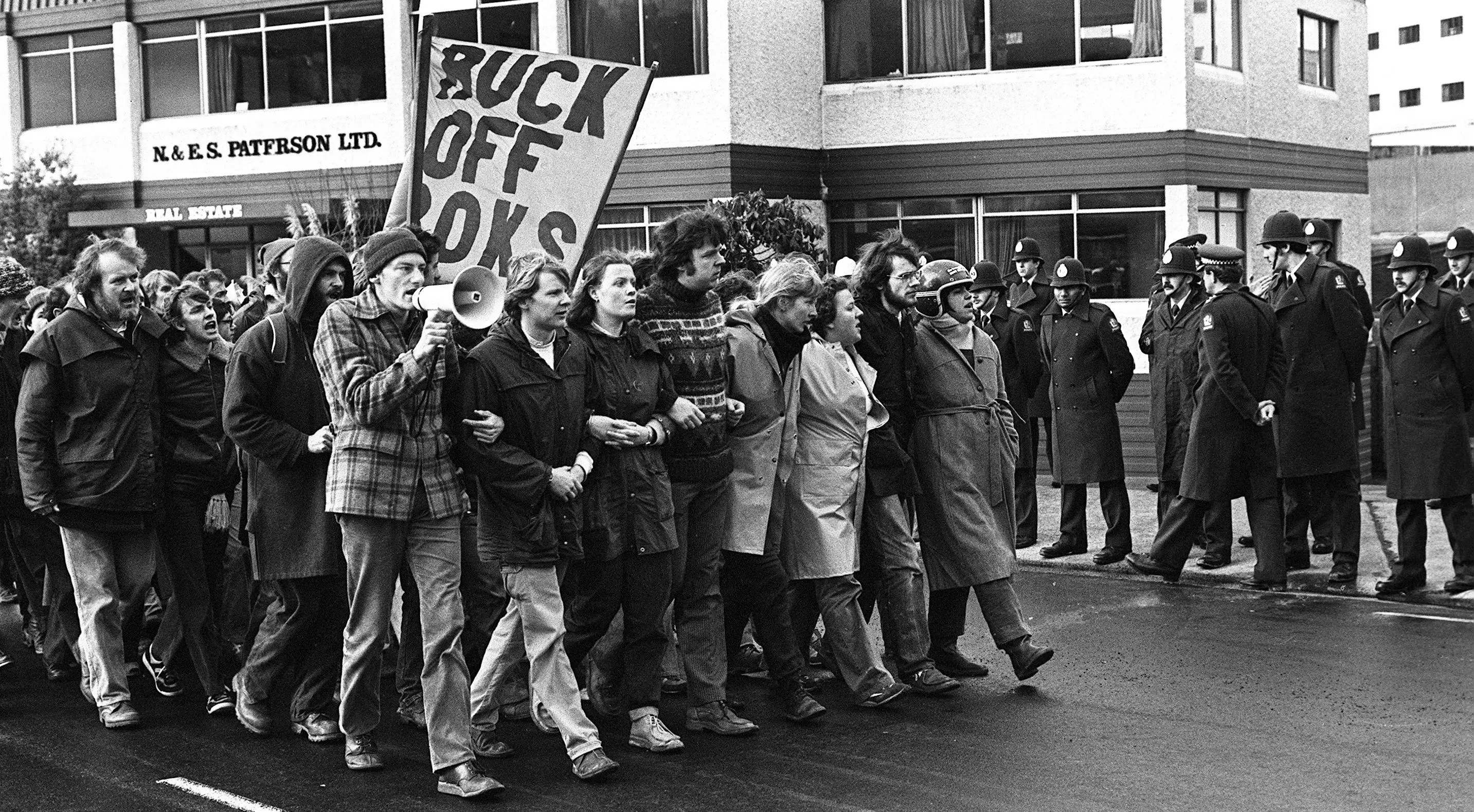
Major protest activity centred on the Southern Motorway. Protest leaders had liaised with police and agreed that a march would be allowed to proceed along the motorway to a point within 600m of Carisbrook.
Ten or 14 abreast, the 600-800 strong procession of demonstrators swung on to the motorway and chanted its way, with a certain amount of apprehension, towards the packed ground.
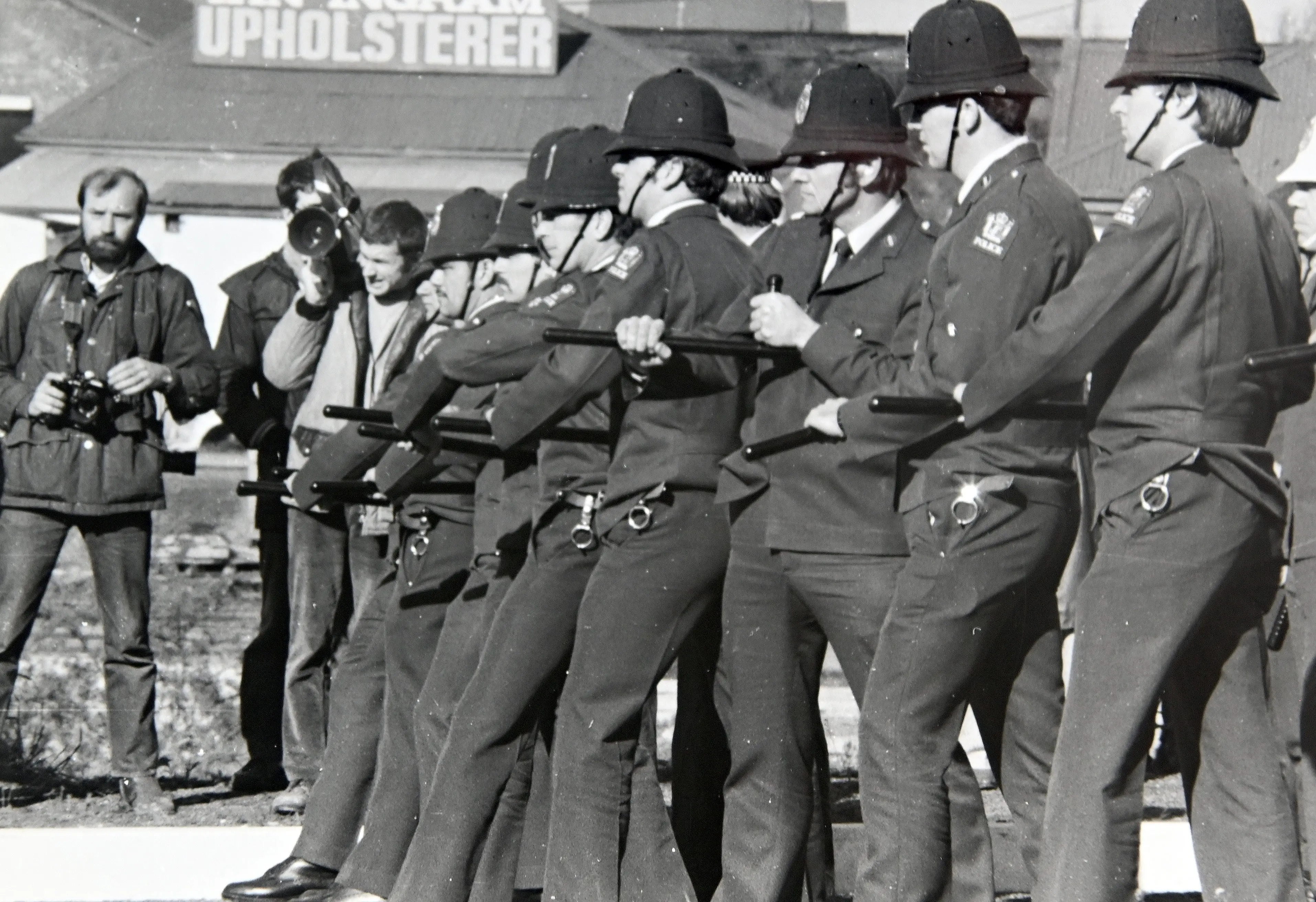
As the marchers turned the first bend and headed with purpose to their police-negotiated rendezvous, the towering drum of the Dunedin Gasworks gasometer (now demolished) formed a backdrop of police, the front row with their Monadnock PR24 long-batons
drawn, and blocking any further advancement.
This human blockade of blue uniforms, reinforced further back by a row of police equipped with anti riot gear, enraged the demonstrators, as it was nearly 500m short of the agreed demarcation line.
Police presence was heavy inside the ground. The playing field was ring-fenced by police. A tight bunch of whistle-blowing protesters on the terraces were soon surrounded by Red Squad members and forcibly removed, arrested, processed and charged with breach
of the peace.
No further incidents were reported, leaving Otago rugby supporters to find entertainment elsewhere – on the field in fact, where the Springboks narrowly defeated the home side 17-13.
At the railway embankment end of the ground just below the motorway was the scene of an unprecedented security measure – a tangled mass of barbed wire stretched along the slope above the Carisbrook ground – designed to separate New Zealander from New
Zealander for the good of the game of rugby.
While tensions often ran high between protester and police in the days before and after the Otago match, there were many lighter moments.
Tim Donaghue, a journalist covering the Springbok Tour for the Press Association, made the comment that he had found anti-tour protesters in Dunedin to be “the most good-humoured and inventive of the whole tour.”
As an anti-tour activist, one of my most enduring memories was a conversation I had with the late Lance Bardwell, former police Superintendent and Operation Commander in Dunedin for the Springbok Tour.
In one incident, when protesters outnumbered police, Bardwell was approached by a woman he knew well who shouted accusingly, “You should be ashamed of yourself; call yourself a Catholic,” and spat in his face.
Unknown to most people at the time, Lance Bardwell was personally opposed to the tour and torn between his conscience and his duty as a policeman.
Reflecting on the Springbok Tour, Lance told me, “I remember how proud I was one day when there was a big protest march on. I was standing in the Octagon, and I saw my sons take part in the march. I was very proud, really proud and happy.”
Tony Eyre is a Dunedin writer and was part of the 1981 anti tour movement.