
PHOTO
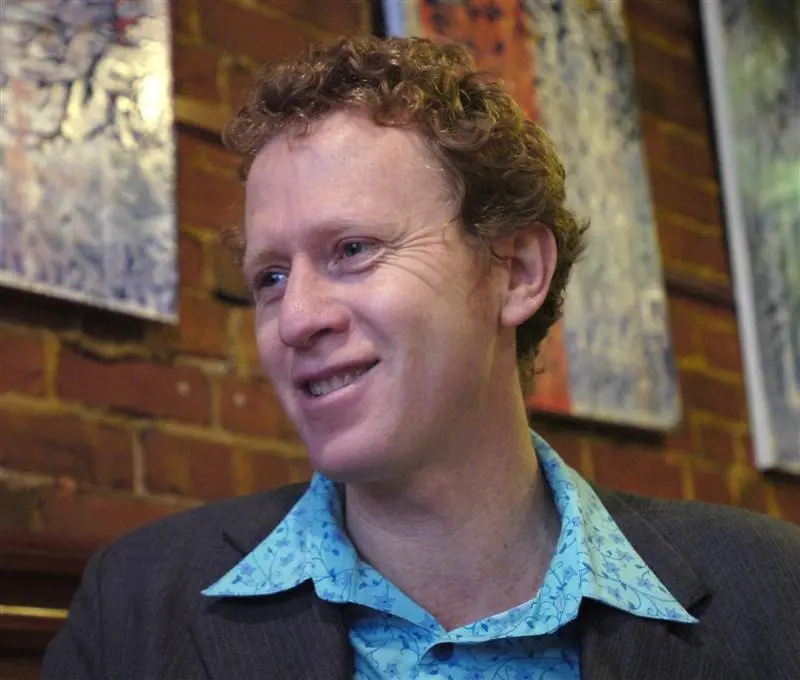
Green Party co-leader Russel Norman is out to win hearts and minds this election, and finally has even got his mum on board.
The 41-year-old never aspired to be a party co-leader and has been in Parliament only a few months.
But while he once shirked the limelight, he's now getting a great deal of satisfaction out of haranguing those who ignore environmental problems.
"I'm a pretty passionate person and I am pretty angry about the state of the planet and where the powers that be have put us," he tells NZPA.
"So having the opportunity to get up there and say 'why the hell are you doing it?' and 'why don't you fix it?' is something I've actually wanted to do for a long time."
Dr Norman was elected co-leader in June 2006 to replace Rod Donald, who died in November 2005.
In June, MP Nandor Tanczos resigned early so Dr Norman could get a few months' experience and profile in Parliament before election day.
He also needed to prepare for the possibility of Ms Fitzsimons stepping down, something likely to happen during the next term.
Dr Norman said he stepped up to the co-leader role because he thought he was the best candidate.
"I never intended to be a front of stage person. I've never thought of myself as particularly good at it and there always seem to be enough people who want to be in the limelight."
An Australian who has lived in New Zealand since 1997, he said his mother approved of his latest job - he's had a few including organic gardening and car assembly work.
"I think I finally made up for dropping out of medical school. I thought when I got my PhD in politics that would do it but no.
"When she saw me in Parliament, she came over to see my maiden speech, I think she finally thought that I was someone to talk to the ladies at the indoor bowls club about and you didn't have to be worried about it.
"So now she tells them all about it. The indoor bowls ladies are very well informed about my career."
His parents, from poor backgrounds who benefited from post-war social democracy, taught him to care for others.
His father Colin, an engineer, died in an accident when Dr Norman was 17.
Dr Norman, the youngest of six children, studied medicine at the University of Queensland when he left school because he wanted to go to the third world and be useful.
"When I was halfway through that degree I was exposed to politics and came to the conclusion that if you didn't change the political structures then you wouldn't really fix anything."
He turned to politics which saw him "deeply involved" in setting up the Green Party in South Australia.
A decision to study the Alliance Party for his thesis at Macquarie University in Sydney saw him move to New Zealand.
"I was very interested in red, green, brown working together and whether that was possible and the Alliance was a fascinating complicated beast and so I thought it would be interesting to study it."
His thesis concluded that progressive political parties needed internal democracy if they were going to be effective.
That is something the Green Party puts into action.
The decision on which party it would support will be made by the party before the election is held.
At the campaign launch on Saturday, Ms Fitzsimons defended that decision, the same as one which saw them shut out of Government post-2005 after campaigning in support of Labour.
Instead Labour made deals with United Future and New Zealand First.
"I think you have to do what is honest and you have to act with some integrity, and if people take you for granted well, there's nothing really you can do about that," she said.
Dr Norman said the Greens were a principled party and that's how they would operate.
"All we are going to do is play it straight. I don't see what else you can do."
The party's national executive, policy committee and caucus - about 30 people - would make the decision.
Dr Norman says people had a right to know how their vote would be used - but in 2005 the party learnt a big lesson about independence.
"Just because we state a preference doesn't mean we are going to do a deal. Then there's any kind of negotiations that happen after an election."
Being in Cabinet is a good way to advance policy but the party had been no push over to date.
The Greens got a $1 billion fund to insulate and heat houses and played a big role in getting more for electrification of Auckland rail among other achievements.
They are also strong advocates in social policy areas.
"My view is that the two are fundamentally interwoven. I think that people who care for the planet generally can't help themselves but care for people," Dr Norman said.
"Society which is deeply divided and has massive inequality is not a society that I think is likely to deal with an environmental crises."
What can and can't be achieved on all fronts will be decided in post-election talks.
Before then there's an election to fight. Standing by him will be partner Katya Paquin, whose sister is the actress Anna.
The pair met on Anzac Day in 2002 when she was an intern and Dr Norman was a secretary in the party.
They live together in a flat in Wellington suburb Hataitai. But not owning a property isn't for any philosophical belief: "that's to do with my bank manager's beliefs about my bank account."
Election campaigns are stressful enough but they are worse for the couple. She goes into hospital just before the election for a third operation on a brain tumour.
Asked how he coped with the stress, Dr Norman answered: "I don't know. I don't know what the answer is."
The tumour was diagnosed just a few months before the last election.