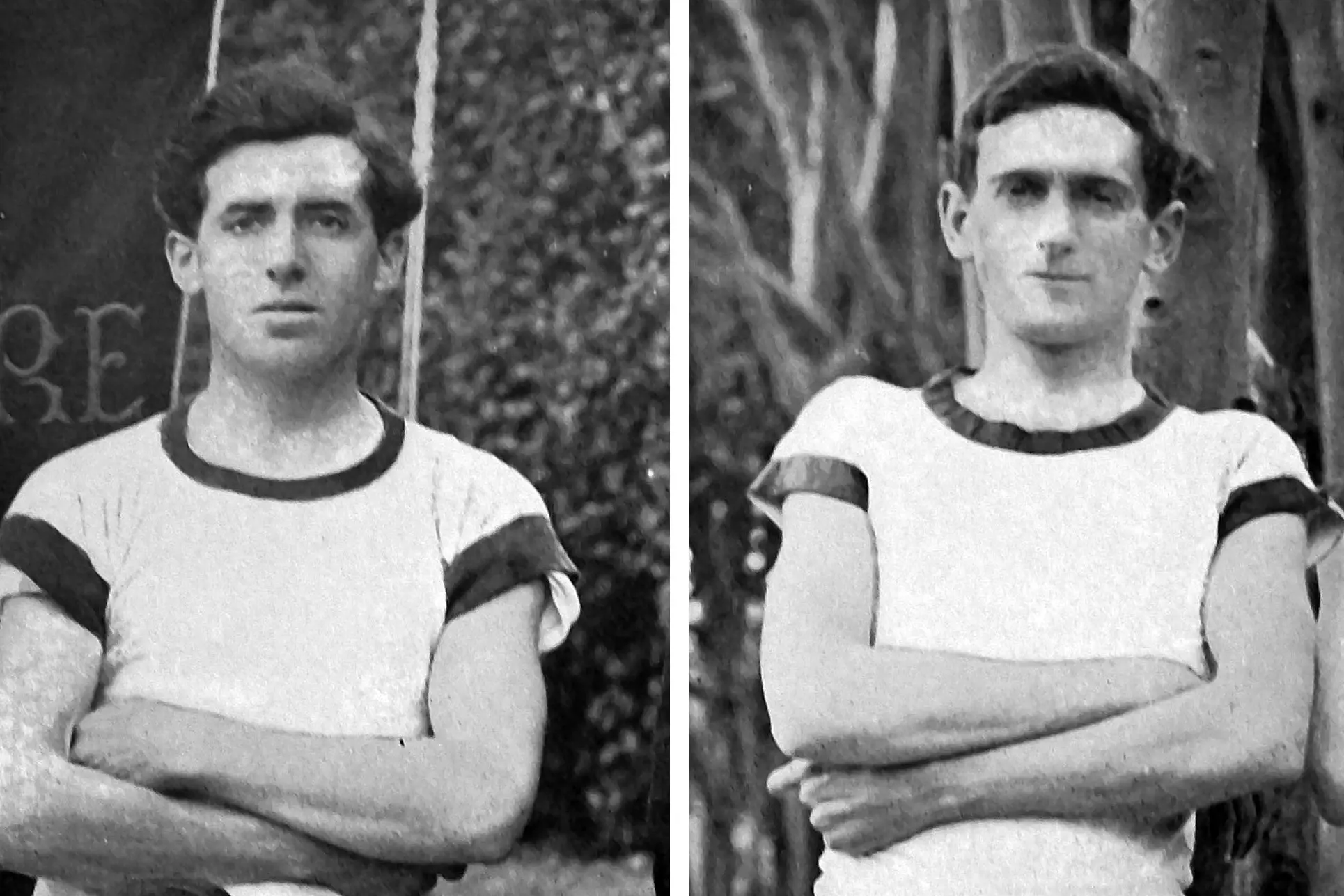
The eighteenth annual five-mile cross-country championship of Otago was held at the Wingatui Racecourse on Saturday. Influenza was responsible for a number of intending runners not being able to compete. There were 51 starters, representing eight clubs. C.W. Frye (Caversham Harriers) ran home an easy winner by fully 100 yards from J.W. Tapp (Caversham Harriers), with W.N. Connell (Anglican Harriers) 150 yards further back. The teams’ race was won by Caversham with 39 points, the next in order being Pacific (87), Anglican (100), Caversham No. 2 (118), University (121), and Cargill Road (124). Pacific won the Sealed Handicap. Teachers colleges get together Sixty-three students from the Christchurch Training College arrived in Dunedin yesterday afternoon by the express from the north to take part in the annual sports tournament against students from the Dunedin Training College. The visitors were met at the Railway Station by a large contingent of scholars from the local college, and were given a very cordial reception. The Dunedin students gave a haka, which was responded-to by the visiting teams. Acquisitions and accessions There has lately come into the possession of the Hocken Library a number of interesting and valuable pictures. A water colour by J.C. Hoyle — “ Captain Cargill’s Cottage, Hillside, Dunedin” was presented to the Hocken collection by E. Cargill Begg esq, Sussex, England. Two water colours by Barraud, “White Terrace, Rotomahana ’’ and “Oraki Korako on the Waikato”, were presented by Mrs Hocken. A water colour representing whaleboats at Karitane, by Miss Winiperis, was presented by Miss Joachim. Among the recent additions to the books in Hocken Library is one presented by Mrs E.A. Grant, Napier. “Les Squatters de la Nouvelle Zelande” by Monsieur Paul de Rousiers of the Societe D’Economic Sociale, Paris. M de Rousiers, who had never visited New Zealand, obtained his information from the late Mr Grant, former early settler in Otago, while spending a holiday in France. In case of emergency A simple and effective method by which passengers may, in the event of emergency, stop trains has been introduced by the chief mechanical engineer of the Railways Department, Mr G.S. Eade. This relates to the emergency application of the Westinghouse brake. In accordance with Mr Eade’s proposals, an emergency brake cock, enclosed in a box with a thin glass front, is now being installed in each passenger car compartment. In an emergency the glass may be easily broken by a passenger, and the turning of the cock applies the brake just as effectively as would result from an application by the engine-driver. The emergency train stop-cocks are connected to the engine brake pipes, which extend from the engine to the last vehicle of the train. When the cock lever is pulled down, the compressed air in the train brake pipes escapes, and this causes instantaneous application of the Westinghouse brake with its full force to the whole train. It is also intended to introduce a form of communication cord into the sleeping cars of the traverse compartment type. Unsafe safe A safe, believe to be that which was removed from Dreaver’s shop some time ago, has been seen wedged in the rocks at the foot of Lawyers’ Head. The discovery has been reported to the police, but as the safe is in an awkward position it will be impossible to recover it until conditions are suitable. Feathered friends According to Mr Cook, assistant lightkeeper at The Brothers’ Lighthouse in Cook Strait, the tuatara lizards there are gradually increasing in numbers, and some fine specimens have been located. This winter, contrary to their regular habits, the lizards have been out of their holes very frequently. Usually they dig in from March until about the end of August. The spectacle of a young dove petrel and a tuatara together in a hole on friendly relations was recently met with, and it has been noticed also that during the time the lizard digs in for the winter the hawks never appear on the island. Lagoon stocked Anglers will be gratified to learn that 500 trout taken from the Water of Leith have been liberated in Tomahawk Lagoon. The fish weighed up to 5 pounds, and should provide good sport during the coming season. — ODT, 3.8.1926