


PHOTO
Two Southland driving instructors disagree on whether defensive driving courses, which the government is scrapping in its current form, make our roads safer.
Defensive driving courses, introduced in New Zealand in 1967, usually taken up by restricted drivers, taught motorists how to identify and manage hazards and risks on the road, but from January 25 next year, it would be removed in its current form.
Currently, a completed defensive driving course, which came with a fee, normally reduced the 18-month tenure of a restricted licence by six months, to a year.
In February, the government had introduced the option of an approved practical driving course or logged supervised driving hours for motorists on a learner licence, which, when completed, would reduce the time spent on the licence from a year to six months.
Gore-based driving instructor Gayle Lormans, who had taught defensive driving courses for eight years, thought they did not make for safer drivers because the possible life-changing consequences of risk-taking behind the wheel were not spelled out.
“When you see … the pictures of the gore and the months in hospital, it’s going to have more of an impact on you than just being told, ‘you have to be careful or you’ll have a crash,’ which is what the current course is,” Gayle said.
“Which was one of the reasons why I stopped doing [teaching] defensive driving, because I don’t think it actually helps.”
Start Safer Driver Training instructor and president and secretary of the New Zealand institute of driver educators Gemma Scott said current defensive driving courses had their place, and removing them could increase the chance drivers would make errors.
“That is my concern, without them having done a defensive driving [course] … we haven’t identified … their bad habits,” Ms Scott said.
“Is that going to make us safer drivers? It’s really hard to know.”
Ms Scott said she personally did not support the government change to add the option for an approved practical driving course or logged supervised driving hours to the learner licence.
“They are not being assessed from the restricted to their full, whatsoever,” she said.
Gayle said the learner add-on, if drivers chose to do so, could increase driver safety.
“Because then … by the time they get their [restricted] licence, they’re already aware of all of the things that can possibly go wrong,” Gayle said.
“Defensive driving should be taught as soon as possible, which includes parents teaching their kids, right from day one.”
Ms Scott said that her business, which offered driving lessons in the Southland region, would be affected, because the demand for her current defensive driving course could disappear.
To plug the gap, she is going to design a defensive driving course, similar to the current offering, she said.
“I’ve had to venture out of my own business to offer other services due to these changes being made,” she said.
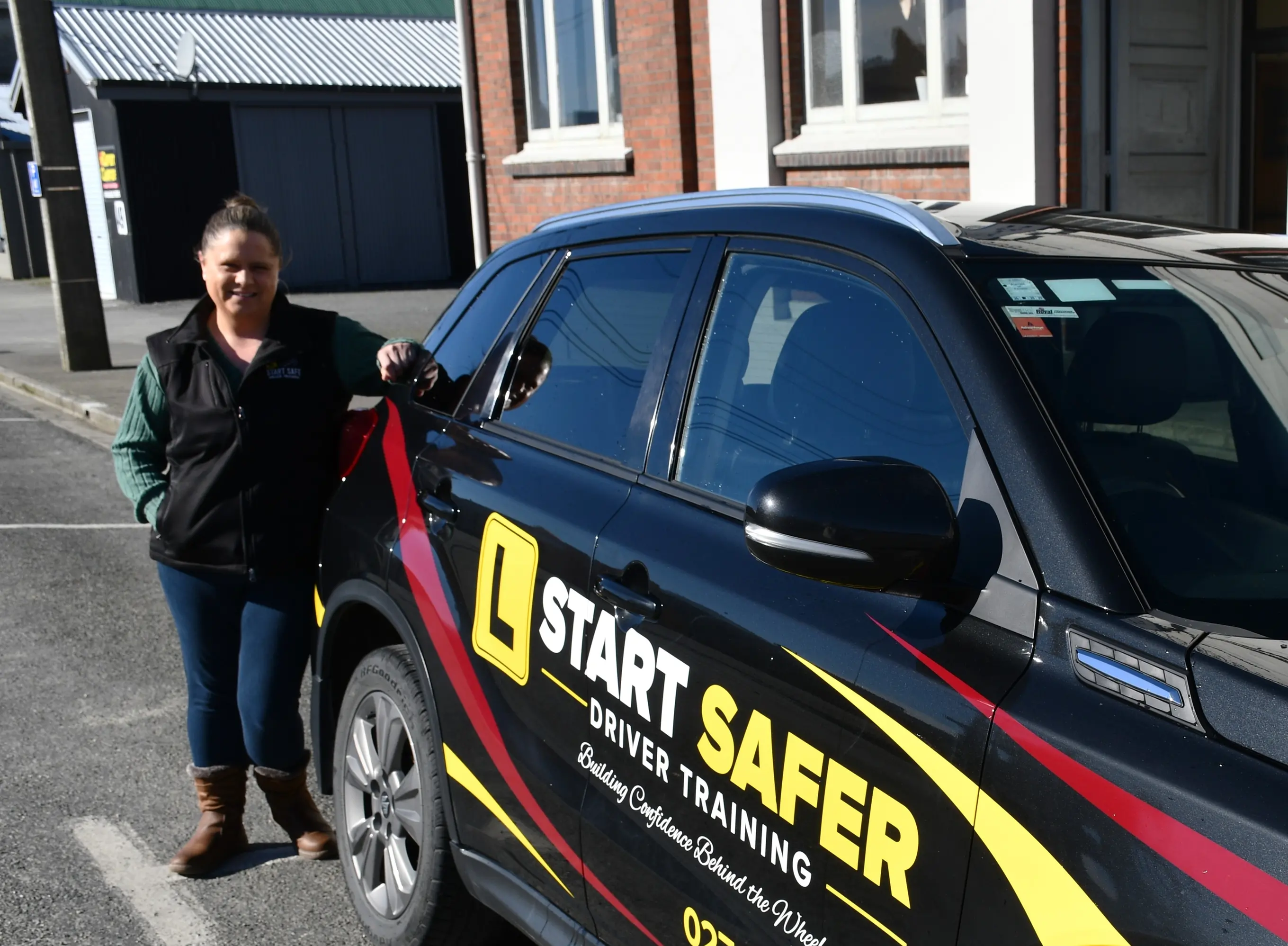
She now had a car with “disability controls” in Invercargill, the only car of its kind south of Christchurch, which helped people with physical disabilities in the lower South learn to drive.
Another government change to the pathway towards obtaining a full licence included scrapping the full licence practical test, which had existed since 1987.
The hazard perception element of the current full licence test would be added to the restricted test.
Instead, drivers would automatically qualify for a full licence, and pay $70 less than they would now, if they had a clean record, and had held their restricted for 12 months, under the changes.
Restricted drivers who commit demerit point driving offences would have an additional six months added to the tenure of the licence, which took effect on May 7.
Demerit point driving offences included cellphone use, speeding, drink-driving and drug-driving.
Before the changes, the duration of a learner’s licence was six months, the changes would see it increased to 12 months.
Under the changes, a restricted licence would be held for a minimum of 12 months. Currently it is 18 months, or twelve months with a defensive driving course.