

PHOTO
A space company operating at opposite ends of the country is taking off in the corporate world, but has no plans for a policy on military activity.
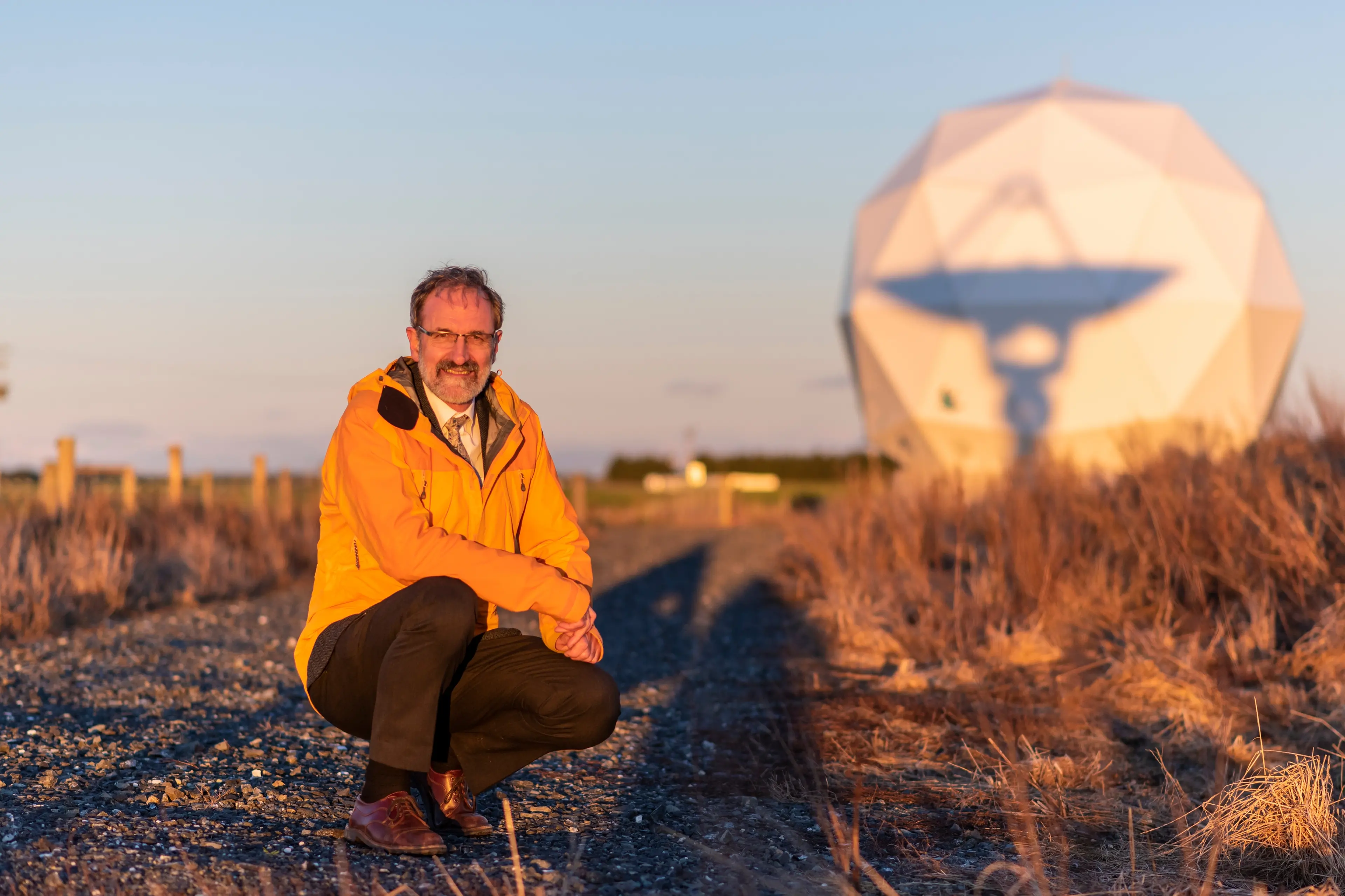
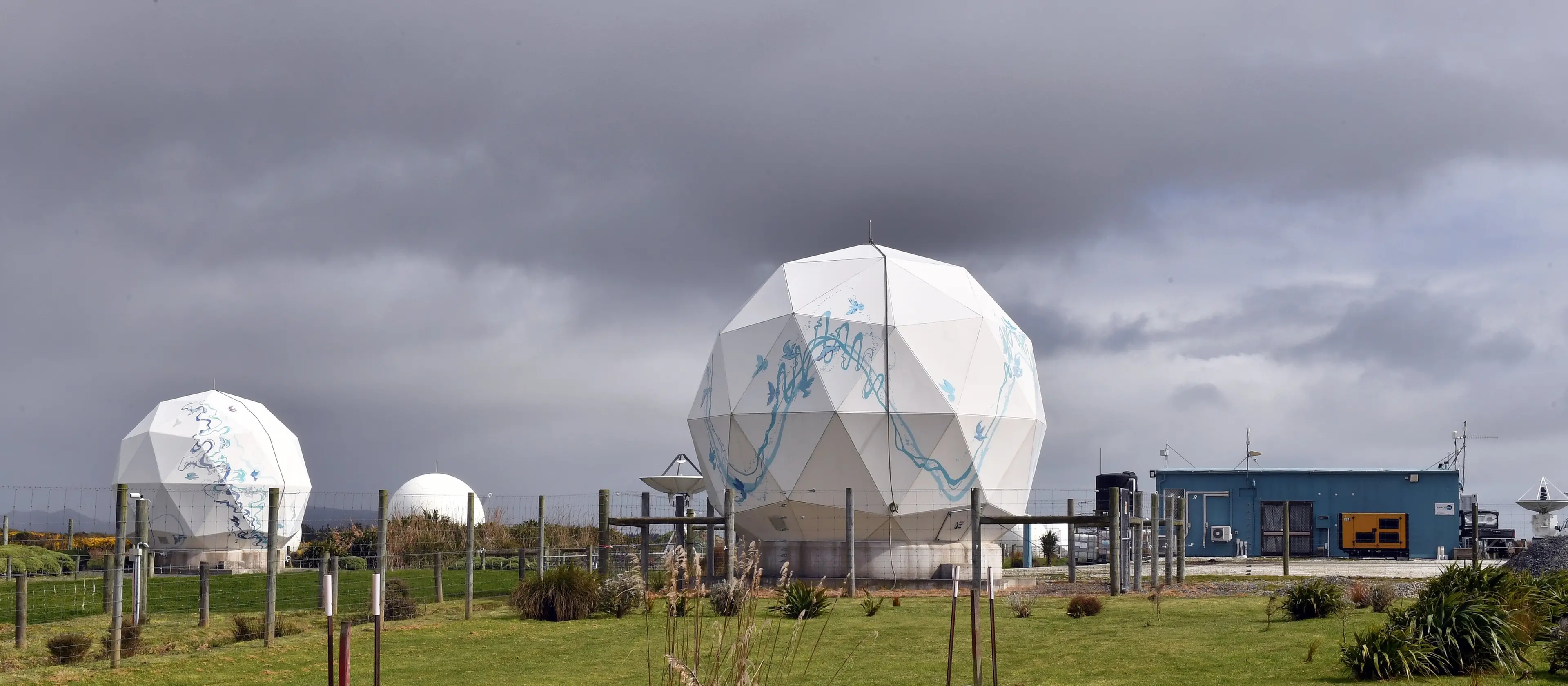
SpaceOps runs a ground station at Awarua, south of Invercargill, plus Warkworth Space Centre, north of Auckland.
Its core business is hosting antennas for clients connecting to spacecraft, with big name users including aerospace and defence giant Lockheed Martin, Norway’s KSAT and Italy’s Leaf Space.
But company chief executive and founder Robin McNeill has revealed there is no policy in place for accepting or undertaking work connected to military activity — despite the company being a subsidiary of regional development agency Great South.
“We’ve got enough other things to do without spending ages developing a policy that we don’t need,” he said.
Mr McNeill is the brains behind SpaceOps and the 2024 recipient of the inaugural Prime Minister’s Space Prize for Professional Excellence.
Work began at Awarua in 2004 following a €200,000 injection from the European Space Agency, he explained, and the site has since expanded to cover 32ha, all paid for by profits.
The company employs 11 staff across Awarua and Warkworth, and construction is under way on a new $4.55 million headquarters at the southern site.
“We’re globally important. We’re very important for spacecraft that are in what’s called ‘low-earth orbit’,” Mr McNeill said.
Despite the company’s growth and profitability — it is expected to turnover about $5m this year alone — Mr McNeill said the inclusion of military in its statement of intent would be “too hard”.
“Policies are always tricky … I don’t think it would affect how we operate, is the answer.
“I’ve got staff who would walk out on me if we went down a military route.”
Mr McNeill gave examples of how SpaceOps was inextricably linked to that world, such as a contract with LINZ which involved locating the North and South Pole to within 1mm, twice a week.
That information was vital to all satellites, including those used for GPS, which is itself a US military product.
SpaceOps worked with Lockheed Martin as part of a SouthPAN project, with Mr McNeill acknowledging the company did satellite based augmentation systems, but also made fighter jets.
There was also the grey world of “duel-use”, with Mr McNeill explaining many European and American spacecraft could be financially backed by both the commercial and military worlds, “and it’s hard to know what happens”.
With no policy in place, responsibility rested with Mr McNeill to make a call on jobs.
“It’s not a problem. I don’t want to have to go to prison,” he said.
Mr McNeill confirmed SpaceOps had assisted with a covert operation related to security for the New Zealand Defence Force, but also noted his company mainly lived in the corporate world, and military did not consider civilian operations safe.
Discussions with the board was an option if there was something “hairy”, but that had not been required, he said.
SpaceOps was incorporated in 2016 and is a wholly owned subsidiary of Great South, which is funded by Southland’s four councils.
Local Democracy Reporting asked Great South if it was concerned the company did not have a policy for the kind of jobs it accepts.
Chief executive Chami Abeysinghe — who is on the SpaceOps board — said it was aware it needed to comply with Radio Spectrum Management, acts, treaties and other requirements.
SpaceOps’ statement of intent says it supports and advocates for the peaceful use of space, noting it is a signatory of the Washington Compact and compliant with various Acts and international space treaties.
The statement also included the company’s four lines of business: hosting satellite ground stations on behalf of customers, leasing its own ground stations, undertaking space geodesy and radio astronomy observations, and providing technical expertise to the space community.
In September, a hearing was held at Invercargill City Council after Calder Stewart objected to a request from SpaceOps to create land and air space next to its Awarua site.
The rich-list Stewart family is developing a large industrial area near the site which will include a windfarm.
Information prepared for the hearing showed SpaceOps held over 700 radio licences, with indications Awarua supported “well over” that amount of spacecraft and satellite constellations.
LDR is local body journalism co-funded by RNZ and NZ on Air.