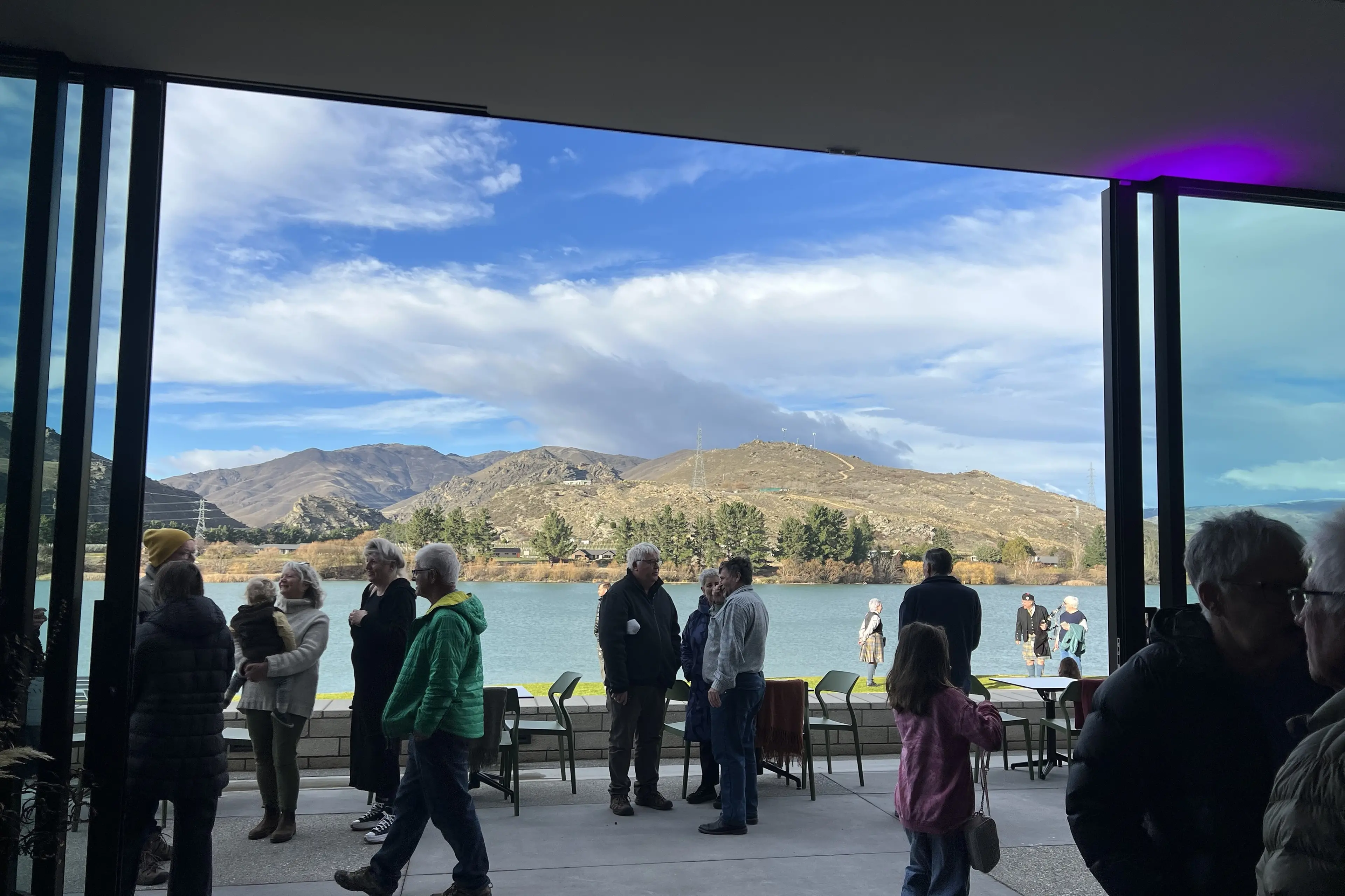
The Cromwell-born architect of the town’s new memorial events centre, Te Puna Mahara, says she is “so proud” of how the building has turned out after decades of conversations and planning. Those behind the $45.8 million centre were able to see how people received it for the first time at the weekend, when it was officially opened. Jess Sutherland, the local architect partner on the project, which was led by Jasmax, said the materials used made the process of designing the building especially memorable. As you moved through the space, you could see local history revealing itself everywhere, she said. She points to bricks sourced from Alexandra and Earnscleugh that incorporated tailings from historic gold mining sites and timber flooring salvaged from the old town hall that had been repurposed into the new RSA room. She also noted the foundation stone from the original memorial hall, which had been cast into the building’s external entry walls, and heritage plaques and trees that were replanted as a memorial within the grounds. Central Otago District Council community experience manager Genevieve Chrystall said those sorts of connections were the heart of the project, and she felt “incredibly proud” of everyone involved and what the building had become. And locals, able to enter the building for the first time, seemed equally impressed. Among those enjoying the gala opening on Saturday was 50-year Cromwell resident Denis McEntyre, who described the new centre and its lakeside setting as “phenomenal” and “extremely important” for local events. Alexandra residents Chaunē Engelbrecht and 17-year-old daughter Tynielle, both passionate about the performing arts, praised the new dance studio as a potential boost for the region’s arts scene and were impressed by the “obvious thought” that had gone into the building’s design. Saturday’s community gala day included pipe and brass band, dance and choral performances as well as entertainment from magicians, line dancing, yoga, face painting, martial arts demonstrations and food. (c) Allied MediaThe community joins RSA members at the Cromwell cenotaph to commemorate and pay tribute to the military significance of the site, as part of Friday evening's ceremony to relight the Eternal Flame. Photo: Carys Trotter It followed a day of activities on Friday that began with a dawn whakawātea (blessing) to open and dedicate the building, attended by mana whenua, elected members, project partners and community representatives. The Chinese community was also acknowledged and later that morning there was a whakawātea for the redesigned Cromwell Museum, Te Huika Wai, which is inside Te Puna Mahara. The last ceremony of Friday was led by the Cromwell Returned Services Association (RSA) and centred on the relighting of the eternal flame which was first lit in 1959, but had been extinguished for about two years while the new centre was built. RSA vice-president Tub Rodgers said he hoped the centre would serve the community while also giving the RSA a central place to gather, helping attract future members. “It’s brilliant to be a part of, and all the work here is just magnificent.” Cromwell RSA secretary Pete Svensson called it a moment that gave Cromwell “its own permanent meeting place again.” “We are now able to continue honouring. The flame is an attachment to that memory. As it burns, so it will always remind us of them,” he said. Reflecting on the project’s long road, Mayor Tamah Alley told those gathered on Saturday it had been “a long time coming”, with conversations about the project dating back to 1998 — her first year of high school. There had been many iterations along the way, but since construction began, the highlights had been watching mana whenua, community groups, designers, contractors and council all work together to create something that truly reflected Central Otago, she said. She hoped Te Puna Mahara would become the heart of the community. ”I hope in years to come, people aren’t remembering the opening — they’ll remember the school productions, concerts, weddings, exhibitions, community events and special moments they’ve shared here,” she said. “Then we’ll know it’s been a success.” Reflecting on the day itself, she added: “Seeing our people walking through the doors today makes the journey worthwhile.” The centre features a 400-seat auditorium, a 40-seat boutique cinema, meeting and conference spaces, a dance studio, cafe and bar, creative studios and the museum and gallery areas.