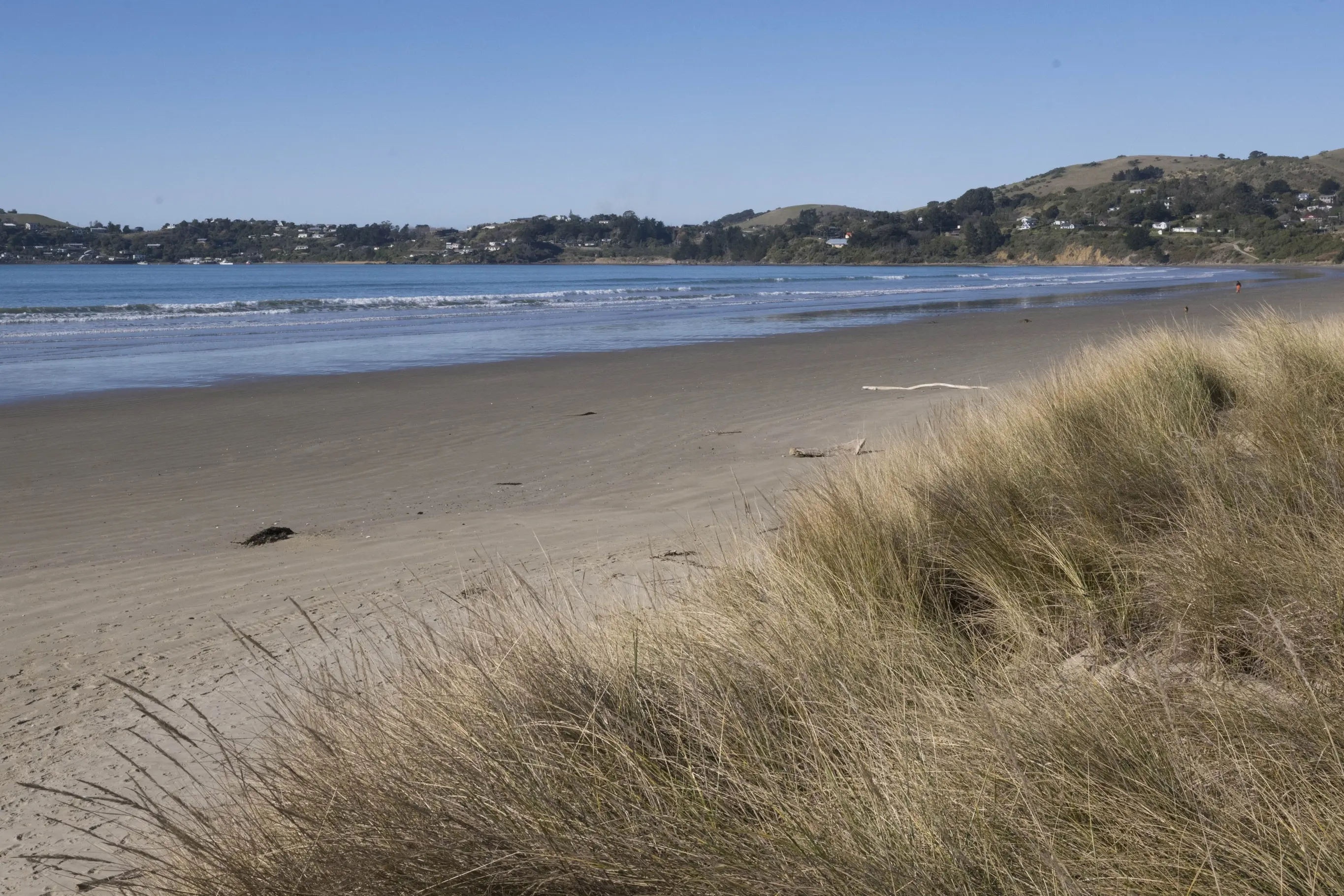
The removal of shellfish from Karerekautuku, near Moeraki, has been banned for two years. The shellfish closure will prohibit gathering any shellfish, including cockles (tuaki), from the northern end of the Moeraki Boulders south along Moeraki Beach and west towards the village, to the headland at the eastern edge of Onekakara Bay. The closure, notified by Fisheries New Zealand this week, applies to all shellfish and is intended to support rebuilding of depleted stocks in the area, particularly tuaki. The closure, initially requested by Te Rūnanga o Moeraki in March after a period of rāhui runs until August, 2028. Te Rūnanga o Moeraki upoko David Higgins said the rūnanga was “very pleased” the request was “successful for a number of reasons”. “We’re pretty happy that we’ve got through that stage. “Those beds have been decimated over the years, not necessarily by humankind, but we suspect it was a mixture of too much harvesting by individuals and groups, but also the possibility of sewage. “We now have an opportunity to decide the next steps, in that proposed period, to consider whether we extend the exisiting mātaitai to include that area that has been set aside recently,” Mr Higgins said. If the mātaitai were to be extended, Mr Higgins said the rūnanga would have have “some control on behalf of ourselves and the wider community of Moeraki, to manage and to ensure those tuaki have a chance to grow and survive”. The new closure includes all fisheries waters out to 500m offshore from the mean high-water mark. One of several pressures the shellfish faced included pollution, Mr Higgins said. “We now have a sewerage system scheme in Moeraki so there is a chance for those tuaki grounds to recover. “Because it’s not just cockles we’re talking about; it’s paua, and mussels and other species. Mr Higgins said it was “really sad” that “one particular cultural group” was found to be ripping out the cockles, some as small as a 50c coin. “Its not a wide grouping of different immigrants,” he said. “We’ve got the same problem with the same cultural groups up north doing the same thing with the cockles.” A ban on harvesting certain shellfish in parts of the Hauraki Gulf in the North Island was recently also extended for another two years as it faced similar issues. Otago & Southland Chinese Association (OSCA) president Teresa Chan had made contact with the rūnanga in March to offer help to educate newer migrants or possibly tourists who might be involved in the removal of the shellfish. Mr Higgins said “it was not the Chinese community” directly involved in this situation. “We’re going to have some educational sessions, but we need to gather all the cultural groups, and new immigrant groups. “Fisheries New Zealand are very keen to promote the idea of holding some educational sessions too,” he said. Mr Higgins said some locals might be concerned they could not gather shellfish “but they can always come and get a permit to take from a different area completely to allow that area to recover”. Mr Higgins said they would continue to “watch and monitor” the growth patterns of those species to see if there is “substantial recovery underway within that two-year period”. “Our Te Au Roa o Te Rakihouia marine rangers were there [on Thursday] removing the predatory marine weed undaria that has been thriving on this coast … because it’s not just cockles we’re talking about here, its pāua and mussels and other species,” he said. An MPI Otago and Southland spokesman said fishery officers would be enforcing the rules through patrols.