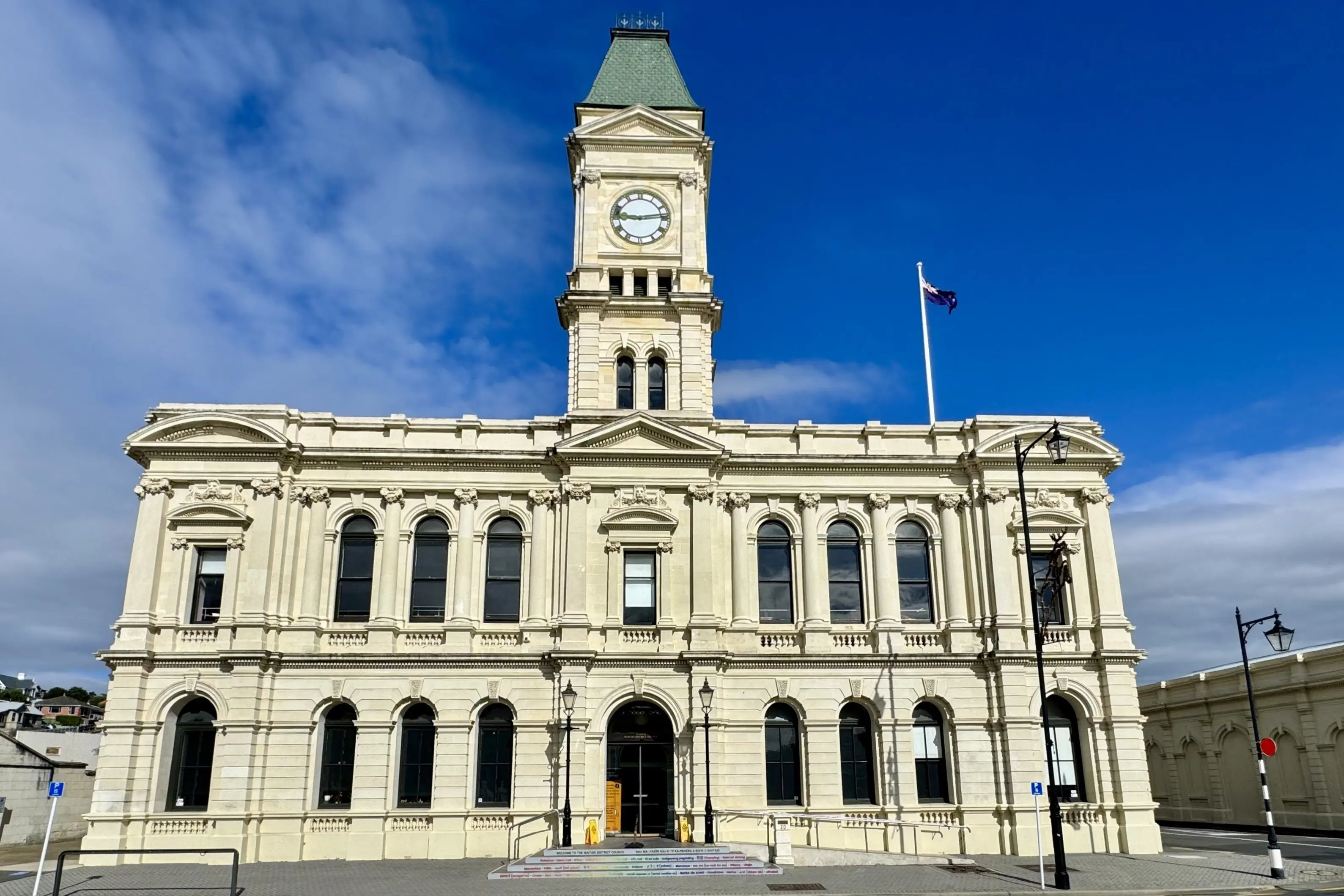
Waitaki district councillors have unanimously backed setting up a new unitary authority with northern neighbours, including a “foreign takeover” of Ashburton. The Canterbury/North Otago authority — made up of Timaru, Waitaki, Waimate, Mackenzie and “unwilling” Ashburton — would have a population of up to 125,000, a land area of around 26,900km² and GDP of $10.5 billion. This proposal was seen as the most likely to get over the line with the government and was in the best interests of the Waitaki district, councillors heard. A five-council “Aoraki/South Canterbury” proposal floated last week was scrapped after Ashburton District Council voted against joining the Head Start process at a meeting on Wednesday, only for the option to be brought back to the table on Friday when it emerged a four-council proposal was not viable. Mayor Mel Tavendale said it was a “really fast moving conversation”. The mayor told councillors the “bigger problem” with Ashburton opting out was there was no answer “for all of Canterbury” and after speaking to government officials she understood the four-council proposal was “not likely” to meet requirements. Mrs Tavendale said the whole amalgamation process had tested relationships between councils across the country, that it was not the way she wanted to go about it but she was hopeful for a “viable” outcome. Cr Frans Schlack called it a “foreign takeover” to make up the numbers, given Ashburton had opted to fall into the Backstop process, a pathway with the risk of having a structure imposed on a council by government. He said the five-council proposal was a “good move”, would make sure Waitaki was not divided up, and Ashburton were “well aware” of the consequences of the Backstop process. Mrs Tavendale said she had given Ashburton a “heads up” and “certainly I don’t like the takeover way of going about things”. Cr Sven Thelning said: “It’s really not ideal. “We wouldn’t like it if the shoe was on the other foot.” Waitaki was being “eyed up” in other proposals too which was a “feature of the process”. A separate Otago proposal for two unitary authorities — one of which could include Waitaki in a Coastal Otago unitary — was put forward by Dunedin City Council and Queenstown Lakes at meetings earlier this week. Cr Thelning said: “At the end of the day, the government is the one that is going to make the decision on this, and we’ve got to make the best of it.” Cr Brent Cowles said: “We’ve got to stick to what we believe is best for our district.” An “off-ramp” clause was also included as part of Friday’s vote allowing any of the councils to exit before a detailed design proposal was agreed, expected in May. Friday was about giving Waitaki the opportunity to remain at the table and shape the future of the district, chief executive Alex Parmley said. Key issues were keeping the Waitaki district together, engaging with Waihemo communities about their future and ensuring the Waitaki River catchment stayed within one authority. The chief executive will work with the mayor to finalise the amalgamation proposal and submit it ahead of this weekend’s deadline. Deputy mayor Rebecca Ryan said she had listened back to late colleague Cr Jim Hopkins’ final contribution on the topic of amalgamation. “He acknowledged that this wasn’t his ideal solution for the future of local government. “But he also recognised that leadership isn’t always about choosing the perfect option. “Sometimes it’s about making the best decision available with the information and the circumstances we’re faced with.” Councillor numbers will likely be slashed under a unitary authority model. Waitaki, Timaru, Mackenzie and Waimate currently had 76 elected members between them, plus three councillors from regional councils, but it was proposed this significantly reduce to between 10 and 15 elected representatives, with a “sufficient” number of community and local boards beneath this “to ensure local voice is retained”, a draft document prepared for Friday’s meeting by independent advisory company Rationale stated. Doing so would reduce “duplicated” governance structures and consolidate long-term plans. Consolidating a “considerable” number of functions would “achieve efficiencies of scale, increased effectiveness and provide improved value for money for our ratepayers”, the councils argued. The government is expected to make a decision next month on which proposals to progress to the detailed design phase.