

PHOTO
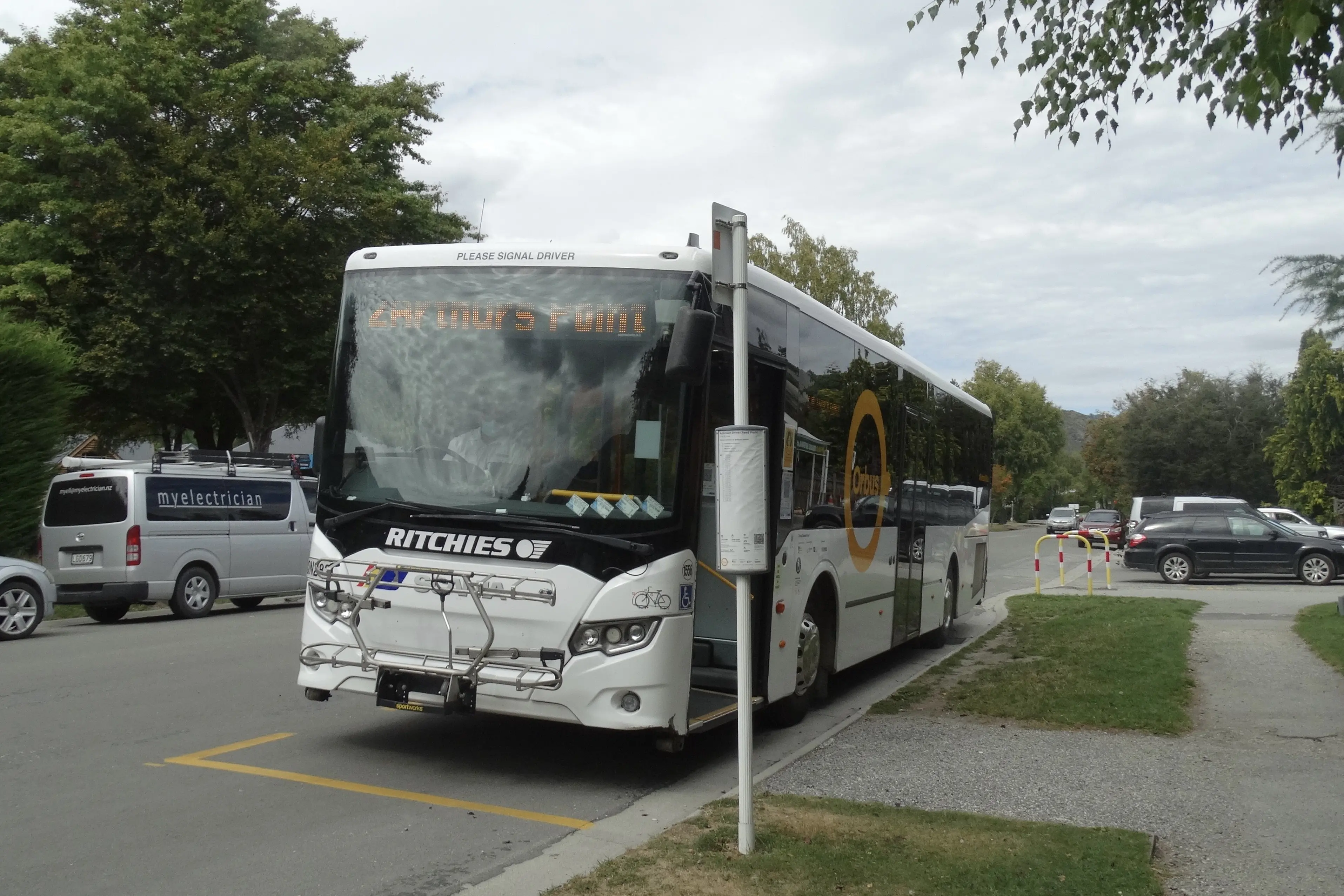
AN eight-trip-a-day bus service connecting Lake Hāwea, Albert Town and Wānaka is the area’s best bet for public transport, regional council staff sy.
A business case for public transport in the Upper-Clutha will be presented by Otago Regional Council staff.
Councillors are due to consider the matter next week.
In the investment case, developed by council staff, a ‘‘skeleton bus service operating eight trips per day, seven days a week,’’ was identified as the preferred option.
The investment case proposed trips within the Wānaka and Albert Town area would cost $2.50 and trips between Wānaka and Lake Hāwea would cost $3.
While council staff described this as a ‘‘skeleton’’ service, it would represent a significant step up from the frequency of service offered by the shuttle trial operated by Community Link in 2022 and 2023.
Further, while the Wānaka Sun reported last week it could take until 2037 before there was an eight-trip-a-day bus service, it appears that council staff’s preferred option is for the service to launch in early 2028.
It is proposed the service be established on a two-year trial basis, providing an opportunity to embed the service in the community before its long-term viability is evaluated.
The investment case states the indicative annual operating cost for this service would be about $1.07 million, with $100,000 in implementation costs in the first year.
Buses would be from the council’s existing fleet.
Service and fleet improvements were planned on the approval of longer-term funding.
Council staff propose 49% of the cost of the service be met through ‘‘targeted rate funding’’ — meaning residents will pay for the service in their regional council rates — with the remaining 51% to be sought from NZ Transport Agency Waka Kotahi (NZTA).
The investment case states an economic assessment shows a benefit-cost ratio of about 1.1 — meaning the economic benefits of the proposed service are 10% greater than the costs.
That ratio is likely to improve significantly as the population of the area and use of the service grow over time.
Whether NZTA would fund the service was identified as one of the primary risks to the service.
If NZTA co-funding is not secured, the council will need to consider funding in full with rates, the investment case states.
For Queenstown Lakes District deputy mayor Quentin Smith, the shape of the proposed service was positive, as was the accelerated timeline for an eight-trip-a-day service, but there remained a concern about how the service would be paid for.
‘‘There’s definitely support for public transport and the Hāwea to Wānaka route is obviously the best place to start and frequency, reliability and affordability are the key factors in making that successful.
‘‘I’m fully supportive, I still remain concerned about what the targeted rate would be for public transport for the Upper Clutha because the affordability component for ratepayers is a key consideration.’’
Cr Smith said the fares sounded reasonable, but while the Queenstown bus service had been successful due to similarly low fares, Wakatipu residents were beginning to see an increase in their rates to pay for the service.
Cr Smith said while the cost of public transport was a concern, so were the consequences of not having it.
‘‘Queenstown shows you what happens if we don’t plan a multi-modal transport network and congestion is a key part of that.’’
A spokesperson for Community Link, the charitable organisation that ran community shuttle bus trials in 2022 and 2023, said it was ‘‘delighted to see positive movement towards a public transport service for the Upper Clutha’’.
‘‘Reliable, affordable public transport has been a long-standing need for our community and it’s encouraging to see a proposal that could finally deliver a practical solution.’’
Community Link surveyed Upper Clutha residents on demand for a bus service in May and the response demonstrated a strong need.
Reliability, travel time and affordability were the key factors influencing people’s willingness to use public transport.
‘‘It’s great to see that the proposed service aligns closely with what our community told us they wanted.
‘‘The people likely to benefit most are those who currently face transport barriers, including young people, older residents, workers commuting between Lake Hāwea and Wānaka, and households that would welcome a more affordable alternative to relying on a private vehicle,’’ the spokesperson said.
Councillors will discuss the investment case at a full council meeting in Dunedin on Wednesday.
Council staff are recommending councillors approve the endorsement of the investment case and note the preferred option will be put forward for inclusion in the council’s 2027 long-term plan, as well as being included in its public transport service improvement programme for Otago’s 2027-30 Regional Land Transport Plan and 2027-30 National Land Transport Plan bid.
ruairi.oshea@alliedmedia.co.nz