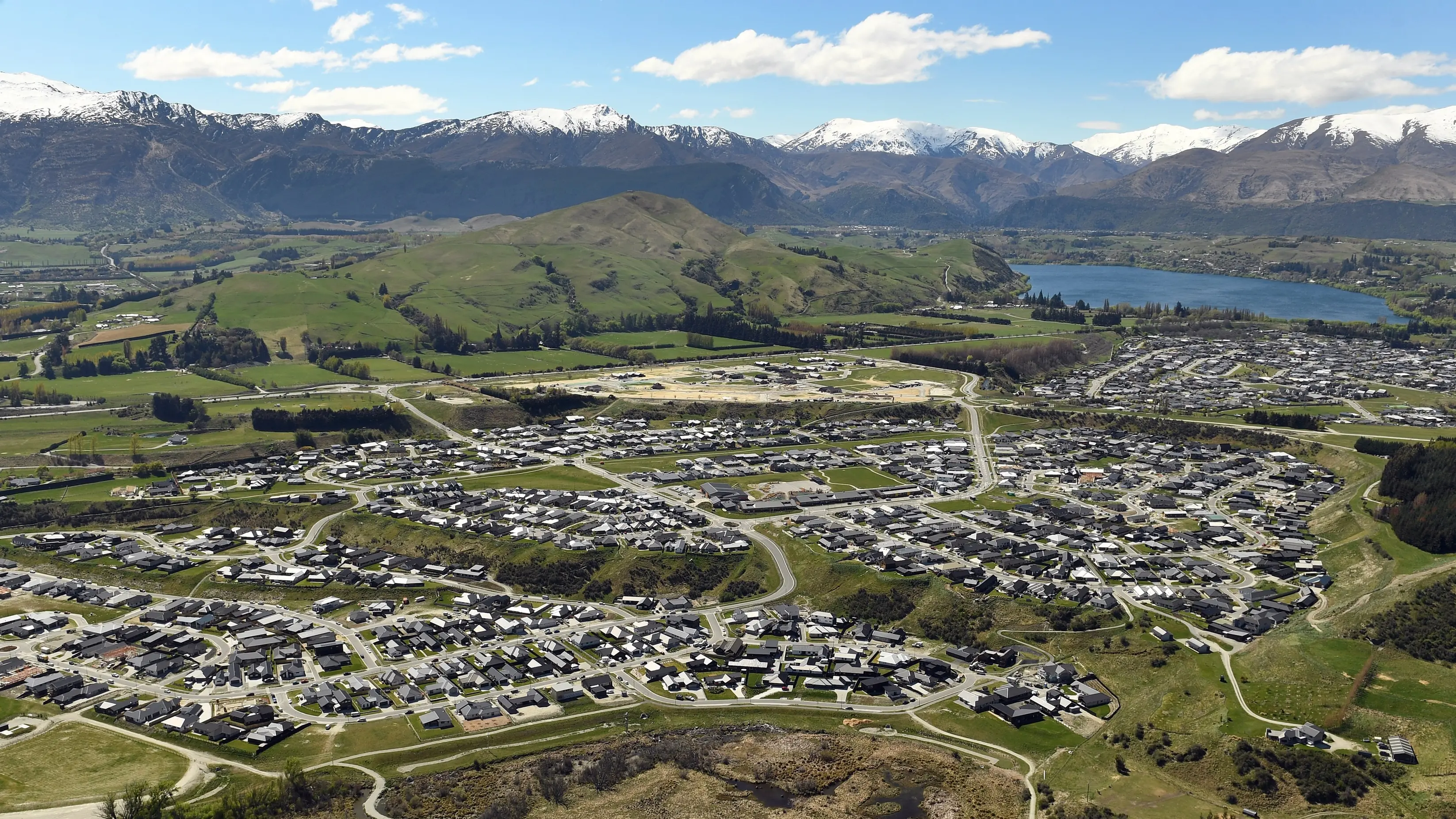
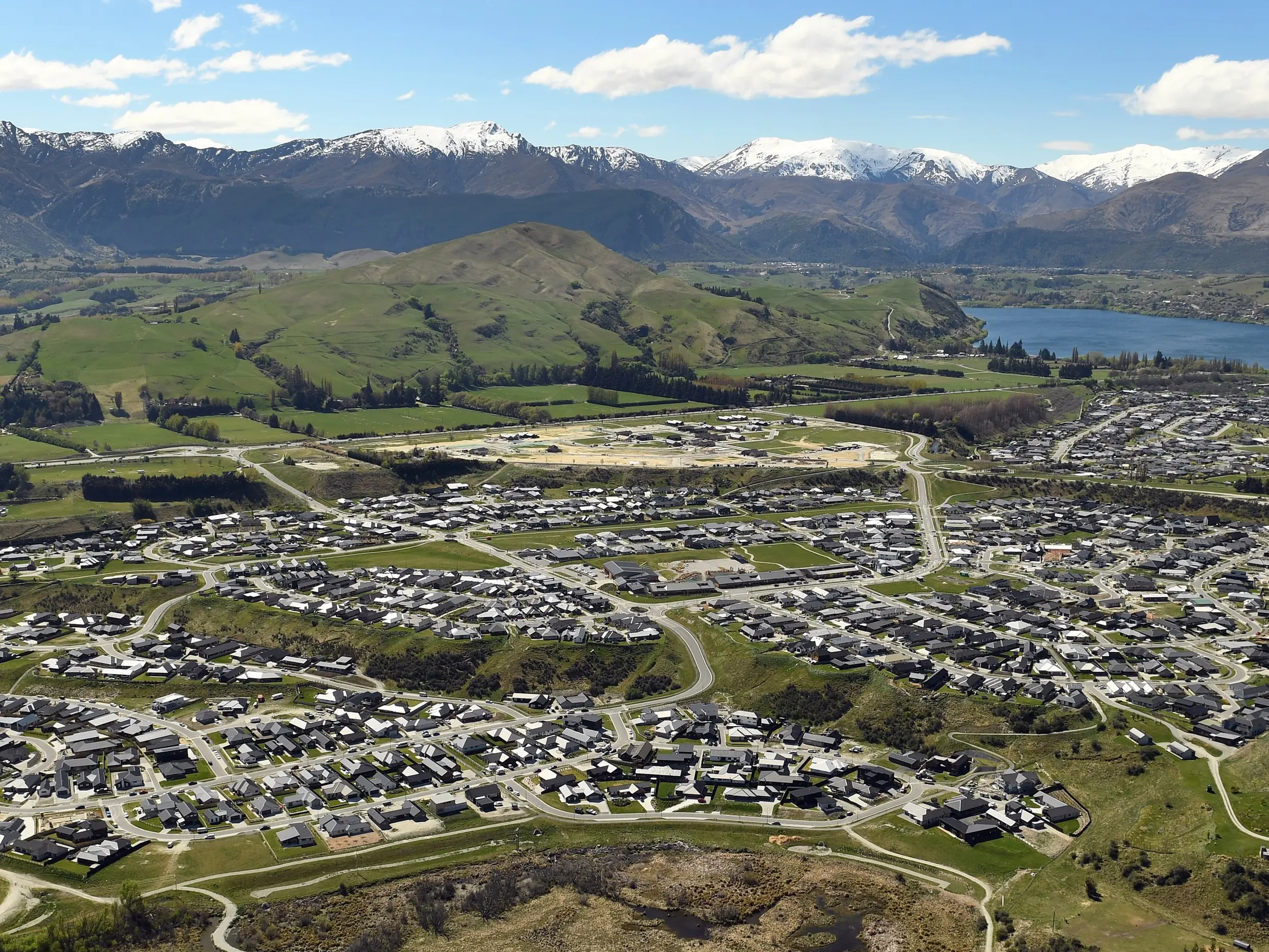
The three parcels at 429, 465 and 489 Frankton-Ladies Mile Highway are owned by developer Clarke Group.GRAPHIC: ODT An Auckland-based property development firm plans to almost double the number of residential units first proposed on one of its Ladies Mile sites. Clarke Group said there ‘‘may be a perception’’ the increased density proposed for its 7.12ha Glenpanel homestead in Flint’s Park — more than double the per hectare minimum — was ‘‘inherently inappropriate’’ or ‘‘too dense’’ for that environment. However, the ‘‘lived density’’ on the ground would be materially lower than what the figures suggested, it said. Seeking to have its application to the Queenstown Lakes District Council processed as a non-notified consent, it said density provisions within Ladies Mile did not operate as a ‘‘cap’’ on development intensity, but established a minimum density. ‘‘This is a deliberate planning response intended to avoid the inefficient use of scarce urban land and to ensure that infrastructure investment along the Ladies Mile corridor delivers meaningful housing outcomes,’’ the application states. Roads and transport infrastructure had been excluded from the net developable area calculation, the firm said. A variation was granted last month which included vesting part of the site to form a section of the ‘‘East West Collector Rd’’ and forming a 3000sqm park, while a stormwater park was also proposed. ‘‘Focusing on density figures for an individual neighbourhood in isolation, or expressing concern solely because the overall Ladies Mile area may ultimately accommodate more than 2400 dwellings, risks misunderstanding the planning framework ... deliberately adopted by the district plan,’’ the application states. The application argues the relevant planning question is not whether the proposal exceeded ‘‘a perceived suburban density expectation’’, but whether the proposal will produce the type of neighbourhood anticipated by the district plan and work with the infrastructure framework. The site, between the Shotover River and Lake Hayes, is one of three land parcels along Ladies Mile bought by Clarke Group earlier this year for a combined cost of nearly $100 million. It neighbours land owned by Simplicity Living, on which a comprehensive build-to-rent development is planned. It is part of a 15.5ha site where about 9.45ha was initially planned for development. Glenpanel Developments initially proposed to build 370 residential units, housing about 1000 people. Through the fast-track process, however, the total number of residential units increased to about 500. The council granted subdivision consent for 232 residential lots and land use consent for 287 residential units on the part of the site now owned by Clarke Group last May. But the new owner now wants to develop 443 residential lots and units, at 97 dwellings a hectare. The minimum density requirements of the zone is 40 dwellings per hectare. The increased density of the homes would primarily be enabled through the refinement of the area’s layout, a broader range of housing types and narrower lots. There were also changes to the internal roading layout and the introduction of jointly-owned accesses to garages, secondary units and for waste collection. The changes, the application states, will allow the site to achieve a ‘‘more compact medium-density urban form while maintaining ... amenity, open space and pedestrian connectivity’’. Overall, the application states the proposal represents a ‘‘comprehensive and integrated urban development response’’ consistent with the objectives and anticipated built form outcomes of the Te Pūtahi Ladies Mile Zone. The application is on hold with the council and an external report is required. tracey.roxburgh@odt.co.nz