

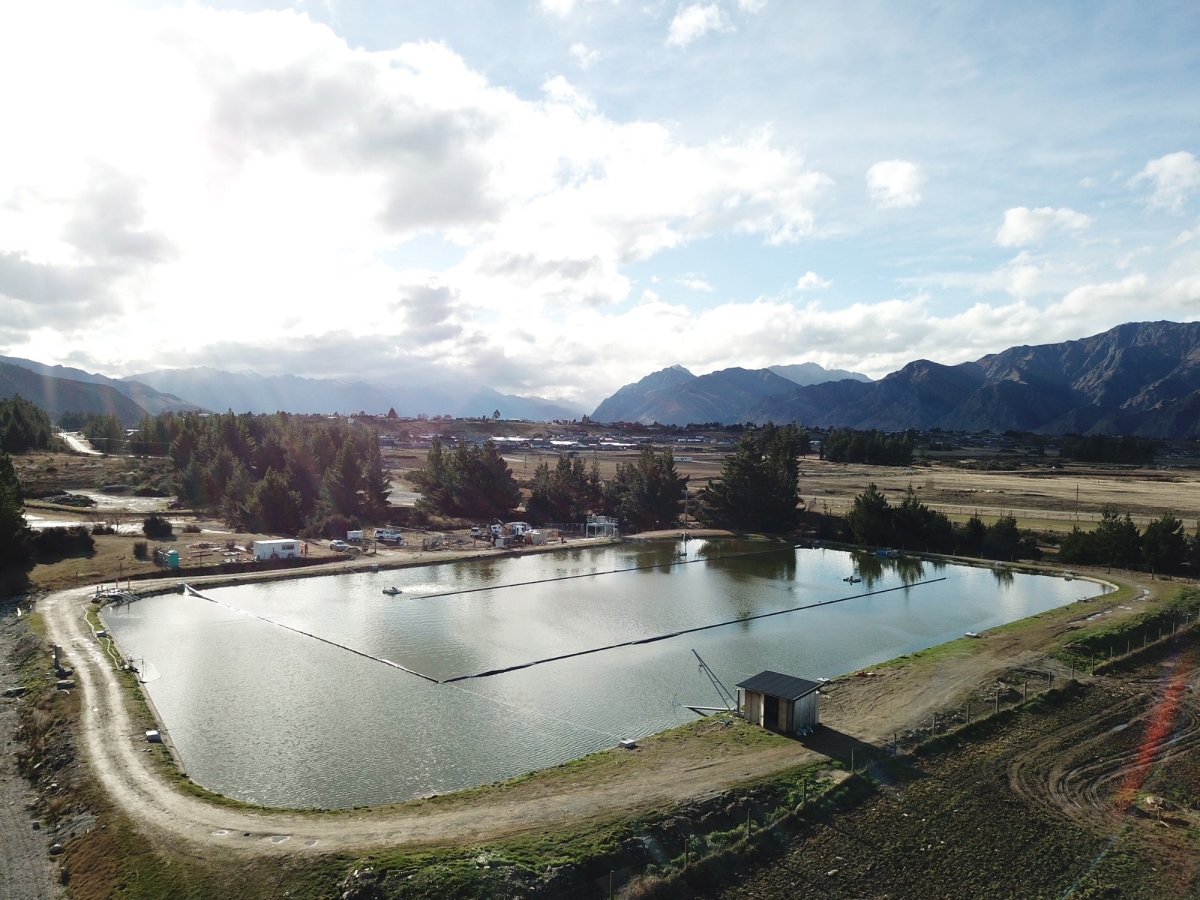
Queenstown Lakes District Council (QLDC) announced yesterday property owners would be banned from connecting any new developments to Hāwea’s wastewater system until the town’s treatment plant was upgraded.
The plant has been operating under an abatement notice after high nitrogen levels were found in its treated wastewater discharged to an oxidation pond on site.
QLDC said network upgrades to bring the plant up to scratch should be finished by early 2027.
Meanwhile, Lake Hāwea residents are fielding exponential rates to cover the costs of the infrastructure for the council’s "project pure" wastewater pipeline, which will initially cost $80 million.
Lake Hāwea Community Association chairwoman Cherilyn Walthew said the council had misled locals about the capability of the treatment plant and forgotten residents of the community when making plans and granting resource consents for development.
The association was told by QLDC in May that there was plenty of capacity and the wastewater treatment system was working well, she said.
"Mike Theelan [QLDC chief executive] sat there and looked me in the eye and said those nitrogen levels were fine for the next 12 months."
The council went against public sentiment when granting consent for four recent developments: Timsfield, Longview, Domain Acres and Falcon Rise, Ms Walthew said.
"I don’t think we even come into the equation; they haven’t thought of the average person on the street who has to shoulder this."
Developers were not fielding the costs of the $80m wastewater scheme, residents were, she said.
Her own rates had risen by $1300 in the past year on 3.5ha.
"Council should not be taking development contributions and sitting on their arses with it and then coming in and putting the costs on us when it’s too late."
"Where is the development contribution being used?
"It doesn’t scratch the surface in terms of the infrastructure bill."
The association was not against development, but had told the council the drinking and wastewater infrastructure needed to be upgraded and fit for purpose before consents were granted, Ms Walthew said.
Development contributions are $42,208 per section at Lake Hāwea.
Longview developer Lane Hocking said the limitations on new connections would not have any impact on Longview and its residents.
"Longview has plenty of sections for sale, all of which are already constructed and therefore have wastewater connections in place.
Deputy mayor Quentin Smith admitted the wastewater scheme was taking longer than planned, and the plant in question, which had had about $20m spent on it in upgrades in the past four years, was only to be temporary.
"The plan was never to rely on that treatment plant long-term."
"We always knew the Hāwea wastewater scheme had its life and its life was coming to an end.
"We always had to plan for a replacement but that had unfortunately been delayed."
There would likely be a further $20m spent on the Hāwea scheme in the following six years, on top of the $80m, Mr Smith said.
"I don’t think it is a matter of assigning fault — council haven’t kept up with the growth and we would have liked to have done it faster," Mr Smith said.
"We are investing and people can see that in their rates, unfortunately."
Meanwhile, Otago regional councillor Michael Laws was quick to fault both councils for not doing their jobs.
"Hāwea and QLDC report yearly to the ORC [Otago Regional Council] and if they are in breach you’d expect them to take an intervention.
"ORC hadn’t been monitoring the breaches despite QLDC notifying them on a yearly basis that they were."
There were potential health and environment risks with the nitrogen levels exceeded, Mr Laws said.
ORC chief executive Richard Saunders said it took compliance seriously and an abatement notice was issued in March for the plant.
"QLDC have been proactively engaging with ORC in communicating the steps that they are currently taking and the plan to take to address the matter."


