
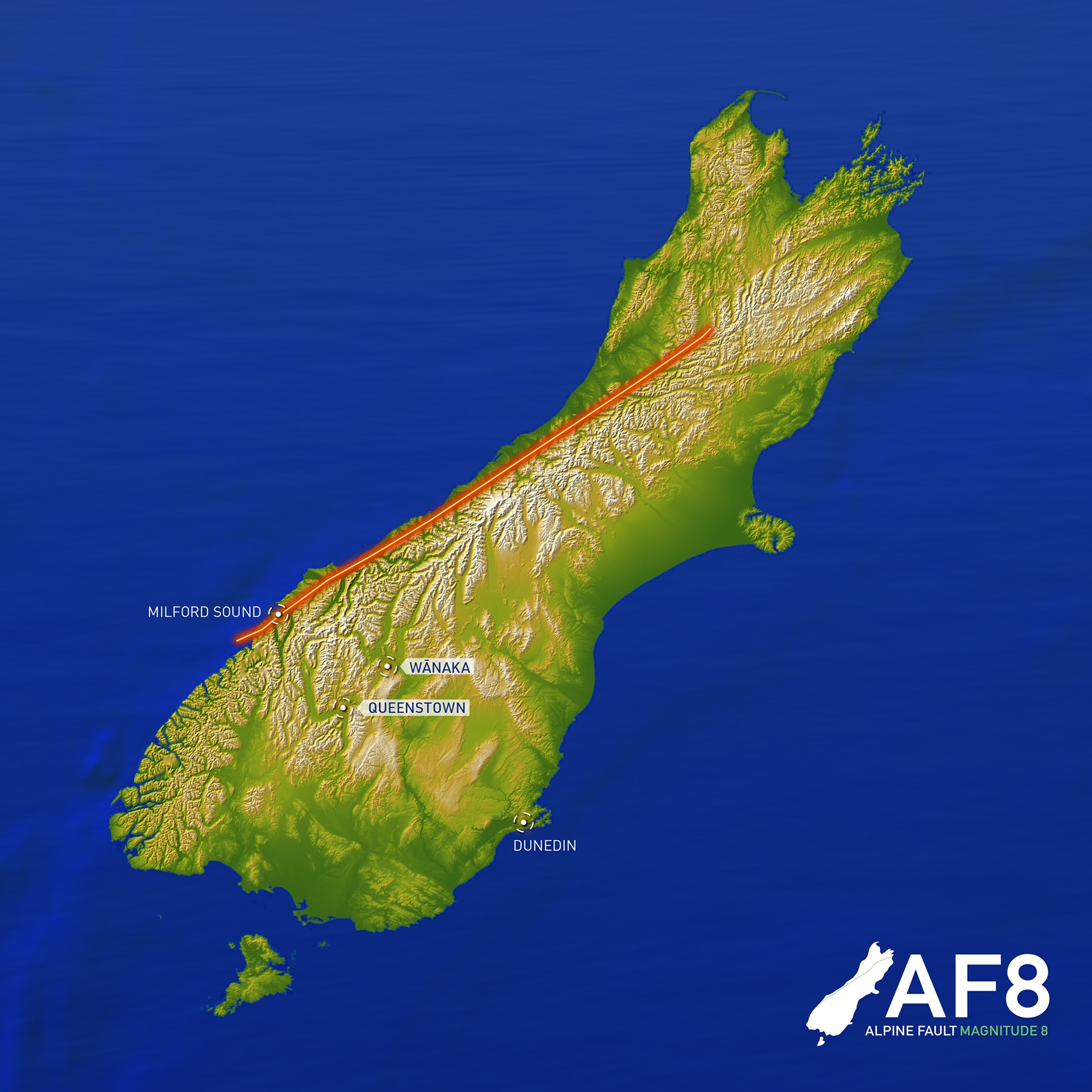
Alpine Fault 8 (styled as AF8) is a research programme designed to model the effects, and build resilience, to a theorised 8.0 magnitude earthquake on the Alpine Fault.
The group predicts there is a 75% probability of an Alpine Fault earthquake occurring in the next 50 years, with a four in five chance that it is an 8.0 magnitude event.
AF8’s science lead Dr Thomas Robinson said an earthquake on this scale would be "500 times times more powerful than the Christchurch earthquake in 2011", and felt by all New Zealanders.
Robinson said that shaking would last for up to two minutes causing widespread landslides in the Southern Alps, cutting off multiple roads, while also causing widespread power outages and disruption to the telecommunications network for a couple of days after the earthquake.
"Then the real challenge is going to be getting access back to those areas, and getting key power and telecommunications back up on the West Coast and in other areas that are likely to be affected," Dr Robinson said.
Earthquake damage on this scale could isolate the Upper Clutha from external supply, meaning that communities need to prepare to exist independently in the immediate aftermath of a disaster.
Andre Meyer is the chair of the Hāwea community resilience group.
Mr Meyer describes earthquakes as Hāwea’s main risk, with the size of the community, and the relationship with Wānaka, creating additional complications.
"The event we’re talking about is going to affect 80% of the South Island.
"We’ve got Christchurch to deal with, Timaru, Dunedin, Queenstown and Wānaka.
"Hāwea will get no help, possibly for up to three weeks."
Mr Meyer pointed to a philosophy within civil defence which suggests that every family must look after themselves, encouraging families to think about the nature of an event like an alpine fault earthquake and the type of food or products they might need within their home for an emergency.
However, at the same time, Meyer and the rest of the Hāwea community resilience group have developed a thorough community response to a potential earthquake which harnesses the expertise of doctors and nurses in Hāwea for its medical requirements, wireless internet hubs to maintain connectivity, and the group in the process of getting funding for solar panels to generate power for the community centre in an emergency.
"Another challenge we have is that during the working day, Hāwea empties out.
"If you worked at Mitre 10 in Wānaka and you lived in Wānaka, you could walk home.
"In Hāwea, we’ve got to cross two rivers to get home, and there’s a challenge for the high school kids, or for those that work in Wānaka, in how they get home at night.
Mr Meyer is cognisant that times are tough, and that families struggling week to week might struggle to pay for food to hold in reserve.
"People don’t necessarily think about these things, but all we want them to do is actually think about it for a few minutes and put a plan together," Mr Meyer said.


