PHOTO

Farmers clearing weeds to bring wetlands back to life might have a lifelong job ahead of them.
Ongoing maintenance is needed after native plants have become established.
About 120 farmers and industry people attended the Farm Wetland Symposium in Christchurch to learn more about the Managing Wetlands as Farm Assets project led by Landcare Trust and funded by central and local government and industry groups.
The project’s focus is on protecting and restoring wetlands; demonstration sites cover a range of different farming systems and ecological zones. Among them are three constructed wetlands. The project runs until the end of June.
Farmers were told at the symposium about the value of mapping native plants and water life on a site and monitoring changes, and to let nature do much of the "heavy lifting" rather than carrying out large-scale, expensive plantings.
They also needed to observe what was contributing to a weed problem in order to protect and encourage desirable native species.
Removing willows and woody weeds and then controlling them would be ongoing to keep wetlands healthy.
Willows were often drilled by ground control above the waterline to put in herbicides or regrowth was cut from the base.
Environment Canterbury wetlands principal biodiversity adviser Jason Butt said landowners needed to realise they could not restore a wetland a "little bit".
"Once you are restoring a wetland, you are managing a wetland. That generally means you are managing it forever. Those things that led to the weeds invading and degrading a wetland, they don’t go away. The seed sources are generally in the landscape and they keep coming back. So once you start, sorry to say, you’re committed."
Willows had large canopies that cast shade and choked plants belonging to wetlands such as flax. Native woody species were generally limited in Canterbury wetlands except for kahikatea in lowland swampy wetlands, he said.
Some farmers such as Otematata Station’s Joe and Pip Cameron were reconnecting with local villagers to help them control weeds in a wetland project.
They were working to give holidaymakers access ways via the wetland to swimming spots in the nearby river so they bypassed lambing paddocks.
Farmer panels gave insights at the symposium into the satisfaction and challenges of starting a wetland project.
Ealing Dairies wetland
The dream for Canterbury farmers Ian and Sue Thornton is the wetland they’re restoring on their Ealing Dairies farm will one day be a community attraction.
Mr Thornton has been farming at Ealing since 1989 and the couple are now running two dairy farms on their property.
Their wetland is on the corner of the original farm.
"This wetland has always been here and I would be over the fence quite often in the early days and thought, one day I’m going to do something with that," he said.
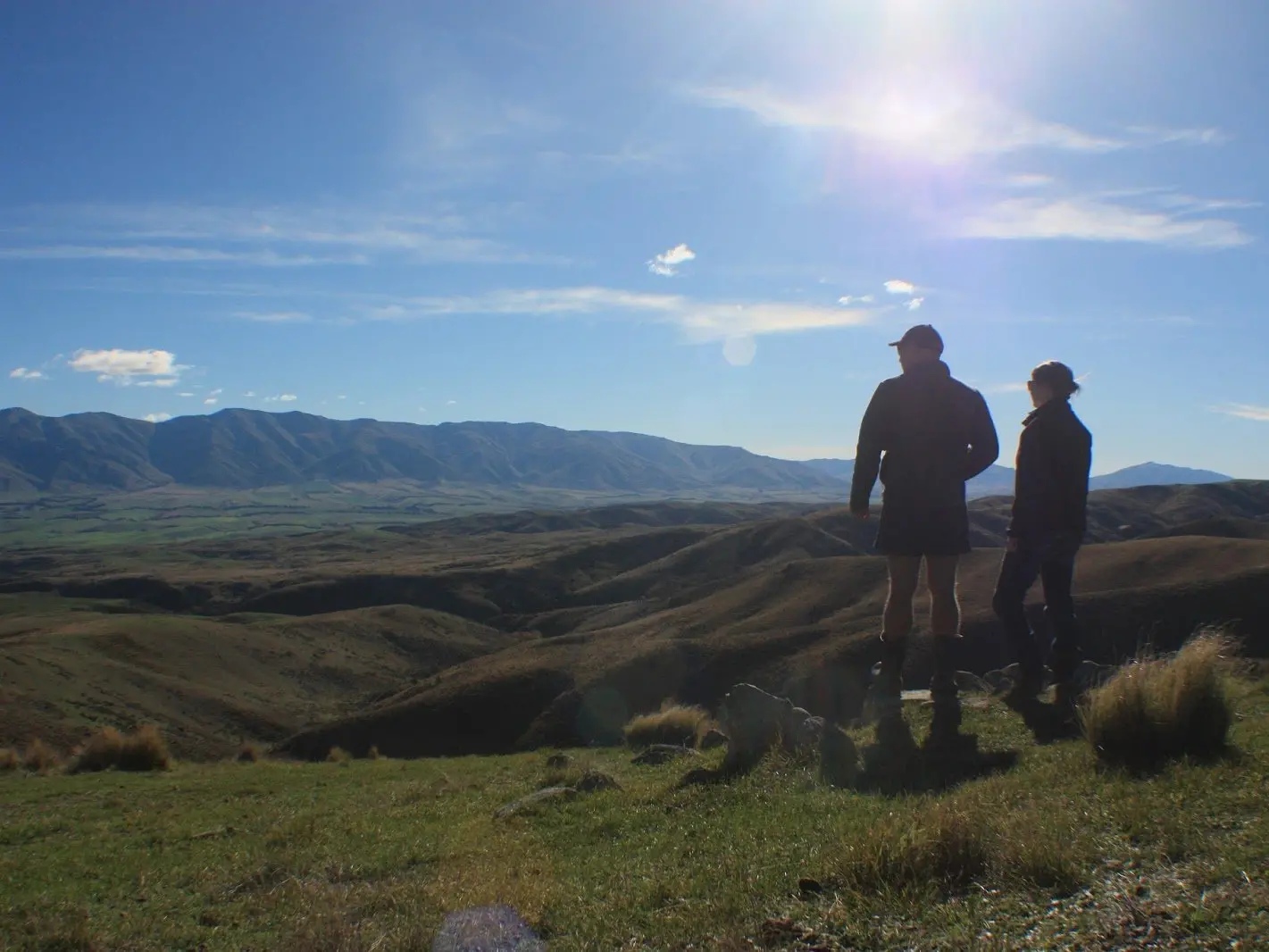
"We basically got into clearing a lot of the willows, gorse, broom, old man’s beard, you name it, and scattered among that were quite a few natives."
After three years of removing weeds, they have started planting about 1500 native plants a year, mainly ribbonwood, kanuka, flax, carex secta and mingimingi.
A learning curve had been matching the right plant in the right place, and they had had a lot more success with their strike rate lately, he said.
Hares were a pest and a trapping programme was controlling stoats and weasels.
"It’s a long-term project and you have to be a wee bit [patient] and put up with weeds."
Mr Thornton was looking forward to the day when there was more natural reseeding and said it was starting to happen already.
At the first planting of about 500 plants, they brought in pupils from Hinds School who assisted and looked at the insects and waterlife.
"It’s a great spot down there for kids and in the future that’s probably what I see it as — available for community groups once it becomes a bit more established ... We’re trying to get it back to how it was originally. We’re never going to quite get there, but it will be pretty close."
Waikora Station wetland
Waikora Station’s Sarah and Hamish Elliot are starting from scratch with a wetland project on their Hakataramea Valley property.
They took over the farm from his parents about 10 years ago and run mainly merinos and beef cattle on about 2500 hectares.
"We’ve carried on the good work they’ve done in the past and developed this 50ha after we first took over this farm and had two very, very dry years. This country up here is a lot more summer safe and we probably get 250mm-300mm more than down at the house and wanted to make use of this ground we’ve got. By doing that, we realised we needed to fence off the middle block because it’s a very sensitive area and very wet and there’s quite a big catchment here," Mr Elliot said.
Fencing off the wetland allowed them to subdivide the block and farm it better.
Their plan is to let nature take its course and revert to native plants without new plantings.
"I used to associate a wetland with a lot of plantings, a lot of riparians and we’ve actually discovered we’ve got a lot of native species already here, so we haven’t had to do any plantings and will just monitor what’s here," he said.
At 900m above sea level, the difficult climate can bring heavy snow and dry spells so they take the view they’re better off letting existing natives thrive and eventually multiply.
Mrs Elliot said they entered as wetland novices and had become heavily involved in the Hakataramea Sustainability Collective, which was doing great work in the local catchment.
"We’re really excited to see and learn about eco-sourcing of seeds for our catchment and how we can propagate these and plant them back on the farm and improve the biodiversity that’s already here."
Nurturing new plantings would be a struggle as the steep wetland area was some distance from their house, she said.
The couple were grateful for the support of New Zealand Merino and Landcare Trust to help make the project successful.

Double Tops wetland
Hawarden’s Andrew and Charlotte Rutherford are determined to get on top of errant willows so wetlands can thrive on their Double Tops farm.
They’ve been farming sheep, beef and deer in a partnership with his parents on the 6500ha property the past 11 years.
Their wetland is fed by several creeks coming off developed farmland and used to be a holding area in their main laneway with a lot of stock moving through it.
Mr Rutherford said they wanted to carry on the environmental work of his parents and previous owners, Harry and Ginny Pawsey.
"We decided to get involved in this project and get it all fenced off. There’s about one hectare here and a second part further down of 1.5ha that we’ve fenced off as well. Generally we’ve just let it do it’s own thing, but Charlotte’s spent a bit of time planting."
Mrs Rutherford said she started digging up flax two winters ago and repositioning it to mimic nature in the lower part of the valley.
"They’ve eventually started growing away, but there were huge big willows here as well."
About one hectare of willow tangle had choked the creek to the extent that the paddock was named The Willows. Their roots invaded the creek, which was silted up as a result.
Only stumps remained and were starting to break down after being sprayed. A channel had emerged after heavy rains.
They had converted an old cow bale for propagating natives, Mrs Rutherford said.
The main expense was getting the wetland fenced and growing plants themselves or letting nature follow its course to costs down, she said.
"Stage one was getting the flax through the middle in the wettest part and then doing the banks, and eventually just let the seeds produce other plants. I come from an interior design background where everything is quite straight-lined and this was quite a hard project for me because I was trying to mimic nature where everything is quite randomly placed so it’s been interesting to try and visualise how it works spatially."
Other wetlands restored by his family had transplanted plants or let them come back naturally after fencing them off, Mr Rutherford said.
"I think this is a critical point because it’s where a lot of the run-off from our cultivated land comes to, so it’s quite a good filtering system."
Buffer strips above the wetland soaked up the sediment, he said.
The couple supply fine wool to New Zealand Merino via a ZQRX accreditation programme, which includes monitoring the biodiversity and carbon footprint on farms.
They had stacked up quite well in that department and would improve further with more wetlands work, Mr Rutherford said.
"In this day and age it’s becoming more recognised having that biodiversity and we see a lot of value in it.
"I’m actually looking forward when I’m an old man being able to drive down here and seeing it all fully established."