PHOTO
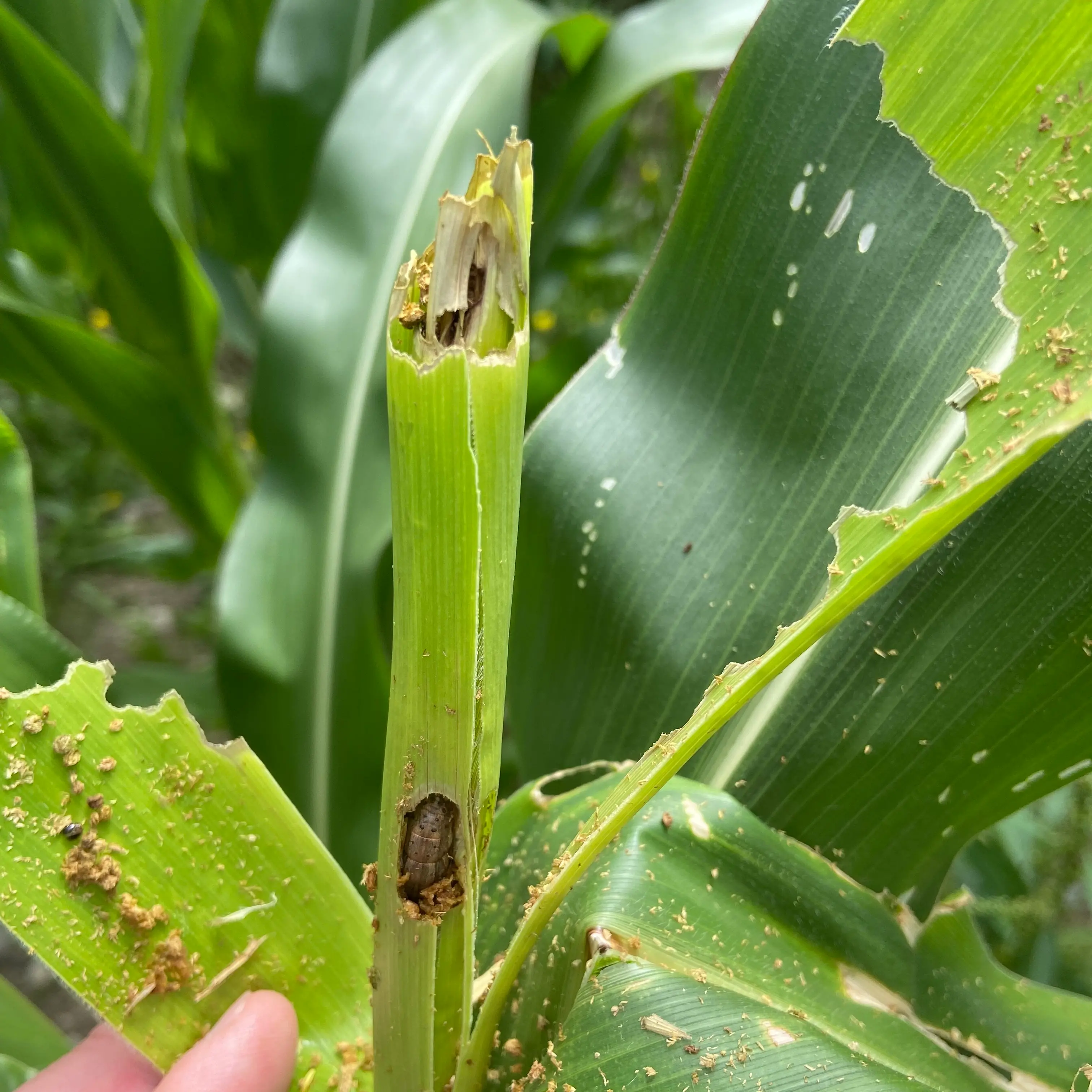
It is thought fall armyworm landed in New Zealand last February after being carried on storm fronts across the Tasman Sea.
Until last month, it had been contained to warmer Northland, Waikato, Bay of Plenty and Taranaki.
The discovery of insect infestations by authorities at three sites on the West Coast in the week ending January 13, however, added the South Island to the growing list.
Foundation for Arable Research (Far) business general manager Ivan Lawrie said the confirmed finding of fall armyworm in a maize paddock near Hokitika followed by other discoveries in the region suggested several maize crops were affected.
He said it was still too early to pin down the source of its arrival.
It was only a possibility it could have flown over from Australia, he said.
"We might not find how it got there. It’s very speculative and when something like this happens it’s very hard to tell if it’s a fly-in or whether we’ve had a slow generation tiding over winter from the previous year.
"We will know more as the season progresses."
Late-stage larvae found indicated they had been in the maize crops from an early stage.
A spell of fine weather on the West Coast would have supported its growth and growers have told Far that the region has frost-free pockets.
Mr Lawrie said the possibility it could have come from Australia again was supported by the pattern that it first arrived on the West Coast of the North Island.
Models indicated it was not expected to come this far south because of its preference for warmer areas, where it would more likely survive over winter.

He said the pest was likely to surface now in other parts of the South Island.
"I wouldn’t say it’s a foregone conclusion [it will come over the Southern Alps to Canterbury], but there is a high probability it will come that way or from the North Island in the east from several wind patterns."
Other pockets in the South Island could have unknown populations which survived over winter, he said.
The maize and sweetcorn industries are working with the government on the response to the pest.
Members of the Far seed and grain readiness and response team combined with Dr Scott Hardwick from AgResearch/B3 to assess crop damage and control at the Hokitika property.
Mr Lawrie said the grower and local representative deserved praise for swiftly reporting the find.
He said it was important for growers to walk through their crops and check them regularly as their control was easier and more effective if they were caught before the larvae moved into the plant whorl.
The larvae feed on more than 350 plant species and have a liking for maize and sweetcorn.
Fall armyworm is the name commonly attributed to the larval stage of the moth Spodoptera frugiperda, which can chew through crops, causing widespread damage. Its life cycle has an egg stage, up to six caterpillar (larval) stages, a pupal stage and an adult moth stage. Adult fall armyworm moths are strong flyers and will travel hundreds of kilometres on storm fronts.
The maize plants on the Hokitika farm are at the eight- to 10-leaf stage and the size of the large larvae suggested some had already dropped to begin pupation.
More than 25% of plants were affected at the whorl stage, so the grower’s decision to spray was the correct one, based on the threshold guide from international data.
The insecticide Sparta (spinetoram 120g/L) is now on label for use on fall armyworm in maize and sweetcorn crops for ground applications.
Mr Lawrie said the insecticide could be ground-sprayed only at this stage and authorities were aware that later crops might not be "doable" because of their height.
He said there were no negative consequences to growers reporting, as crops where the pest was confirmed would not be destroyed or put under controls.