
PHOTO
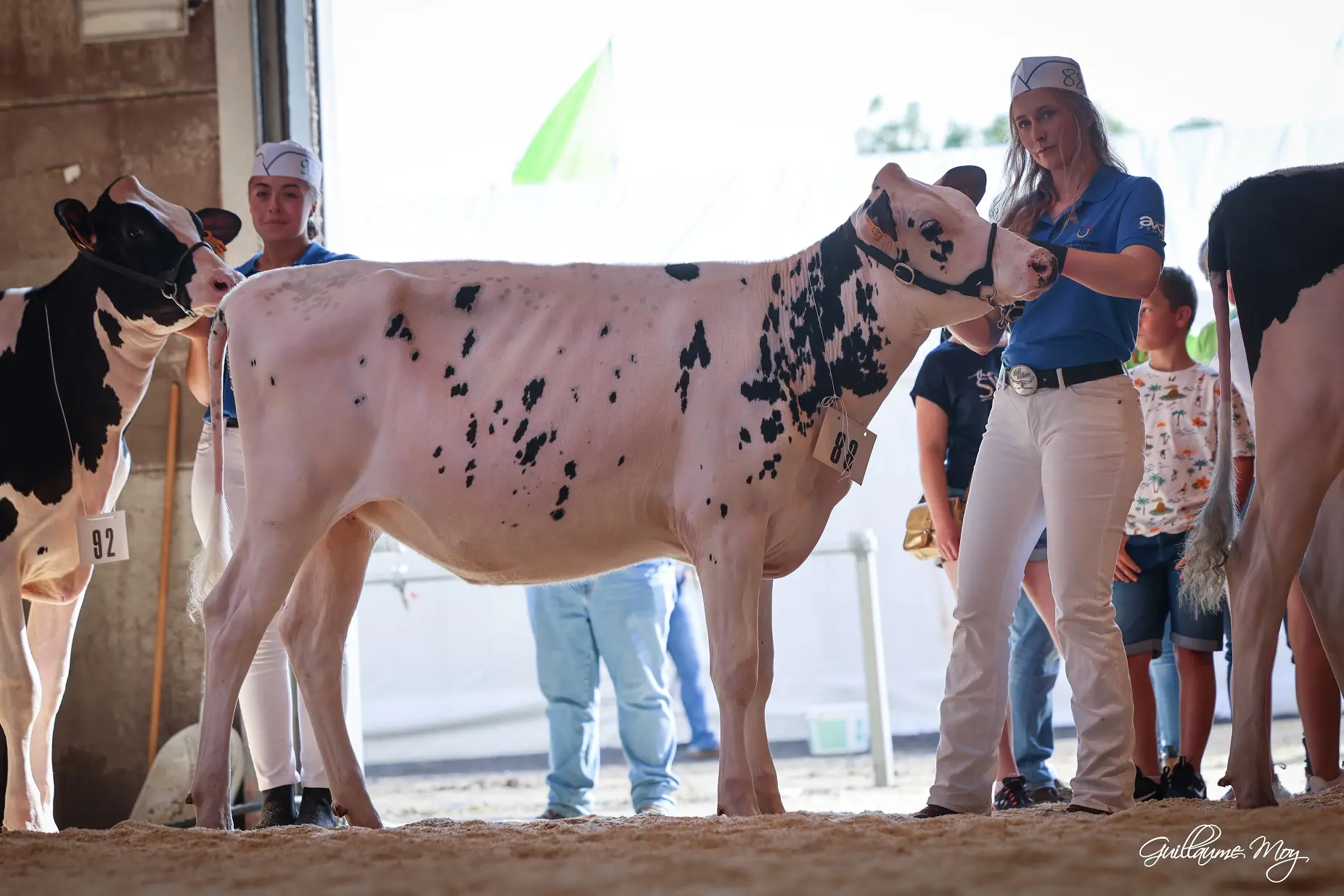
The 2024 European Young Breeders School was held in Belgium last month. Kate Cummings, of Dipton, was selected to represent New Zealand at the competition. The Ensign reporter Ben Andrews chatted to her about the experience and the different farming techniques employed by European farmers compared with those in Southland.
"An incredible experience", is how Kate Cummings summed up her time at the European Young Breeders School last month.
She competed in Belgium against nearly 200 young breeders from across the globe, placing third in the breeders class and sixth in the handlers class.
For five days, competitors took part in workshops and modules and familiarised themselves with their assigned heifer.

"It’s hard work and tough going but you love what you’re doing," she said.
At home, before showing an animal they would get months of training. In Belgium they had only a few days, she said.
Over the five days competitors spent the first three days in and out of learning modules.
The days included washing, bedding, feeding, clipping, braiding, marketing and showmanship, culminating in a show judged on the final day.
"We did a lot of learning there and then we spent a lot of time with our heifer, getting them ready for the show."
This time paid off, as she earned third in the breeders class and sixth in the handlers class for the 24-25 age grade.
The days were long, and often they would be at the camp from 4 in the morning till 10 or 11pm.
A couple of night shifts were involved also.
"You’re there 24 hours of a day with these heifers.
"We all enjoyed a good night’s sleep after all that."
Given the chance, she would do it all again, she said.
"It was a great five days. Great networking experience and learning."
If the chance arose to go back she would take it, she said.
"I was really proud to be a part of the New Zealand team ... I’d definitely want to go back and see it all happen again."
Travelling to Europe was not cheap and she wanted to thank everyone who had supported her to make the journey possible.
"Thank you to all the sponsors ... If it wasn’t for all the sponsorship we received, it wouldn’t be possible."
Farm difference striking
One thing Kate Cummings learned in Europe is that farming techniques are very different from those in Southland.
Ms Cummings is a part-time farmer.
After five days representing New Zealand at the European Young Breeders School in Belgium, she took the opportunity to do farm tours across the continent.
Visiting farms in Scotland, Denmark and the Netherlands, she outlined just how different many of their practices are.
She said the tours had been a great learning experience for her.
"I was expecting it but it still blows you away, how we’re all in the same industry but we do it so differently."
In Europe much of the farming was house-oriented and animals spent minimal time grazing pastures, she said.
In Scotland the rainfall and soil did not allow for cows to graze outside.
That was a huge difference, she said.
"Our soil type, our climate and our pasture we can grow allows for us to graze. A lot of their styles don’t allow for it."
Another difference she outlined was the difference in milk supply.
"Over here there’s only a few different milk companies we supply ... What they have is contracts with supermarkets or dairy brands."
The contracts often dictated how the farm was run, she said.
It outlined how much choice they had relative to New Zealand farms.
"It’s just so interesting how we can all be in the same industry but there’s so many different ways to do it."
Farming knowledge was her forte, and she had spent time on farms in Australia, up north and in Southland.
While she was travelling and touring people offered her work on the farms, she said.
"It was extremely tempting but I like my farm, my cows and my life in Southland too much."
She arrived back in New Zealand on September 25 and within a short time was back at her family’s farm in Wyndham, she said.
Her parents’ farm is home to 240 dairy cattle.