
PHOTO
It was about 2am on November 20, 2010.
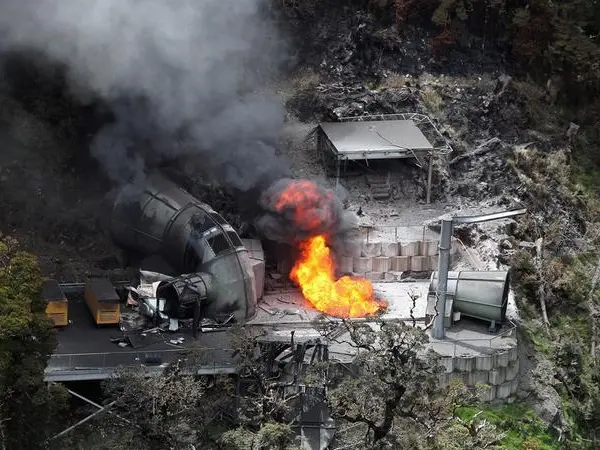
Just over 10 hours earlier, there had been an explosion 2.3km into the Pike River coal mine 45km north-east of Greymouth. Two miners got out at 5.51pm, but 29 others were unaccounted for. They would all perish.
Police were controlling the rescue operation and had given an order: No-one was to enter the mine due to the possible risk of another explosion or collapse.
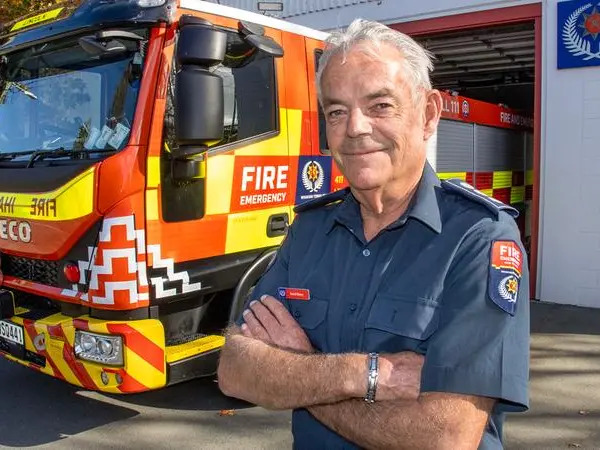
Berry, the Christchurch City Fire Station senior station officer had been helicoptered to the West Coast after the 3.44pm explosion to help manage the Fire Service response.
When specialised Delsar listening equipment arrived sometime after midnight, Berry, an urban search and rescue technician (USAR) and a fellow firefighter, made the decision to act, despite the police order, and enter the mine to install it.
The high-tech equipment is used to detect and locate trapped live victims.
It is designed to pick up any sound or vibration by transforming from what it is attached to pick up noises made by survivors.
Said Berry: “The Delsar stuff arrived, so we thought we might as well put it to use.
“They were letting nobody in, but we thought we had to get in there and see if there was any noise.”
The trio carried the equipment from the emergency services base to the entrance of the mine, which was in darkness.
Berry said they did not take breathing apparatus.
“It was a spur-of-the-moment thing.”
Berry and the USAR technician ran into the mine; how far, they were not sure but it could have been about 200m, carrying torches, spending no more than five minutes inside.
It was the furthest they felt safe going into the mine.
It was about 2km from where the explosion happened. They attached the listening equipment to a pipe that went deep into the mine.
“We just ran down there, put it on, and ran back.”
Where they went was still “reasonably intact.” The conveyor which carts material out of the mine was undamaged. There was no smell of gas.
But they were still very much in the unknown.
“It was a highly calculated risk. We had an escape plan, it was just to run like hell,” he said, if anything unexpected happened.
Listening device installed, they exited as quickly as they could, staying outside the mine entrance until sunrise to listen for any sign the 29 miners may have still been alive.
“We were looking for any sign of life, like tapping on a wall, but we could only hear the water running,” said Berry.
Four days later a second explosion ripped through the mine, with two further explosions in the following days, leading to the mine being sealed with a concrete wall 170m from the entrance.
USAR area commander Steve Barclay found out later on the morning of November 20 about the listening device mission. But he did not raise it with the trio.
“I’m not sure if the police or the mine company ever found out,” said Berry.
Placing the listening device inside the mine “reassured” them they had done what they could to locate the miners.
“It gave us that feeling of if we can’t hear anything, we have done our best to try and listen and see what’s happening.”
Berry was probably always destined to become part of the emergency services.
Sneaking into the back of his dad’s police car was an early sign he, too, would serve the community.
“I was either going to be a firefighter or a policeman,” Berry said.
Growing up in Burnham, from about age 12 he accompanied his father Alf – the settlement’s sole police officer – on ride-alongs. Alf initially used his own vehicle before being issued a Holden Kingswood patrol car.
On one occasion, while driving his personal car, Alf arrested an escaped prisoner.
“We were going along Main South Rd, and he was just walking along in a prisoner outfit, and dad jumped out and grabbed him.”
But the emergency services were not Berry’s first calling.
His first job out of school was a shop hand at Para Rubber in High St, where he moved up to become an assistant manager.
It was followed by a job in the hardware department of Farmers Trading Company, Riccarton, where he became the store’s assistant manager, and after that an assistant manager at its Colombo St store.
He was then transferred by FTC to its Matamata store to be the manager – at the age of 23.
It was there an opportunity arose to fulfil his boyhood dream for the emergency services.
The Matamata Volunteer Fire Brigade was looking for volunteers, so Berry signed up.
Six months later, he became a paid firefighter in Tauranga, leaving his retail career behind. Three years later, in 1988, he transferred to Christchurch City Fire Station.
He worked his way up the ladder to senior station officer in the mid 1990s. He was also a training officer and a key person in instructing crews how to use new command unit vehicles across New Zealand when they were introduced in 2010.
It was also the year Berry first took an interest in urban search and rescue, which at the time was still in its infancy in New Zealand, training as one of the first hazmat officers in the country for USAR.
A hazmat officer’s role is to assist with chemical incidents and provide specialist advice to responding crews.
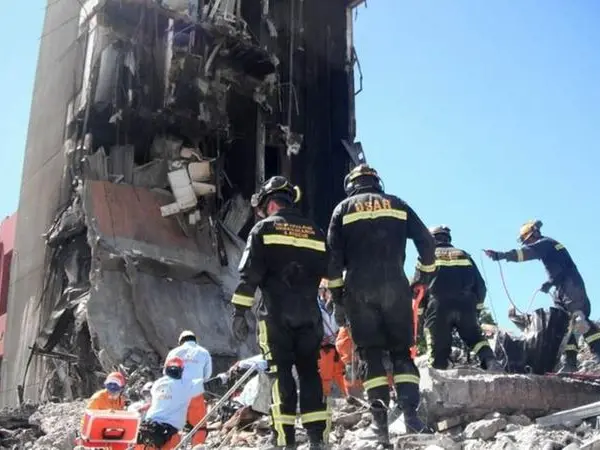
When the 2011 6.3 magnitude earthquake hit, Berry was at home in Prebbleton, where he then lived. He now lives in Lincoln.
He was deployed to the collapsed CTV building as a hazmat officer, but quickly deviated into a rescue role.
The building accounted for 115 of the 185 fatalities from the earthquake.
“The team I was in rescued about eight people,” he said.
Among those saved by Berry’s team was one of the last survivors pulled from the rubble, 19-year-old Kento Okuda, a student at King’s Education English language school.
To get access to Okuda, Berry and his team had to dig down through several metres of rubble and concrete.
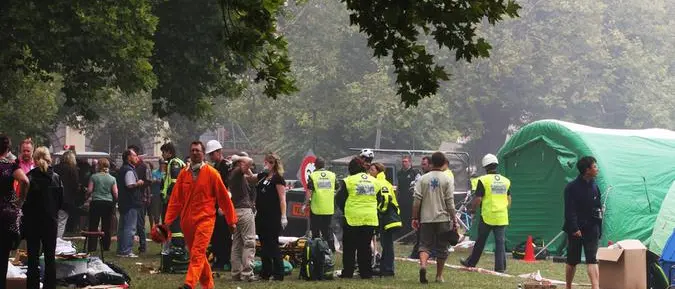
When they found Okuda sometime after midnight, he was pinned down by a concrete pillar.
“It was quite smoky, so we gave him an oxygen mask,” Berry said.
But Okuda initially tried to return it to rescuers, who were not wearing masks. They insisted he keep it.
To free him, his right leg had to be amputated – a decision Berry, another firefighter and a paramedic had no choice but to make.
“The leg was not going to be saved, and it was the only way we could do it.”
Surgeons were brought in to carry out the amputation.
Berry stayed at the CTV building until the early hours of the morning before being relieved by another crew.
He spent about 20 more days running USAR’s base in Latimer Square as a tasking officer.
“My role was to delegate jobs to each of them and make sure it was all completed.”
The following month, Berry was part of a USAR team called to Fukushima in Japan to help with the aftermath of the 9.1 earthquake and tsunami, estimated to have killed 29,000 people.
The team was part of the global response to the disaster.
He again served as a hazmat officer, monitoring radiation levels and assisting with decontamination efforts after the Fukushima Daiichi Nuclear Power Plant meltdown.
“We had to do radiation checks all the time. We did do some decontamination of people who were caught in it.”
Berry and his team were camped out in a baseball stadium about 40km up the coast from the plant.
“It was an eye-opener with the amount of destruction.”
He was amazed at the resilience of the Japanese people, recalling seeing them sitting around playing cards amongst the rubble.
For Berry, while the big fires and disasters “take the glory,” it is the personal calls which are the toughest.
“I’ve gone to three medical incidents where colleagues have passed away, so they’re pretty tough.”
Berry became Canterbury area commander in 2012. Since 2017, he has been responsible for Selwyn, supporting 13 volunteer brigades and acting as incident commander on larger callouts.
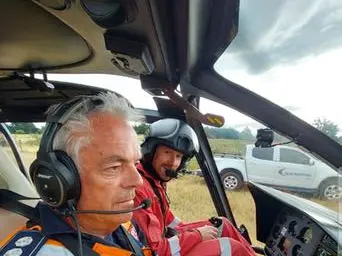
His retirement follows a prostate cancer diagnosis in 2024.
The cancer was caught early, and he has undergone surgery and radiation treatment.
“We’ve come through all that and got the clearance, and basically just on the monitoring stage now,” he said.
The cancer caught him “by surprise”.
“I just started losing a wee bit of weight and just did some tests and found it,” he said.
Specialists linked the cancer to carcinogenic substances like toxic gases, liquids, and particles he was exposed to as a firefighter.
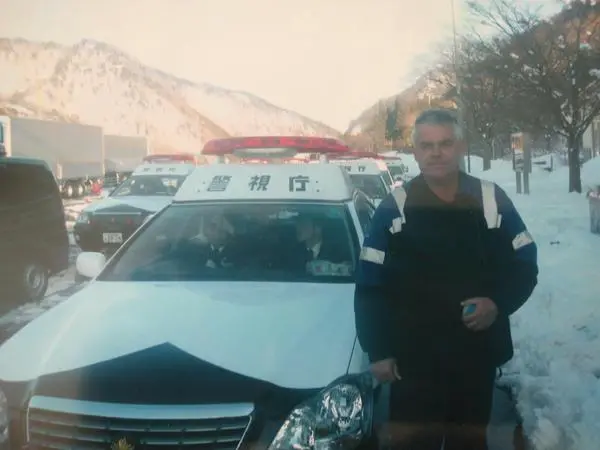
Berry says working on the Fukushima and Christchurch earthquakes could have been a factor and in the early days of his firefighting career the safety equipment was not like it is today.
Retirement will bring more golf and trips to Australia to watch three racehorses he owns as part of a syndicate.
It will also allow Berry and his partner, Sharron Comber, to spend more time with their four grandchildren.
Asked to reflect on his 40 year career in the fire service, Berry is typically understated.
“It has been one full of adventure and good friendships.”
And, he adds, he “would do it all again”.