
PHOTO

Daniel Alvey looks at how the infrastructure, businesses and schools will cope with the growing number of people moving to Darfield
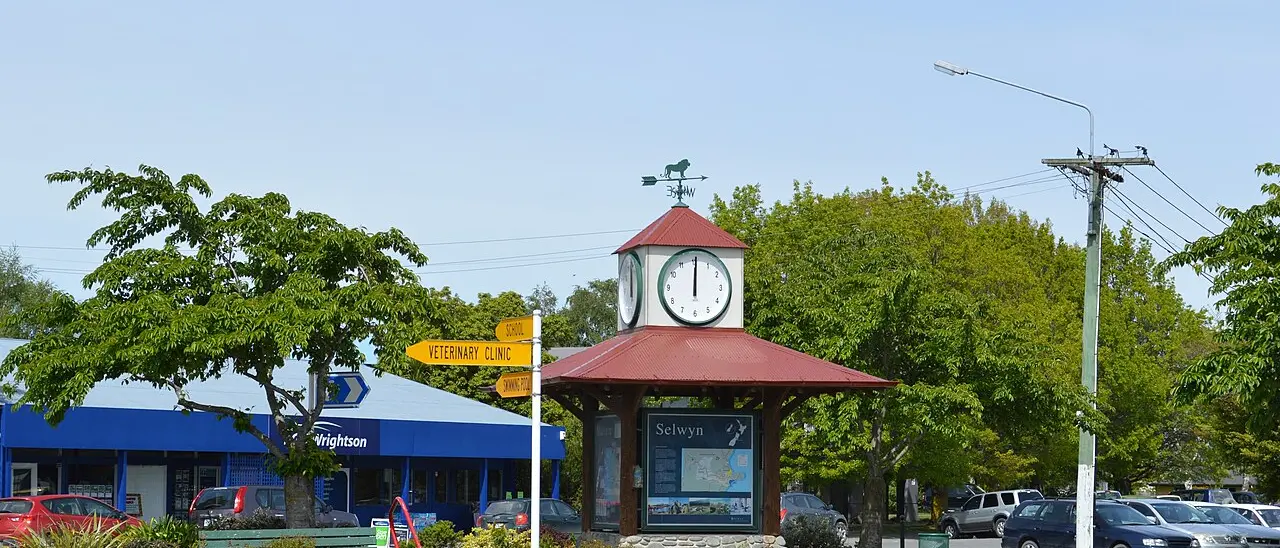
As the saying goes, ‘west is best’ - and that seems to be the case for Darfield where the accelerator is about to be pushed on the township’s growth.
One of the biggest indications it is about to speed up is the fast-track application from Hughes Developments for an 800-home subdivision called Bangor Village.
Drawn by the quiet streets, small‑town charm and property prices that get you serious bang for your bucks, the Spicer family are among the growing number of people moving to the township.
Jess and Jarrod shifted from Te Awamutu to the township with their two children Harry, 5, and Harper, 3, six months ago.
Jess, who is originally from Christchurch, said they wanted to move back to Canterbury to be closer to their family.
“We had been looking at it for some time, and we just had to wait for the right job opportunities,” she said.
Jess, who works in occupational health, and Jarrod, a professional firefighter, were both able to get transfers to Christchurch.
The couple looked at a range of areas in the city, Oxford, Rangiora, Lincoln and Rolleston, but in the end chose Darfield.
"We really liked the appeal of being somewhere a lot quieter,” Jess said. Like others, they are concerned about the pace the township is growing at and whether infrastructure and key services can keep up.
The township has a population of about 3600 but it could grow to about 9500 in the next 10-15 years, with 2000 new homes planned across several subdivisions.
The family is yet to find a local GP as the Darfield Medical Centre is not taking new patients.
Said Jess: “That’s one thing that still is quite hard. We are still not enrolled in a GP. Especially with young kids, that has been quite tricky.”
The family timed their move for Harry to start school.
“That was the big push for us. If we are going to do it, we've got to do it before school starts.”
A big reason for choosing Darfield was getting value for money when it came to a new home. The couple sold their 1950s house in Te Awamutu for just under what they bought their near-new Darfield home for.
“We just couldn't get over it. In Darfield, the bang for your buck was just crazy,” said Jess.
“We're probably hypocrites in that we have moved, and we don't want it to grow anymore. We fully appreciate we are the people moving that are causing the growth.
“We love the fact we can take the kids for a bike ride, and the streets are quiet. We love the fact that there is no McDonald’s or anything like that, and the supermarket closes at 7pm.”
Darfield’s population boom: Can it keep up?
Construction analyst Mike Blackburn said Darfield’s population could increase by about 6000 from its current 3600, with about 2000 new homes planned across multiple subdivisions.
The latest data from Infometrics shows the township’s population has been growing by about 100 people a year, but the new homes being built could cause it to increase by about 500 a year.
Darfield looks set to follow a similar trend to Lincoln. Over the past decade, Lincoln has been growing by about 700 people a year. But prior to 2015, it was increasing by about 100 a year.
At large councillor Tracey Macleod said there is a risk Darfield will not keep up with the rise in population, as happened in Lincoln.
“I have major concerns that Darfield is going the way of Lincoln,” she said.
Macleod and fellow councillors Denise Carrick and Aaron McGlinchy ran a community advocacy group, Lincoln Voice, before they were elected to the council. It aimed to fight the 2100-lot Earlsbrook subdivision in Lincoln, but was ultimately unsuccessful in stopping it.
"What we’ve seen in Lincoln is that it becomes more of an urban feel, rather than a small town feel, and with that comes a disconnect,” said Macleod.
Malvern Ward councillor John Verry is concerned Bangor Village’s fast-track application, which bypasses the council, and other planned residential subdivisions could see the township become fragmented.
Verry was unsure if Darfield would turn out like Lincoln.
Mayor Lydia Gliddon said the level of housing density being proposed for the township “is a real step change”.
“And I do think it’s pushing beyond what fits comfortably with Darfield’s rural village feel.
“For me, it’s not about whether Darfield changes, it will, but it’s about how it changes. Growth can work, but it needs to be in scale with the town and supported properly. If we get that wrong, we risk losing what makes Darfield special.”
But Gliddon said there “is a genuine need for more housing across Selwyn”, so to see this kind of development in Darfield was not unexpected.
“Darfield is a place I know really well. I grew up there, went to the high school, and later ran a local business, so I understand why people care so strongly about its character and rural amenity.”
Gliddon said her focus is on ensuring infrastructure improvements are being made to cater for the growing population.
“That means making sure development is supported by roads, water and wastewater, community facilities, central government services like health and education and that Darfield’s town centre continues to function well. It also means being up-front with the community about what growth could look like and when. People need to feel informed and part of the conversation.”
Gliddon also has concerns with the fast-track process, saying “communities and councils have less influence over how that growth is shaped”.
“We understand the need for housing, but the scale and level of density proposed here is a significant change for Darfield, and it’s important that’s very carefully considered,” she said.
“We’ve been engaging in the process to make sure Malvern’s voice is heard. If developments of this scale are going to proceed, it is crucial that there is the right investment alongside them in roads, schools, healthcare and community infrastructure. Growth works best when local communities are part of shaping it.”
Real estate agent Chris Jones said the cost of land is driving the population increase. In Darfield, a 1000sq m section may sell for about $290,000, while a 500sq m section in Rolleston would go for about $330,000, and a 400sq m parcel of land in Lincoln about $350,000.
"People look for value, local community, they look for local rural village feel. It’s easy to build, it’s bulletproof dirt," Jones said.
"People like heading west, closer to the rivers and the mountains.”
But with rapid expansion there is often growing pain. Among them are concerns the rural village feeling may be lost and infrastructure may not be able to keep up.

Another big issue for residents is whether the key services like health and education can cope with more people.
Darfield Residents Association chair Harvey Polglase said the population increase would stretch the healthcare system.
"We’ve got a good medical centre there, but it’s not keeping up with the existing population, let alone all the new residents,” he said.
Darfield’s population has fewer people aged between 25 and 35 than the rest of the district and more people over 65.
“It’s all very well to let the place grow, but you've got to have the facilities otherwise you are disadvantaging all the people here,” Polglase said.
The medical centre is owned by Green Cross Health. Its senior regional business manager for the South Island, Siobhan Kay, said the practice has 7084 patients enrolled and a waiting list of 190.
“As patients transfer out, individuals from the wait list are contacted and invited to enrol,” Kay said.
Green Cross Health also operates the West Melton Medical Centre, which also has a waiting list.
“This shared workforce model allows resources to be flexibly allocated between the two communities, rather than expanding capacity solely within Darfield.
“Based on the current operating model, any future increases in capacity would more likely involve expanding the existing practice.”
A supermarket is also planned for either Bangor Village or the Darfield Estates subdivision on the south side of the township, but the operator has not yet been confirmed.
Currently, there is only a Four Square in the township.
But despite concerns about the growing population, some business owners see it as an opportunity.
Said Darfield Bakery owner Nicole Lang: “There are bonuses for things like employment with people who want to base themselves locally.”
On the other hand, Lang felt it would be “really sad” if it caused Darfield to no longer feel like a rural community.
She said a collaborative approach between the council, residents and developers is needed to ensure the country feeling is retained.
She also felt positive about the possibility of getting a new supermarket.
“The supermarket will provide options for people and create less reliance on us travelling to Christchurch or Rolleston.”
Dalethorpe House café owner Rachel Ferguson said the township’s growth is good for businesses and a new supermarket would be “fantastic”.
Darfield Village Meats owner Blair Wards has not yet noticed a lift in customers due to the rising population.
If a supermarket is built, he would expect people to stay loyal to the existing businesses.
When it comes to education, the township has one primary school and a high school which also includes year 7 and 8 pupils.
The Hughes Developments application has space for another possible school in Bangor Village if the fast-track application is approved.
One of the biggest challenges for Darfield High and Darfield Primary School is not being able to predict what their roll growth will be in the future.
Darfield High principal Andy England said it is at capacity with about 840 students enrolled.
He said planning for the growth will be a challenge until people buy the sections, as he does not know how many children they may have.
“We are keeping an eye on things with regard to timing, and we have also started some work with the Ministry of Education on a longer-term property planning process.
"We are not panicking, but we are aware we need to be building new spaces in the next couple of years.”
England said while the school is at capacity, it will still accept new students from families living within the school zone.
Primary School principal Meredith Devonald did not have an opinion on whether Darfield needs a another school.
“I know the ministry network team is carefully monitoring the situation and, if two (primary) schools are required, I believe the ministry will recognise that.”
The school has a roll of almost 300 and received two new classrooms last year to cater for the growth.
Ministry director of education for Canterbury, Coralanne Child, said it is monitoring the township’s growth.
“At this stage, there are no further expansion projects approved for either school. However, if and when it is required, we would seek funding for additional teaching space through future budget processes.”
Farmland should not become homes
For long-term resident Matt Williams, the level of growth has him worried Darfield could lose its village feel.
"I don't believe there is a plan to allow growth and maintain an aesthetic and functional town,” he said.
The 70-year-old grew up in Darfield, leaving when he was 20 for Southland to continue his career as an electrical engineer.
His family connection to the township dates back to the 1920s when his grandfather, Ronald, moved there after World War 1.
He returned about 15 years ago with his wife Anne after their home in Hornby was damaged in the 2011 earthquake. At the time, he was working at Christchurch Airport.
Williams said he is concerned by the amount of farmland being turned into housing.
“My primary concern is that good arable land is being turned into concrete.”
Williams has become known in Darfield as a collector of historical items from the township and surrounding areas. The hobby started with his dad, Russell, who was the township's electrical engineer.
“It started off as one shelf, and now it’s the whole shed.”
Williams helps keep the historic Darfield Jail open so people can check out the township’s history. Williams welcomed the growth, but not the speed at which it appears to be happening.
"There are good things that come with population growth, but if it happens too fast, it’s hard to keep up.”
Where the homes will be built
- Buttle (Kimberly Rd) 200 homes.
- Frew (Greendale Rd) 450 homes.
- Darfield Estates and Gilander 450 homes and a planned supermarket.
- Bangor Village (Bangor Rd) 800 homes, a possible supermarket, and a school.
- Kersey Park (Creyke Rd) 140 homes.
- Ryelands (Kimberly Rd) 120 homes.
- Torlesse Estate (Creyke Rd) 140 homes.
Darfield ethnicity
As of the 2023 Census, Darfield’s population was made up of people who identified as European (93.8%), while 7.6% identified as Māori.