
PHOTO
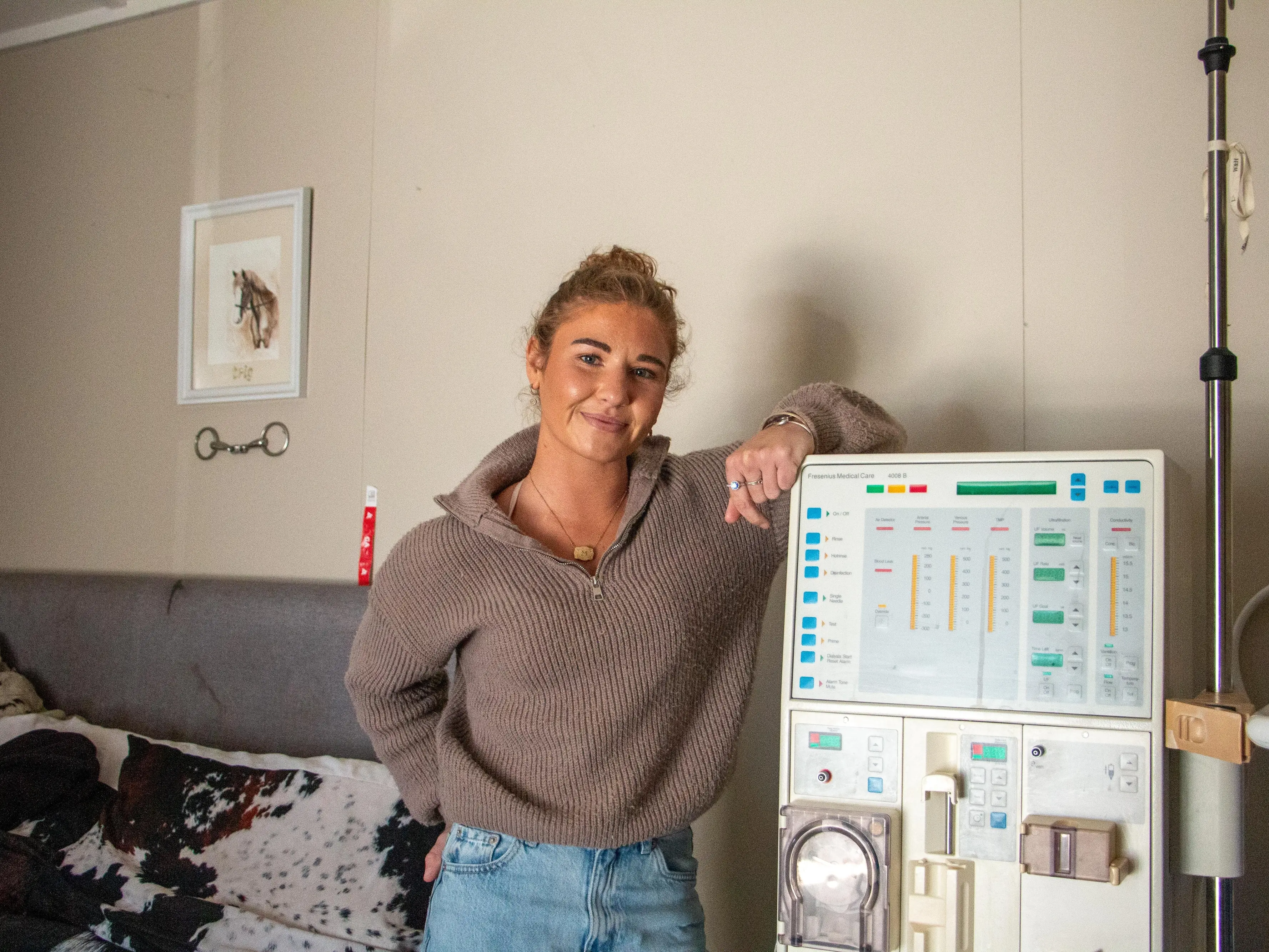
After an 18-year battle with kidney disease, a miracle treatment may provide Maddie Collins with a normal life.
Collins’ body has rejected two donated kidneys. She has been receiving haemodialysis, which filters waste and excess fluid from her blood, since 2020, and has been regularly in and out of hospital after being diagnosed with nephrotic syndrome in 2008.
The 22-year-old who live in West Melton now has the opportunity to become the first international patient to access a “life-changing” treatment in the United States.
The dual immune solid organ transplant (DISOT) being offered at Stanford Medicine in San Francisco involves transplanting a donor’s stem cells into Collins then a kidney transplant five to 10 months later.
The treatment would give her new kidney a high chance of being accepted by her body because the stem cells match it. To date, the treatment has a 100% success rate.
“It’s kind of surreal because I always thought that I was different from everyone else and there was never going to be a full cure,” Collins said.
Her 28-year-old sister, Georgia, is set to donate her stem cells and a kidney.
Said Georgia: “There wasn't any hesitation, I just said I'll do it. I've got two kidneys and have one spare,” she said.
Collins will have to cross some major hurdles to get to the United States, and her family does not want to get too excited yet.
The biggest challenge will be getting funding, with Stanford requiring the New Zealand Government to underwrite the treatment.
Collins’ mother Sarah Manson said the cost is unknown because of the treatment’s complexity, with the price varying from patient to patient.
“There is no denying it is not going to be cheap,” Manson said.
“It just makes sense for the Government to underwrite it and save our health budget hundreds of thousands of dollars. Having a person off dialysis frees up a machine for another person.”
Manson has been unable to work and is Collins’ full-time carer.
“(The treatment) allows Maddie to have a life. It allows me to go back to work and contribute to society.”
Manson is working on an application to get funding for part of the DISOT from the high-cost treatment pool (HCTP). The pool is for patients who require high-cost procedures that are not provided by New Zealand’s public health system.
Manson said unknown cost of the treatment is one of the difficulties in accessing funding from the HCTP.
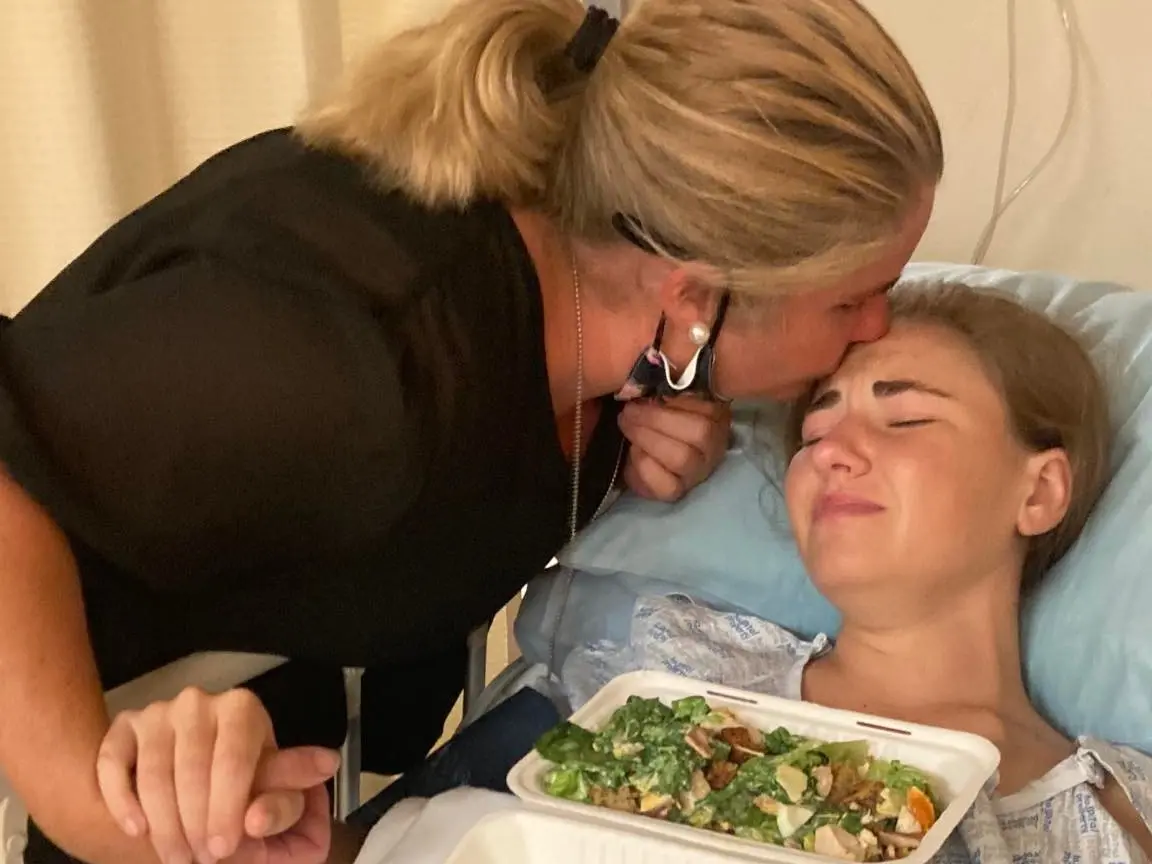
Manson was able to pitch Collins’ case to Health Minister Simeon Brown when he was in the Selwyn District for a public meeting earlier this month.
Since the meeting, Mason has been working with Brown’s office to ensure they meet the criteria for HCTP. Another challenge is Collins does not have a consistent nephrologist, which is another requirement for the HCTP funding.
If the funding is approved, the next hurdle is ensuring Georgia is match and her kidney and stem cells will work. To do so, she will have to undergo tests in the United States, which are not offered in New Zealand.
Only after all that is complete can the transplant happen.
After Collins was diagnosed with kidney disease in 2008, she did not respond to the typical treatment. Her kidneys had to be removed so she could get new ones.
She got her first transplanted kidney in 2012 from her father Adam, but her body rejected it.
It also rejected a “miracle” kidney she was given in 2018. She was left her with no kidneys after it was removed in 2020. Collins underwent the initial operation at Starship Children's Hospital, but after the six-hour surgery, she was rushed back in, when doctors found a kink in her artery that was restricting blood flow.
Since December, Collins has also been battling low blood pressure, severe migraines and chronic anaemia, resulting in several trips to hospital in an ambulance. When she can, Collins rides her horses around the family’s West Melton property. But she pays a price for it as it takes her a long time to build her energy back up, meaning a busy day can take about four days to recover from.
Manson found out about the latest DISOT treatment while at a medical conference in the US.
“If I had not gone to any of these conferences, I wouldn't have known about it,” she said.
Manson said the family has spoken with the first person to receive the treatment, who told them they have been able to travel and study with almost no need for regular medical appointments.
Manson is also raising money for Collins’ fertility preservation, which they have been told will cost $15,675 which includes storing her eggs for five years. The preservation will allow Collins to have kids after the transplant.
Georgia is studying nursing at the Ara Institute of Canterbury. She choose the profession as a result of Collins’ journey through the health system.
“When we were in paediatrics for ages, I just saw how the nurses were just so nice and always loved working around kids,” Georgia said
The nursing training means Georgia can help their mum look after her sister.
Collins said she has been thinking about what life might be like without being hampered by her condition.
“I've been restricted since I was five in this medical cage. When you grow up with it, it is a lot easier to deal with mentally,” she said.
Planning for a future family
Maddie Collins is also on a journey to hold onto her dream of having children one day.
Before the transplant, Collins wants to get her eggs frozen.
“100% I want kids, absolutely love them,” she said.
To pay for the fertility treatment, the family needs to raise $15,675.
“It’s just a precautionary thing, just to make sure all the treatments don’t damage it.”
One of the challenges is the lack of data on people Collins’ age freezing their eggs.
Said Sarah Manson: “The specialists discussed with us that there is currently no data available for young people on dialysis in relation to fertility. Most fertility data starts at age 25, and Maddie is only 22.
“Maddie’s blood results showed no immediate concerns regarding fertility.
“However, these bloods don't indicate egg quality. But they agreed that what we are doing is so important and a very good choice.”