
PHOTO
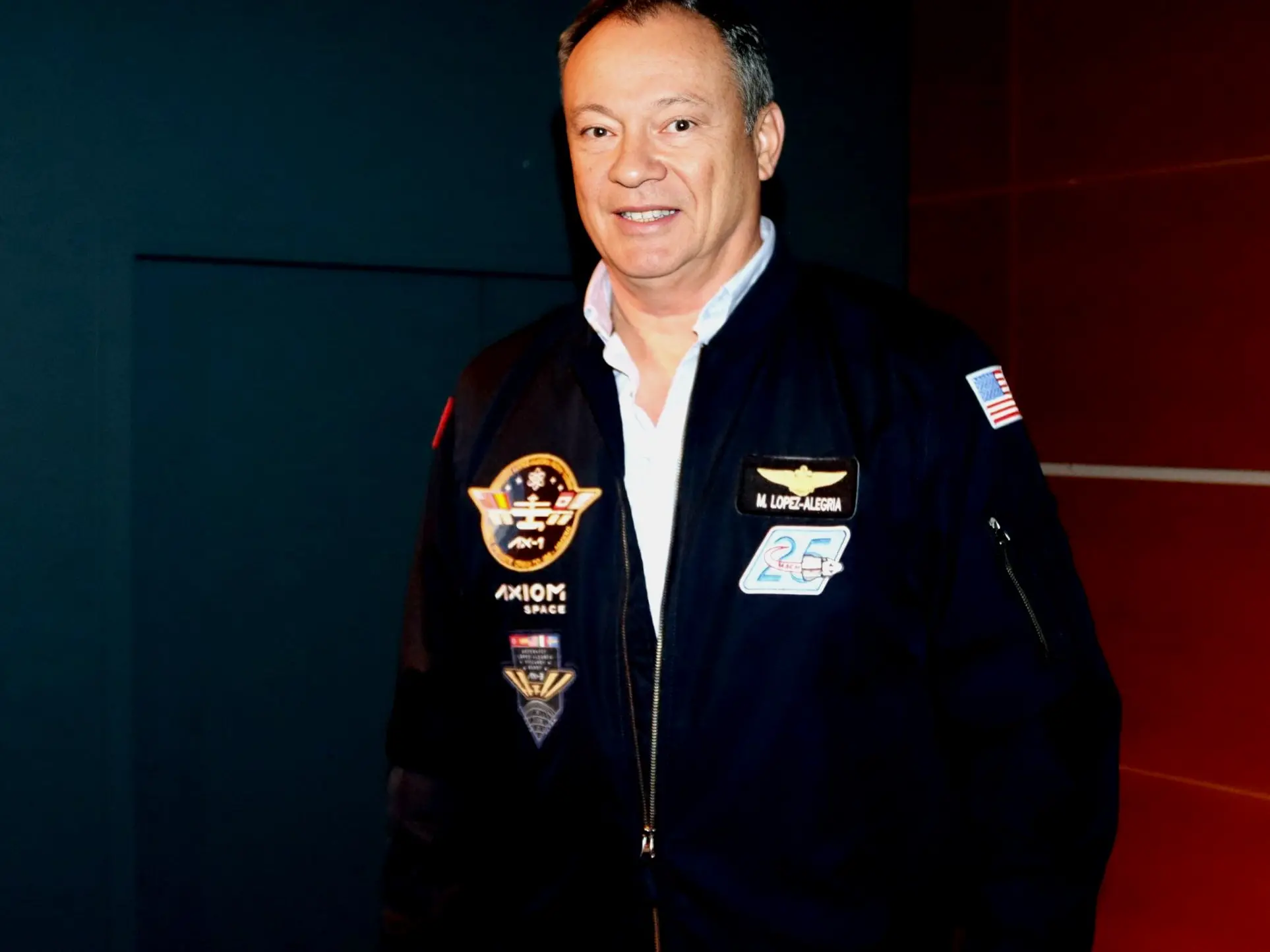
The future of space exploration and commercial spaceflight were discussed at a recent event at Tūhura Otago Museum.
Astronaut Michael Lopez-Alegria outlined his career and described innovations coming to low Earth orbit.
He has completed six space missions and holds the record for most extravehicular activities (10 spacewalks) and the longest cumulative time (67 hours 40 minutes).
As chief astronaut at Axiom Space, Mr Lopez-Alegria commanded the first private astronaut mission to the International Space Station (ISS) in 2022.
He most recently returned to space as commander of the company’s third mission last year.
A key focus for Axiom Space was developing a commercial replacement for the ISS, which is due to be retired about 2030.
The company is developing a series of modules that can be combined to form a new space station.
These include a payload, power and thermal module, a habitat module for crew quarters, an airlock module for spacewalks and a research and manufacturing module.
The plan is to start with the payload, power and thermal module, which can attach to the ISS and allow equipment to be transferred before the ISS is decommissioned.
As other modules were added, it would become a new "small but completely functional" space station.
"Then the ISS will begin its slow deorbit process over time.
"And in the meantime, we will continue to add an airlock, a second airlock and we will open up the research and manufacturing facility," Mr Lopez-Alegria said.
The new station will not only continue the science conducted on the ISS but also expand into new commercial projects, some not yet known.
"Just like in the 1990s when they developed this thing called the internet, nobody knew that you could take your phone and order a pizza or make a bank transaction or find a dog-sitter."
Bioprinting, pharmaceuticals, fibre-optic production, semiconductor crystallography and metallurgy were among the operations that could be performed in space.
The new space station could continue to add modules over time.
"I imagine there are some structural limits but we certainly think that we could make the Axiom station as big as we want," he said.
Mr Lopez-Alegria’s visit was made possible with the assistance of the Embassy of the United States in Wellington.