
PHOTO
Hundreds of thousands of New Zealanders are unknowingly living with a silent killer.
High blood pressure, also known as hypertension, is the single biggest risk factor behind heart disease, which is the leading cause of death in the country.
The condition contributes to nearly half of all cardiovascular deaths, meaning about 4000 lives are lost each year.
Heart Foundation medical director Dr Gerry Devlin said one in three adults over 30 had the condition, yet only 25% had it under control.
“High blood pressure damages your arteries and can lead to heart attack and stroke,” Dr Devlin said.
“It rarely has symptoms, which is why so many people don’t realise they have it.”
There are about 350,000 people living with the undiagnosed condition, but managing it can dramatically reduce the risk of a medical emergency and protect cardiovascular health.
“For every 10-point drop in your systolic blood pressure, you reduce your risk of a heart event by 20%.
“Managing blood pressure is one of the most powerful things you can do for your health.”
Taking practical steps such as exercising more, eating healthier, reducing salt intake, improving sleep, reducing stress and reducing alcohol all have a positive effect on maintaining a healthy heart for the future.
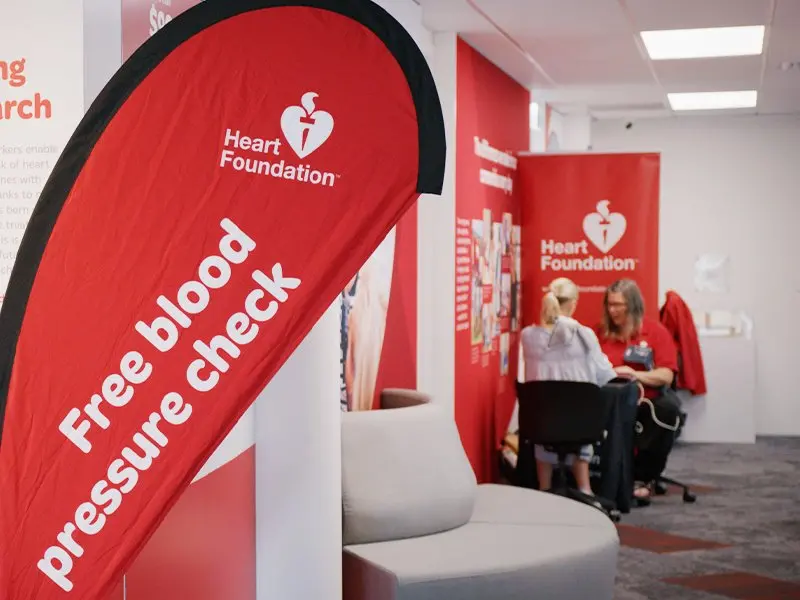
The foundation is running a nationwide awareness campaign during May to encourage people to get their numbers checked.
Blood pressure measurement is given in two numbers, for example 120/80, said as ‘120 over 80’. The top number is the pressure in blood vessels when your heart pumps, which is systolic pressure.
The bottom number is when the heart relaxes, called diastolic pressure. An ideal blood pressure is 120/80, although this may vary depending on individual circumstances.
Blood pressure checks can be done by a range of health professionals at general practices and pharmacies, or by using a home monitor.
Dr Devlin said when looking for a home blood pressure monitor, choose a monitor that has an upper arm cuff.
The reading will be most accurate if the cuff is at the same level as your heart. The cuff should fit snugly around your upper arm, with enough space to slide two fingertips underneath.
In terms of blood pressure readings, if people had borderline or diagnosed high blood pressure, they should monitor it daily in the morning and in the evening or weekly until was under control, then ideally once to twice every month.
It was normal for your blood pressure to fluctuate during the day depending on things like activity level, stress level and different body positions.
While wearable monitors, such as watches, were becoming increasingly accurate and could be a useful indicator of blood pressure, there was no convincing evidence that any cuffless blood pressure technology had adequate accuracy as required for clinical use, and so they were not currently, widely recommended, Dr Devlin said.
As part of a nationwide campaign, free public checks are being offered at pop-up events in Dunedin between, May 16 and May 28.
People could find further information regarding managing and monitoring blood pressure by visiting heartfoundation.org.nz
Blood pressure pop-ups
Saturday, May 16
Otago Museum
419 Great King St
11am to 3pm
Sunday, May 17
Golden Centre Mall Dunedin
251 George St
10am to 3pm
Tuesday, May 19
New World Mosgiel
10 Hartstonge Ave, Mosgiel
10am to 2pm
Thursday, May 21
Centre City Mall Dunedin
133 Great King St
10.30am to 2.30pm
Thursday, May 28
South Dunedin Library
148 King Edward St
10.30am to 2.30pm