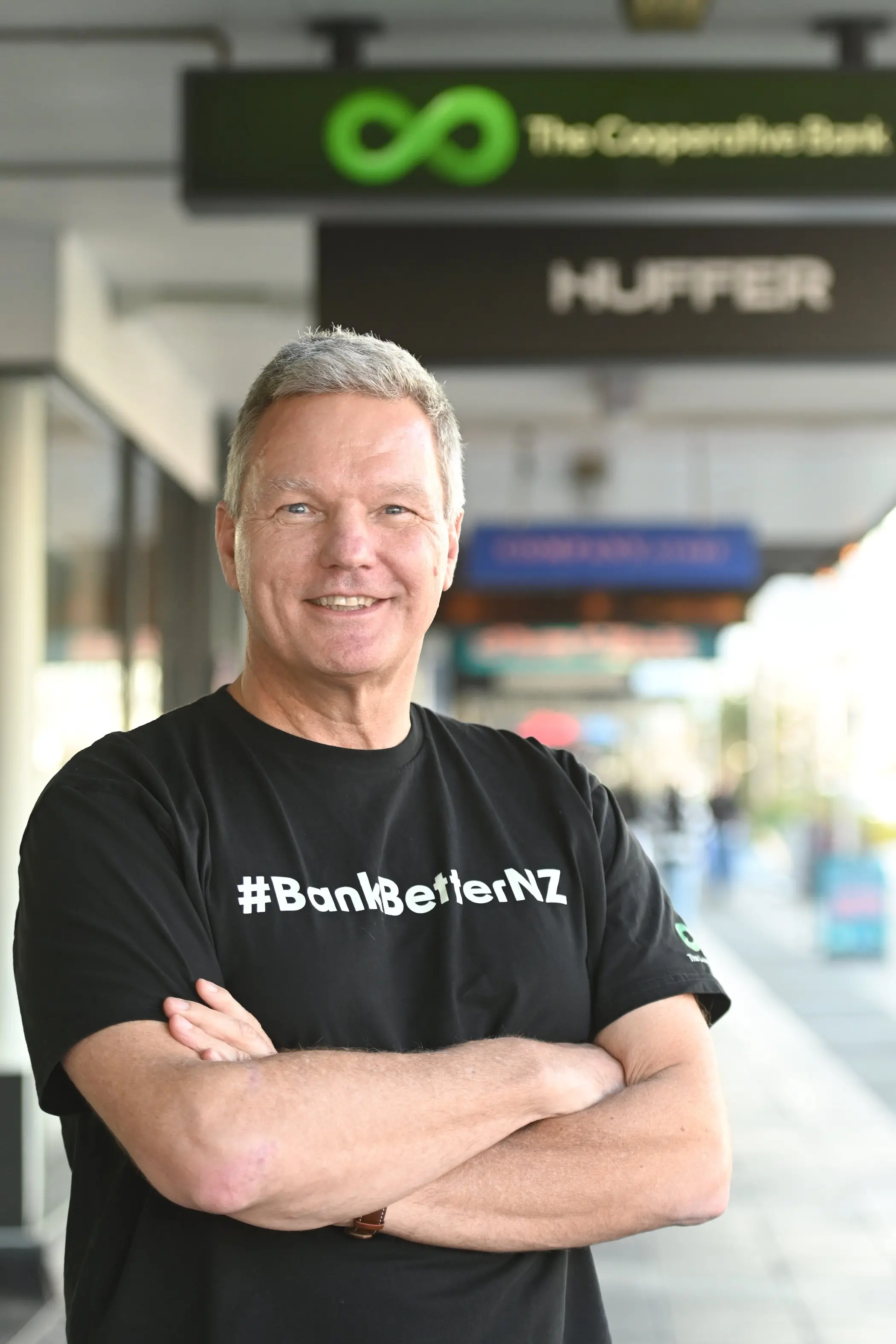
The chief executive of a small New Zealand bank taking on large Australian competitors says it wants to nearly double its share of the market in Dunedin. The Co-operative Bank chief executive Mark Wilkshire said in a market “dominated” by big Australian-owned banks, “we have to fight for our share and you’ve got to pick those areas where you think you can win”. The customer-owned bank was seeing growth in Dunedin among first-home buyer and youth demographics. It was also attracting depositors who liked the idea of having their money go to a New Zealand-based entity. “Those are the three areas that we’re really looking for more growth in,” Mr Wilkshire said. “Dunedin’s got a bit of all of those segments in it, so we see it as a key location for us in the South Island.” The Co-operative Bank had about 6000 customers in Dunedin alone, and it was feasible to grow that share to 10,000, he said. People were careful and lending was very sound in the South Island. “People pay you back in the South Island. “Otago and Southland are particularly strong in having very low arrears — it’s a strength of this part of the world. “The handshake in Dunedin and Southland — I think it’s always been a strong part of the culture.” Mr Wilkshire was in Dunedin yesterday as part of his visits to different branches nationwide. He said he was very fond of Dunedin; he studied at the University of Otago in the 1980s and returned later in life to work at the Bank of New Zealand (BNZ). The Co-operative Bank employed 420 people in total, 8 in Dunedin, and had about 180,000 customers nationwide. It had chosen not to be in business banking — it was a purely retail bank — and was interested in forming long-term relationships with customers. “That might mean letting something go if someone’s prepared to do something silly, or undercut at a level which isn’t sustainable,” Mr Wilkshire said. “We’re not going to chase every single customer — we’ll make sure we look after customers and get the right kind of customers that are looking for a good value exchange over the long term.” Whereas the larger banks tended to hone in on particular markets in cycles, The Co-operative Bank encouraged customers to pick a bank based on pricing and conduct over a longer period, he said. It planned to grow its share of the market in Dunedin by excelling in customer service and backing it up with strong digital capabilities. Mr Wilkshire believed the values held by The Co-operative Bank would resonate with customers in Otago and Southland. Having a bank that customers could rely on long-term was increasingly important when times were tough. “I think the South Island’s doing well. “It’s got strong fundamentals and I think it could be much more part of our future … we should be able to actually grow disproportionately more in this part of the world.” tim.scott@odt.co.nz