



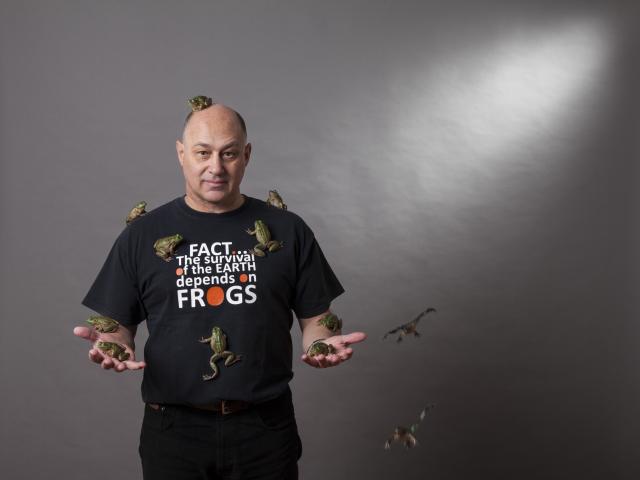
Phil said “People often ask me ‘Why frogs?’ and this has been an extremely difficult question for me to answer. I have been passionate about amphibians for as long as I can remember, I don’t know why, I just simply love amphibians, especially toads! When I look back at my childhood over half a century ago, I remember finding my first amphibian, it was a beautiful female brick red Common Toad. I was four or five years old at the time, and she just sat patiently, filling up my small hand, smiling at me – from that time I was hooked!”
Frogs have a permeable skin – they actually breathe and drink through their skin - so they easily absorb toxic chemicals. They are very sensitive to environmental changes and vulnerable to climate change, so they are messengers for humans, telling us when things are going wrong.
They’ve been around for roughly 250 million years but now they are seriously under threat worldwide. This was Phil’s message. Look at what’s happening to amphibians, they’re the canary in the coalmine.
“We must do everything in our power to save amphibians, we should be working hard to protect them – like our lives depend on them, because it does.”
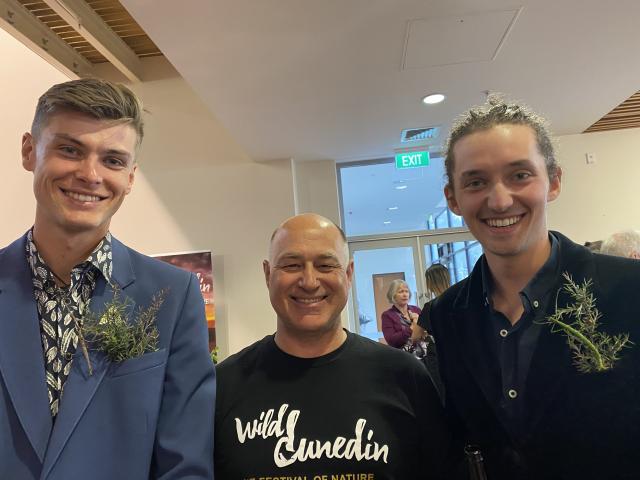
Phil worked in the Zoology Department at Otago University and inspired generations of students with his approach to fieldwork, high academic standards, humour and fine communication skills.
He was a Trustee of the NZ Festival of Nature/Wild Dunedin. His knowledge, enthusiasm and passion for nature were a driving force behind the annual Festival. Only after Phil’s passing did we realise how important and influential he was on the world stage.
With our annual Festival, celebrating Dunedin’s wild creatures, wild places and the people who work so hard to study and protect them, we hope to carry on Phil’s legacy, highlighting the importance of the natural world in all our lives. We want to inspire the next generation to understand and love nature, so that they can fight to protect all aspects of the natural world in Dunedin.
When we get close to nature, we begin to understand its complexity and the impact that humans have. Then we can make changes.


