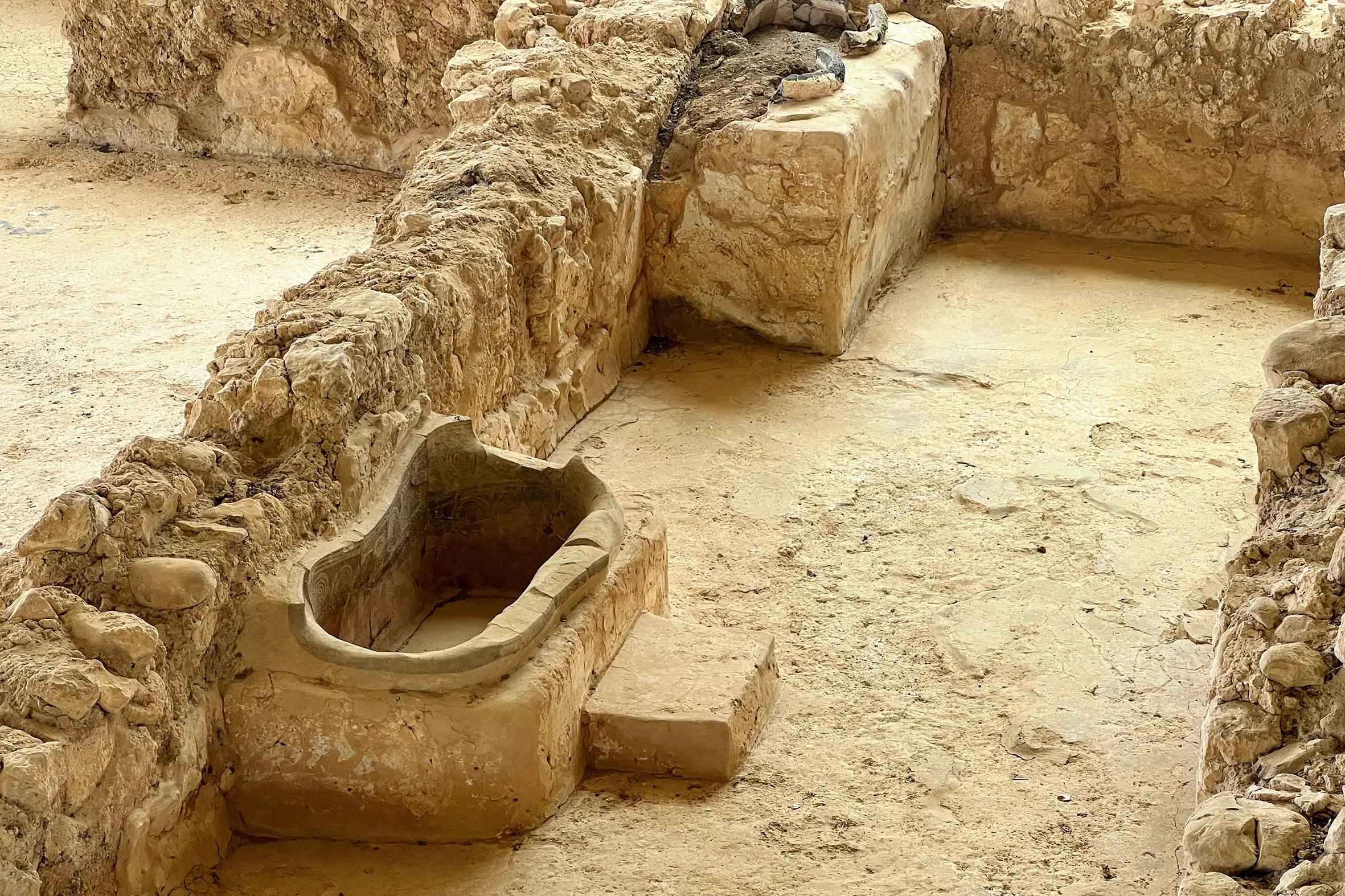
The new film version of The Odyssey has been hitting the headlines. I haven’t seen it, but when I do, I will certainly watch it with interest, particularly when Odysseus navigated the Strait of Messina and sailed through to the Aeolian Islands. I say this because in 1957, I heard that the Italian government had invited a group of archaeology students to visit those mythical islands. I put my name forward, and I was lucky enough to be included in a group that assembled at Victoria Railway station in London on a bitterly cold March day to take the train south. Two days later we crossed over to Sicily and so on to our base on Lipari Island, where the breeze was warm and I opened the shutters of my room to take in the scent of the spring orange blossom. For the next fortnight, we followed Odysseus’s route, on our own three-masted sailing boat. The morning mist indeed made it seem that the islands were floating. One evening, we climbed to the summit of Stromboli. Gazing into the fiery cauldron, there was a sudden eruption and football sized red hot lava shot into the night sky and thumped to the ground 100 metres to our left. Some say that Mount Etna was Polyphemus the one-eyed giant who bombarded Odysseus, but I feel sure it was Stromboli. Crossing the Messina Strait, I could just imagine our hero having to skirt round Charybdis, the dreaded whirlpool, and have to deal with Scylla with her six long necks and razor teeth who snatched and devoured sailors. A few years later, I found myself roaming the Peloponnese. At Mycenae, I passed through the Lion Gate many centuries after Agamemnon did likewise on his way to the Trojan war. I gazed down into the shaft graves where Heinrich Schliemann uncovered the gold mask that led to his famous cable of November 28th 1876 to Kaiser Wilhelm 1st: “Today I have gazed on the face of Agamemnon”. Then on to Pylos, the palace of King Nestor. It was there that Telemachus went in search of his father, but he was too late. Odysseus had already arrived home in Ithaca to kill the men who had tried to seduce his wife Penelope. At Pylos, you can roam the palace, uncovered by recent excavations, and take note of the bath. One wonders, is this the very bath where Polycaste, the daughter of King Nestor, bathed and cared for Telemachus when he stayed in Pylos?