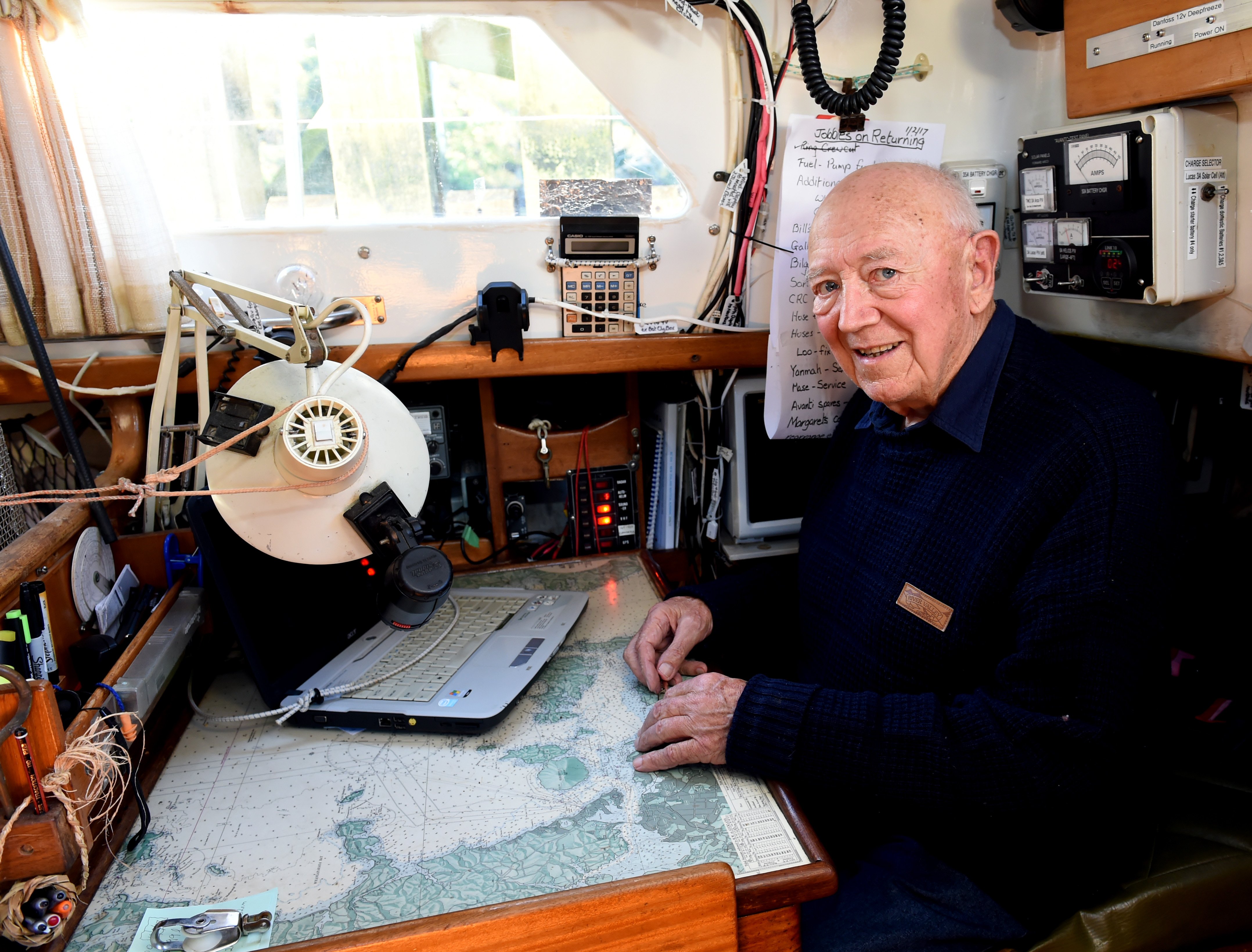
Now in their mid-to-late-80s, Bill and Margaret McIndoe, of Dunedin, have clocked up 120,000 nautical miles aboard their yacht. Bill recounts their storm-riven - and probably final - ocean-going adventure, of just three months ago.
Bill and Margaret McIndoe have had a lifetime of active sailing in their 12m yacht Avanti and other boats.
Bill was in the Royal New Zealand Navy before a career in the family printing firm McIndoe, where he was chief executive officer and managing director.
The Careys Bay, Dunedin, octogenarians have circumnavigated the North Island and the South Island of New Zealand. They have sailed five times to Stewart Island, twice to Fiordland and 27 times to the Marlborough Sounds.
They spent two years voyaging to the Pacific Islands and Australia and a further nine months sailing to Fiji and Tonga. In all, they have clocked up 120,000 nautical miles.
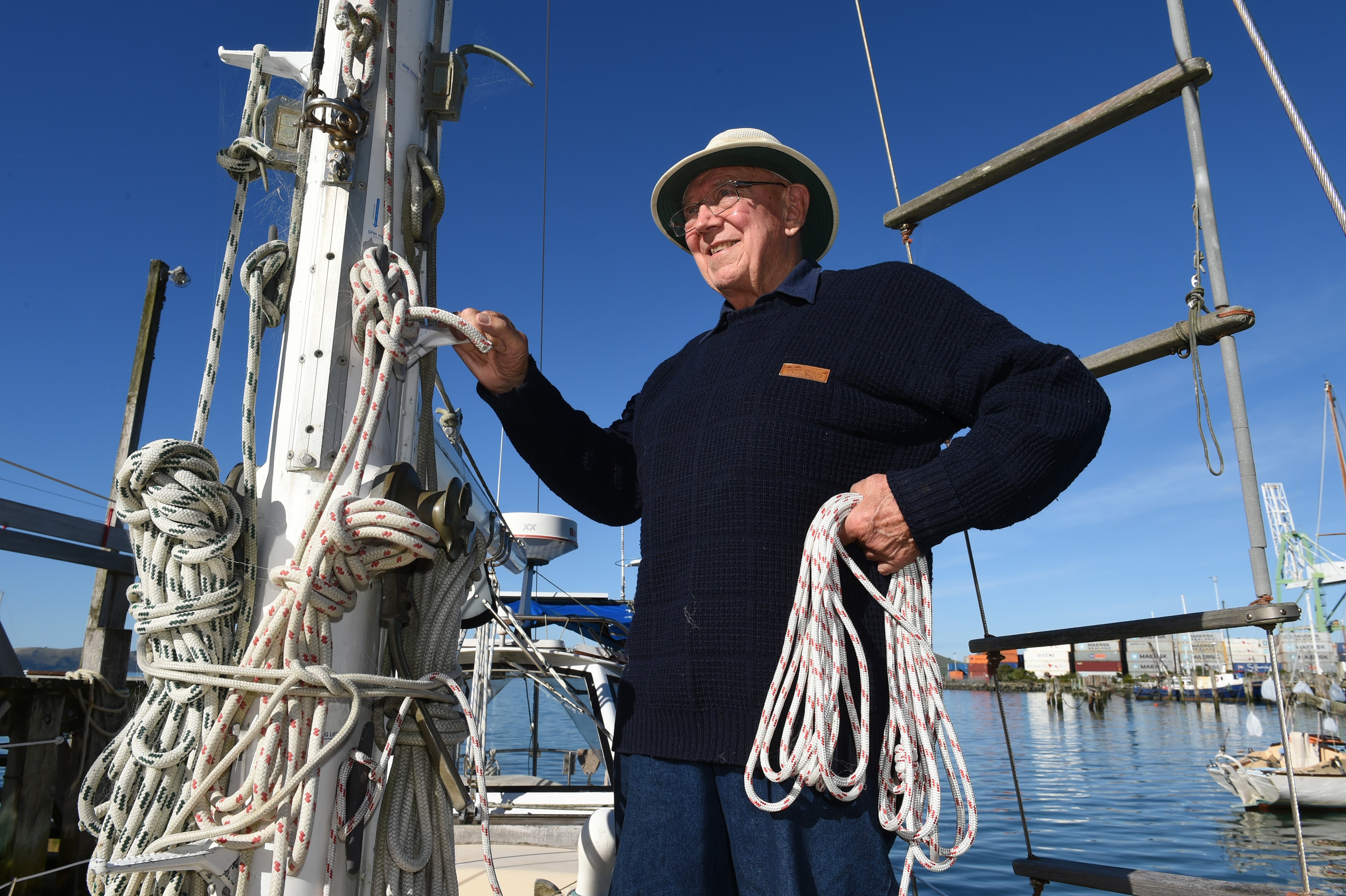
At an age when most people have long since hung up their oilskins, Bill (88) and Margaret (86), felt they were now "near the end of our long-distance open coastal cruising adventures''.
So, they decided to "give it one more go''.
The plan was a 10-week, 1500 nautical mile (nm) cruise up the east coast of the South Island, through the Marlborough Sounds to Nelson and then back to Dunedin. It did not work out that way.
- Bruce Munro

DEPARTURE FROM CAREYS BAY
Being "in all respects ready for sea'', as the Navy says, we sailed from Port Chalmers on the evening of Saturday, January 7.
The start of the 2017 voyage was brilliant. There was a stiff southerly, and once clear of Taiaroa Head, we bowled along at 6.5knots (kts) with a lot of movement.
That nice, fresh southerly lasted for a few hours. Then there was an unwelcome change to a strong northeasterly headwind.
The bow of the yacht began bashing through the short, heavy seas. Sailing conditions were so robust that I stayed on watch all night fighting the ship slowly north.
I insisted that Margaret stay below out of harm's way and for her to concentrate on feeding the brute.
All night, we battled our way north. But at 04:00, when 20nm (37km) off Cape Wanbrow, immediately south of Oamaru, I decided it was too much for us. I turned 90deg to port and headed towards the coast.
Four hours later, at 08:30, I got lined up on the two triangular lead marks that took me through the narrow dredged channel and into Oamaru Harbour. Between the moored private craft in widely divergent states of disrepair, I dropped the anchor and let out 20m of chain. We were out of the wind and the swell, exhausted and, I thought, all settled.
When I came below Margaret had ready a delicious breakfast of cereal and fruit, toast, boysenberry jam and a cup of tea.
My head and body were screaming for sleep which, off and on, occupied the rest of the day. All-nighters have never been for me.
TOO OLD FOR THIS CAPER?
Margaret and I discussed the burning question - were we too old for this caper? Would it not be a good idea to abandon cruising in these rough weather conditions and go home. I could see that there would be plenty of bad weather between Oamaru and Akaroa and on to Picton. Our typical sailors' answer was to put off any decision and look again at the problem on the 'morrow.

Waking on Monday morning, we both felt much better than last night. The idea of reversing course and going back home was preposterous. Whoever suggested that? Breakfast was ready at 07:30 and then, kitted out in sea-boots, old oily parka and big plastic gloves, I started weighing the17kg CQR main anchor chain, hosing off the mud as I went. By 09:30, all was clean and stowed away. I lined up the transit marks, as a stern bearing, to take us through the dredged channel out to the open sea, and set a course of 045degT for a position 6nm east of Timaru.
It was slow progress moving into 20kts of NE headwind and short, heavy seas. The main sail was drawing nicely but with 2000revs on the engine, which in calm conditions would give us 6.1kts, we were only making 3.3kts.
When Margaret served a delicious fish dinner at 21:00, the sea conditions had eased off. We ate in style and comparative comfort, the boat rollicking along at 5kts with the mouth of the mighty Rangitata River abeam 8nm. What could have been better? After doing the dishes Margaret turned in to sleep in the sea-berth and I took the watch on deck.
At 01:00, I awoke Margaret and we swapped positions. At 04:30, Margaret awoke me with a beautiful hot cup of tea, a biscuit and a handful of cherries. An hour later, the wind died and the sea quietened. The speed increased to 6.2kts on a course of 068deg, directly towards Akaroa Heads. Avanti entered Akaroa Harbour at 08:30 only 30 minutes late on my ETA set yesterday.
The main part of the harbour was a hive of a activity. There were two large tourist ships anchored, carrying about 5000 passengers. Six of their motor boats were busy ferrying 40 passengers at a time the 2nm from the tourist ships, across to the landing pontoon on Akaroa Town Wharf.
The Akaroa Yacht Club was host to the New Zealand National Zephyr Sailing Dinghy Championships with 29 participants plus the officials' boats. The fishers and Swim With The Dolphin boats were out, plus all the other touristy traffic. The locals as well were out in their launches and sailboats, pottering about.
We threaded our way through all this traffic and found Akaroa resident John Milligan, in his dinghy, indicating the correct mooring and ready to give us help in picking it up. No trouble there, and he came aboard for a cup of tea and fruitcake. When together, he and I are great talkers. But this time it was only for three hours.
I am trying to leave future plans open because of the inclement weather, especially the frequent strong winds in the north of the South Island and Cook Strait. If the outlook improves, we may go on. But if it remains boisterous, we would be better to go no further. A big strong mooring feels so much cosier to be on than your own anchor.
After a difficult passage from Port Chalmers to Oamaru and on to Akaroa in heavy northerly conditions we have decided, sadly, that the weather for the next month looks gruesome and not suitable for we two ancient mariners to proceed further.
We only accepted yesterday that Akaroa was as far as we were prepared to sail.
We have never given up in 27 previous voyages over a period of 42 years when sailing from Dunedin to Picton, but this time that is exactly what we have done. Are we quitters?

We are looking on the bright side. Here at Akaroa we have friends, a good stout mooring, are not far from the Akaroa Yacht Club and close to this quaint town for food supplies and eateries. The weather is pleasant, although as in most of the country, northerly gales are afoot.
Once settled on to our new mooring, close to Akaroa Yacht Club wharf, a suggestion was made that we join John and Beverly Milligan for dinner ashore.
The Akaroa Yacht Club wharf is exposed to the wind and seas and landing in windy conditions in our inflatable rigid bottom dinghy can be fraught with difficulties.
Margaret is not as nimble as she used to be. The lack of a pontoon makes clambering up tall iron ladders impossible and on to slippery wooden wharf platforms a major problem. So, we dinghyed ashore and the Milligans picked us up in a car and we went off for a jolly on the town.
When ordering dinner at such an excellent establishment as Ma Maison, naturally 75% of the party ordered fish and chips, as you do. But Margaret ordered scallops. The Ma Maison staff, having such a good reputation, did not look a bit offended at our choices. The weather remained calm and we were safely home to Avanti before dark.
Johnny Bell came by in his beautiful yacht Regardless and told us that mooring No207 was available for as long as we needed it. We moved immediately before the northerly freshened. Severe gales were forecast for Wednesday night, which made us keen to get settled before the next big blow.
OUTBOARD PROBLEM
The Yamaha 2hp outboard motor had been behaving strangely. It petered out halfway to the Town Wharf when we had intended to dinghy to town to do some provisioning. The motor stopped after running for 10 minutes, indicating overheating.
I spent the whole of Wednesday struggling to dismantle the lower part of the propeller and gearbox. I had to move slowly because although I had the owner's manual I had no service manual to tell me about the inner mechanical mysteries of the outboard. I also cleared an obstruction in a part of the cooling water channel which was the possible cause of the lack of cooling water.
The plan was to spend the next day reassembling the outboard. Unfortunately it was blowing a full gale, peaking at 30kts, which set the high-wind alarm sounding. The boat was pitching, making it difficult even to stand up. Cautiously, I manoeuvred heavy parts of the motor up on to the cockpit seat where I could work on it, hoping it would not slide off on to my foot. Bit by bit, I reassembled the parts that I had dismantled. Late in the day it was all in one piece and I had not lost any vital bits.
The wind continued to blow strongly during the night, howling in the rigging. The yacht was pitching in the harbour swell. By morning, it was calm and it looked a good day to test my mechanic's skills. We lowered the dinghy into the water and clamped the outboard on to the stern.
The test was successful: a jet of cooling water was flowing out of the back of the outboard, which ran for 10 minutes without hesitation. All fixed.
At 07:00, the large tourist ship Celebrity Solstice, with 2850 passengers, 1250 crew and weighing 122,000 tonnes had anchored 2nm out in the harbour. At 10:00 they started to run their large barges to the Akaroa Town Wharf pontoon. Each of the six barges carried 40 passengers.
The barge traffic generated a constant series of waves from their wake which caused an all day jobble on the water. The barge traffic waves also made it difficult to land Margaret at Daleys Wharf steps and to beach the dinghy at the nearby launching ramp, where the water was surging back and forth like the surf at St Clair Beach.
The Akaroa butcher's shop is considered one of the best in New Zealand. There we bought enough meat to last a week, dealing with a butcher of the kind we remember from our childhood. Bluff, polite, helpful and always ready with a free saveloy or two and a merry quip. Such is Akaroa.
THE LATEST GALE
At our current mooring off Akaroa Yacht Club, when the SW wind has been blowing for a while and with a fetch of 5nm from the Heads, large waves are generated in the main part of the harbour. These waves curl 30deg around Green Point and rush along to Avanti's position. Then she really begins to pitch and crew are frantically searching the medical drawer for the seasick tablets.
Come the morning of Sunday, January 22, the gale reduced somewhat but was still too strong to even consider putting the dinghy in the water. About noon the wind veered from northeast to southwest and strengthened to a full gale. Standing in the galley cooking tea, Margaret is struggling to maintain her balance. With a firm grip on the pot with one hand and holding on to a convenient grab handle with the other she has a problem stirring the eggs. Good rough-weather tucker: scrambled eggs in a cup eaten with a spoon.
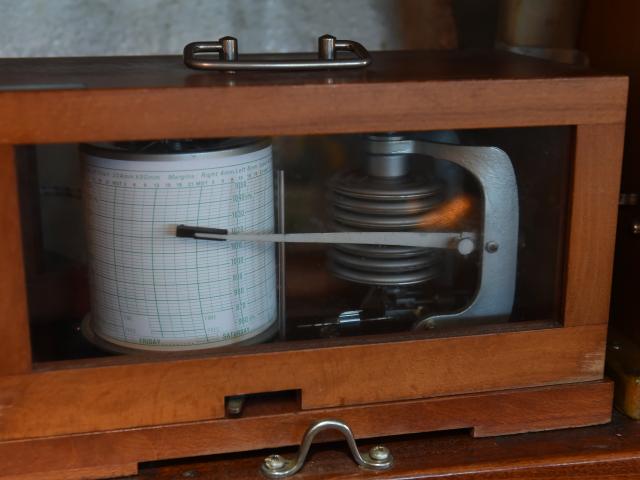
The forecast winds are odd. The normal average position of high pressure systems in the Tasman Sea is between 30deg and 50deg south latitude. An interesting thing about the general weather pattern in 2017 is that the average position of the centre of the highs in the Tasman has been 33deg south latitude, well north of the average.
The more northerly position allows the low pressure cyclonic systems to migrate further north than usual, until they are blocked by the highs centred at about 33degS. They bring their Great Southern Ocean weather with them further north and New Zealand suffers with colder air and more wind. Whereas the low pressure systems are normally blocked by the high and forced to track south of Stewart Island, they are now crossing the country about 38degS. Also this brings dry windy weather to the far north of the country, with drought in Northland.
The outlook is not good. The next gale is forecast to be severe, averaging 34kts right through the night to noon on Monday and then starting to slowly ease in the afternoon.
Then it really began to blow, averaging a gusty 36kts, or 70kmh, and it blew all night. With the breaking harbour waves at about 1m, the motion of the boat was more violent and the wind stronger than two nights previous.
The safest place was lying down in a bunk. Getting up to answer the call of nature required judgement, a grim determination and a vice-like grip on any handhold.
The noise level was high. The wind was howling in the mast and rigging. The 32mm diameter mooring rope, leading from the bollard over the bow and down hopefully to a massive chain and a concrete block on the seabed, made a loud groaning noise.
LOOKING UP
Better weather is now forecast. We will watch for that elusive pattern that will give us an easier ride home to Careys Bay. Some of the days next week look reasonable, but it is too early to tell for sure.
In a bright blue sky, the sun was nearing the horizon of the darkening hills of Banks Peninsula. The sea was calm as the two yachts slipped their moorings and gently motored at 4kts across French Bay and anchored within hailing distance of each other in the little bay under Red Cliffs Point.
It was the first warm and calm night we had had in two weeks since leaving Port Chalmers. The anchorage at Red Cliffs Point Bay proved once again that it is unnecessary to travel far to have fun in a boat.
On Sunday morning we weighed anchor and returned to our mooring off the Akaroa Yacht Club in time to enjoy watching the fine fleet of boats starting in their weekly yacht race. After the race, the bar in the clubhouse was open and the sailors set about dissecting every wind shift and manoeuvre and all the other things that yachties talk about.
Back in the yacht after dinner, we studied the forecast. For tomorrow morning, we could see a little 36-hour chink of a weather window. I considered that if we left early, we could run for Taiaroa Head before a humdinger of a 25kts northerly near-gale.
In the dark, at 05:00 on Monday, I was bustling about the boat making ready the final jobs before departure, expecting heavy weather on the passage and trying not to wake Margaret. That was not possible. She bounded out of her bunk and soon the tantalising smell of bacon and eggs cooking wafted from the galley.

'MARGARET, ARE YOU READY TO TRAVEL?'
That is the question I have always asked Margaret before I slip the mooring or weigh the anchor. On innumerable departures she has always answered with a resounding, "Yes Skipper, I am!'', and we have proceeded for sea.
At 06:00 we slipped mooring No207 that we had been on for 10 days and eased down harbour in the dawning. Facing the current as we ran south before 26kts of wind and big following seas, I was attempting to maintain 6kts over the ground. The motion of the boat was erratic and it was difficult and dangerous to move about the boat. A middle speed was established where, although we could just live with the movement, our arrival at Taiaroa Head would be about 08:00 on Tuesday, before the forecast southerly front and wind arrived.
To beat the impending southerly forecast for the next day, Avanti just had to be kept at speed and Margaret and I had to live with the violent ride. For the conditions, I was really carrying too much canvas (sail area). The boat would be driven forward and heeled over by a strong gust of wind. She would surge down a wave, attempting to round up, driven by the heeled bow and the lever action of the mainsail, the thrust from which was abaft the point of pivot of the hull. The self-steering would manage to correct the off-course by swift and strong counter-rudder action and she would run straight again. Then she would be off again the other way on her wild gyrations.
Once I was satisfied with the setting of the sail and the speed made good there was little adjustment needed. Margaret was then happy to share the watch-keeping with me. Up in the wheelhouse she strapped herself into the captain's seat, took in the current situation and shooed me off to my bunk.
We stood two-hour watches throughout the night. While Margaret "had the ship'' I was comfortable enough, well jammed in the sea berth. When sufficiently tired we can sleep under any conditions. When Margaret came down to occupy the sea berth there was no companionable cup of tea at the changing of the watch. Boiling water was considered too dangerous to have around in case of an accident. A nice mug of cold water did very well. After a wee chat and a giggle, sitting close together on the saloon leeward settee with our cold water and biscuit, she went to the sea berth to a deserved sleep and I to the wheelhouse to take over the watchkeeping duties for my two hours.
Thus the time slowly passed, with Margaret and I keeping two-hour watch and watch throughout the boisterous night.
When we had departed Akaroa, I had calculated that if we could keep up the speed we would enter harbour at 08:00 on Tuesday, January 31, 2017, ahead of the forecast southerly front. Our actual arrival time was 08:30, an unforgivable navigational miscalculation of 30 minutes late. That is, 1.25 minutes, or a 2% error, in every hour. However, we had arrived safely with no injuries and the boat was not damaged. We were grateful for her sterling qualities in never faltering during the rough and fast 150nm downwind passage.
This is likely to be the final long coastal passage we will make in Avanti, our splendid sailing companion and friend for the past 34 years.
- From the log book of the Avanti.