
PHOTO

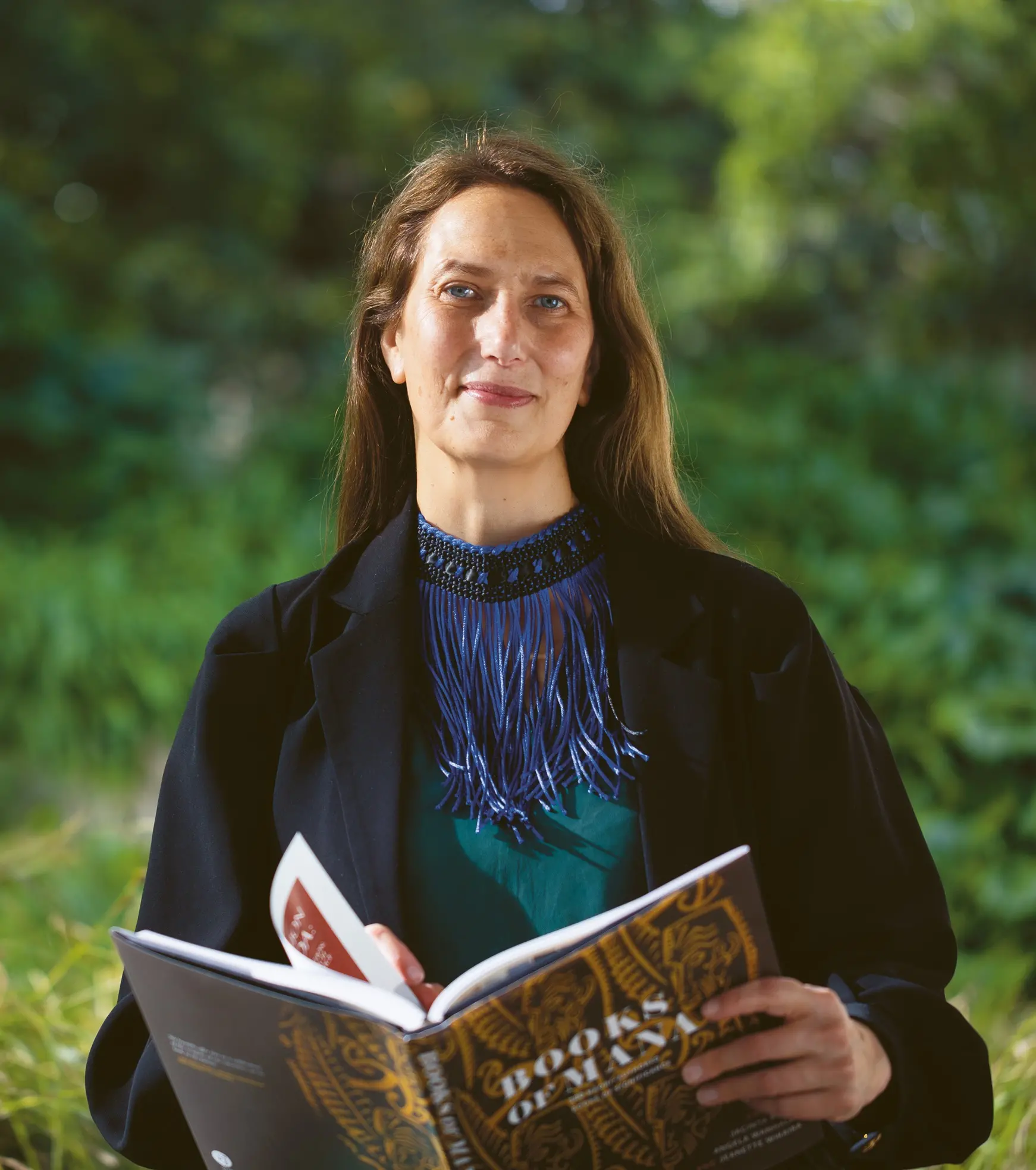
One of our greatest hopes for tackling the climate crisis is to embrace Indigenous leadership in conserving our lands and waters, writes Prof Jacinta Ruru, deputy vice-chancellor Māori at the University of Otago, in Kiwis in Climate. Sharing her own whakapapa, Prof Ruru explains why the law holds the power to mitigate climate change, destruction and biodiversity loss. Aotearoa New Zealand’s leadership in ascribing Taranaki Maunga and the Whanganui River legal personhood is celebrated as a unique step forward. But at the same time, Prof Ruru demonstrates how colonial countries can more meaningfully connect with Indigenous peoples. In aligning Department of Conservation frameworks with Māori empowerment, and recognising the importance of national parks to iwi, Aotearoa can properly recognise the reciprocity inherent in the well-being of people and lands.
TINO RANGATIRATANGA
I think one of our greatest hopes for the survival of humanity on this planet is for our governing nation-states to become more humble so as to embrace being led by Indigenous peoples, especially in relation to the conservation and protection of our publicly owned lands and waters.
In 2023, I was one of many speakers at Forest & Bird’s 100th anniversary, themed "Te Reo o te Taiao — Giving Nature a Voice". It was an enormous honour to join in applauding the 100 years of Forest & Bird’s outstanding advocacy and action for Aotearoa New Zealand’s lands, waters, flora and fauna. In my speech, I welcomed the chance to share and dream for just futures and giving nature a voice.
For me, my one dream is for a future where we can more clearly see, know and hear Indigenous Māori nations — iwi, hapū and whānau — and, simultaneously, where, in response, we all listen, care and act to empower this reconnection for the health of iwi and us all, and the health of the environment.
Drawing on that speech in contemplating this Kiwis in Climate call to action, I reiterate what I believe is a tangible path forward. My call is to re-enable and welcome the practice of tino rangatiratanga (self-determination/sovereignty) by iwi as a valuable and essential addition to caring for public lands and waters. If we are serious about really wanting to:
• create a better decolonised and reconciled society accounting responsibly for horrendous past and continuing colonial wrongs, and
• utilise all the best sciences and knowledges available to holistically address the existential threat of climate change and the environmental crises in our beloved homelands that span devastating biodiversity loss to extremely polluted, unwell waters, then we must open our hearts, minds and hands to empowering ngā iwi Māori to help lead us forward as a nation.
I do not think it is enough just to permit consultation with iwi or invite one or two Māori persons on to governance boards. If we really want to be brave as a nation, I think we need to shift back some power and resources to Indigenous peoples, and here in Aotearoa this means Māori.
Māori have for centuries developed the wisdom on how best to protect and nourish our lands and waters.
In my call to action, I zero in on places dear to my heart: public conservation lands and, more specifically, national parks because they sustain and inspire me professionally and personally. And because conservation and nature-based solutions have the potential to contribute to roughly one-third of the mitigation needed to combat climate change and include activities like reforestation, wetland restoration, sustainable land management and improved forest management.
These all have the capacity to absorb large amounts of carbon dioxide from the atmosphere.
NEXT-LEVEL COURAGE
Aligning Department of Conservation statutes with Te Tiriti

Our nation was brave back in 1987 when Parliament enacted the Conservation Act with section 4 reading: "This Act shall so be interpreted and administered as to give effect to the principles of the Treaty of Waitangi".
Nearly 40 years on, you would think that we would have a system of conservation management that is at least:
• bicultural in power-sharing,
• bicultural in science and mātauranga (Māori knowledge) application, and
• bilingual in expression.
We do not.
This point has been made forcefully by others for a long time, including the Waitangi Tribunal more than 15 years ago when it stressed that partnership is the intellectual framework for understanding the principles of the Treaty of Waitangi and thus:
[The Department of Conservation] must be looking for partnership opportunities in everything that it does. ... opportunities to share power with tangata whenua should be a core performance indicator for the department rather than ... the exceptional outcome driven by the wider pressures of Treaty settlements.
But our current conservation law has been borne of a time where policymakers and government members were heavily influenced by the Western conservation ideals of the 19th and early 20th centuries. This law has at its heart an English colonial idea of conservation.
Of the 25 statutes that the Department of Conservation administers, only four have been enacted after the first modern Treaty of Waitangi settlement statute in 1995. All of the other statutes, such as the National Parks Act 1980, Reserves Act 1977, and the Wildlife Act 1953, were framed from another, much earlier, colonial era.
Most of these statutes are silent on things Māori, and I would go further in saying, hostile to Māori leadership and mātauranga Māori knowledge.
Of course, there are many excellent initiatives going on in practice within the Department of Conservation throughout the country. A coherent and co-ordinated overhaul of the whole discordant framework of conservation legislation is required to catch up to the innovation of Māori ideas for caring for lands and waters, especially now, when we need all the knowledge and solutions at our fingertips to combat the crises of climate change to lead to better outcomes for peoples and planet.
National parks
Would it really hurt to include a Māori understanding of why we have an intergenerational responsibility to care for lands and waters encased within national parks?
According to the National Parks Act 1980, Aotearoa New Zealand’s national parks exist for the "purpose of preserving in perpetuity" their encased mountains, forests, sounds, seacoasts, lakes, rivers and other natural features for:
... their intrinsic worth and for the benefit, use, and enjoyment of the public, areas of New Zealand that contain scenery of such distinctive quality, ecological systems, or natural features so beautiful, unique, or scientifically important that their preservation is in the national interest.
Silent is any recognition that these places are important to iwi.
We only need to look at what happens when Māori do have the pen.
Te Kawa o Te Urewera reads like no other national park management plan I have ever read. It deliberately sets out to "disrupt the norm". It strives to manage people for the benefit of the land (rather than manage land for the benefit of people). It is a remarkable document that embraces a process of "unlearning, rediscovery and relearning to seize the truth expressed by our beliefs".
The orientation of the plan is stated as: "Deliberatively, we are resetting our human relationship and behaviour towards nature. Our disconnection from Te Urewera has changed our humanness. We wish for its return."
As embraced "In all decisiveness, we are returning to our place in nature, as her child".
This plan knows that the answers to biodiversity well-being lie intimately within the lands themselves, if we listen carefully:
Nature speaks all the time and is understood only by the sincere observer and heedful mind and heart. Humanity has much to gain from reigniting a responsibility to Te Urewera for within these customs and behaviours lies the answers to our resilience, to meet a forever changing climate. Through committing to Te Urewera values, we are innovating our instincts and adjusting our behaviour to ensure a prosperous future that is secure.
We need a new relational core to our conservation and environmental legislation, where Māori are valued and enabled in all conservation and environmental legislation to work with the Crown, to "hold the pen", to make core decisions for why and how we care for public lands and waters.
KEY MESSAGES
• Māori values of caring for land and waters are intimately linked to the earth. Māori describe ourselves as "tangata whenua", meaning "people of the land".
• Colonial laws have done an enormous amount of damage to destroy and disrupt Indigenous peoples’ intergenerational responsibilities of environmental care and use.
• Legislation now recognises some of the Māori ancestral embodiments in nature, for example, Taranaki Maunga and the Whanganui River are "legal persons". Legal personality of the environment is a vibrant and real way to displace Crown assumptions of ownership and place at the forefront of our society a Māori understanding of all that is around us.
• A coherent and co-ordinated overhaul of the whole discordant framework of conservation legislation is required to catch up to the innovation of Māori ideas for caring for lands and waters.
• We need a new relational core to our conservation and environmental legislation where Māori are valued and enabled in all conservation and environmental legislation to work with the Crown, to "hold the pen", to make core decisions for why and how we care for public lands and waters.
The book
• Kiwis in Climate: Voices for climate solutions in Aotearoa New Zealand edited by Tessa Vincent, published by Bateman Books, release date March 2026, RRP $45.