
PHOTO
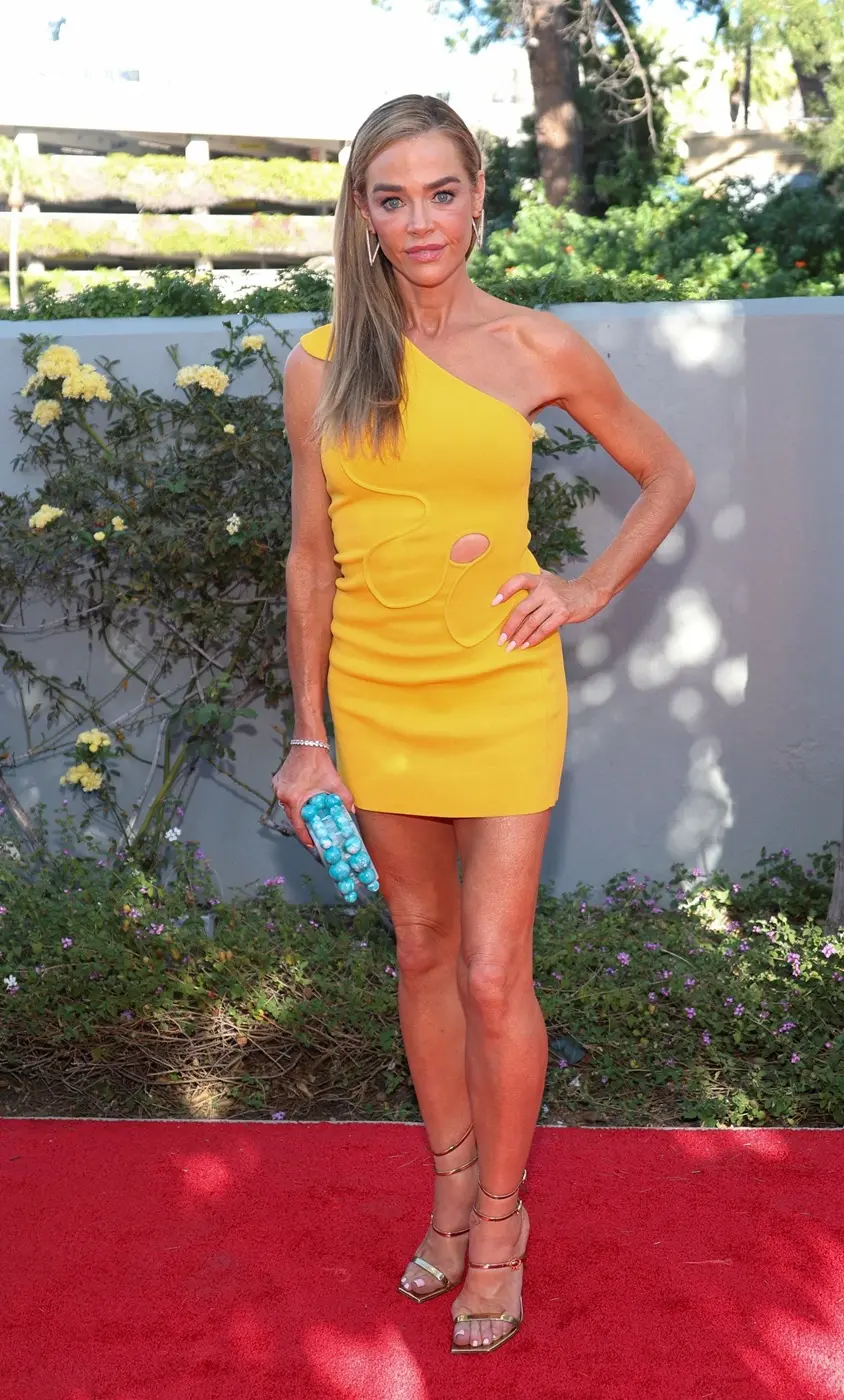
The recent Allure interview with Denise Richards about her facelift at 54 is such a rich text I fear it may have given me gout.
‘‘Richards is opening up about her plastic surgery the way the rest of us talk about what we did Tuesday morning,’’ we learn. ‘‘She is matter-of-fact and unapologetic, discussing incisions, drains, and swelling.’’ The accompanying photography is startling — in the doctor’s ‘‘before’’ pictures, Richards (still uncommonly beautiful) looks pensive and a little sad, as I guess you might be if a man were about to finely slice your eyelids as if prosciutto. In the ‘‘afters’’, having surrendered to a facelift with a temporal brow lift, upper blepharoplasty, lip lift and fat grafting, she looks almost exactly as she did at 27, emerging from the swimming pool in the 1998 erotic thriller Wild Things.
It’s partly for this reason — the fact that (apart from a certain nuttiness in her eyes post-blepharoplasty, eyes so wide they appear to be staring in terror into a newly excavated abyss) the work seems so uncannily good — that the piece is so mesmerising: it is equal parts car-crash and advert. Clicking on the link felt like lowering myself into a pool of turning cream, but one perhaps ridden with piranhas — despite the nipping teeth I found it very hard to swim away.
Certain lines will stay with me. Her plastic surgeon says he lifted the outer corners of her lips ‘‘to make the mouth look happier and sexier’’, and I was reminded of Brooke Shields telling me how her surgeon performed an unsolicited vaginal rejuvenation on her when she was anaesthetised. When Richards woke, her thighs were in agony, and she didn’t understand why until it was explained that the doctor ‘‘used the fat from Richards’s thighs to create a yellow paste — a mix of her own microfat and platelet-rich plasma — which he injected underneath the skin of her face and neck.’’
Upon finding stitches around her ears, which Richards had discovered were numb, she asked him ‘‘if he took them off of my head and put them on the table? I said, ‘I won’t tell anyone if you did’.’’
I traversed many lifetimes while reading this interview with Richards and her proud surgeon. I felt a dragging within me as I filled with the desire to return to what I looked like at 27, emerging from the pool in erotic thriller Wild Things, but also, also overwhelmed by the now-familiar body horror that comes with seeing the brutalist architecture of a facelift.
In the olden days, celebrities like Richards tended to attribute their mysteriously youthful appearances to good hydration and Ponds cold cream. Now it’s common in interviews for famous women to discuss their surgical work in detail, often going so far as to recommend particular doctors, a fact that, culturally, both giveth and taketh; revealing the painful lengths even the most beautiful among us must go to to be accepted, but also normalising and advertising those lengths.
When, at 17, Kylie Jenner first admitted to having lip fillers, one UK clinic reported a 70% rise in lip-filler inquiries in 24 hours.
But even so, pieces like this Allure interview, where you can virtually hear the surgeon’s cash till ringing still have the power to shock. In part, this is because of the admission that Richards split up with her husband 10 days after surgery. ‘‘Going through my divorce, my ex disclosed that I’d had a facelift. He had a photographer show up outside an appointment where I had some microneedling on my scars’’. So, her decision to talk about the operation wasn’t, in fact, solely in the spirit of openness, but because the thing had been weaponised.
I fear that in a decade or so, by the time I am 54, surgery like this will be so normalised that the choice not to have a facelift will be read as vaguely insurrectionist. Already, I’m in my mid-40s and, among a wide strata of middle-class city dwellers, the fact I’m yet to try Botox is unusual, seen by some as hair-shirty, resulting in an ancient face that is needlessly plain. When, of course, the problem is not that I haven’t thought about it, it’s that I’ve thought about it too much.
Richards’ interview hovered as an open tab at the top of my screen for weeks. I found myself lingering sometimes on the detail about yellow thigh paste, sometimes on the before or after pictures, or the photos of her startled eyes staring out of a changing face, guileless and blue. My computer went into sleep mode once as I was reading, and in the glass I suddenly saw my own reflection, and my own eyes, wide as black pools. — The Observer