
PHOTO
The layers of archaeological evidence at Moeraki lie together with the layered histories told and retold by mana whenua, Gerard O’Regan tells Tom McKinlay and Luke Chapman.
- Watch past episodes of Toitū te Whenua
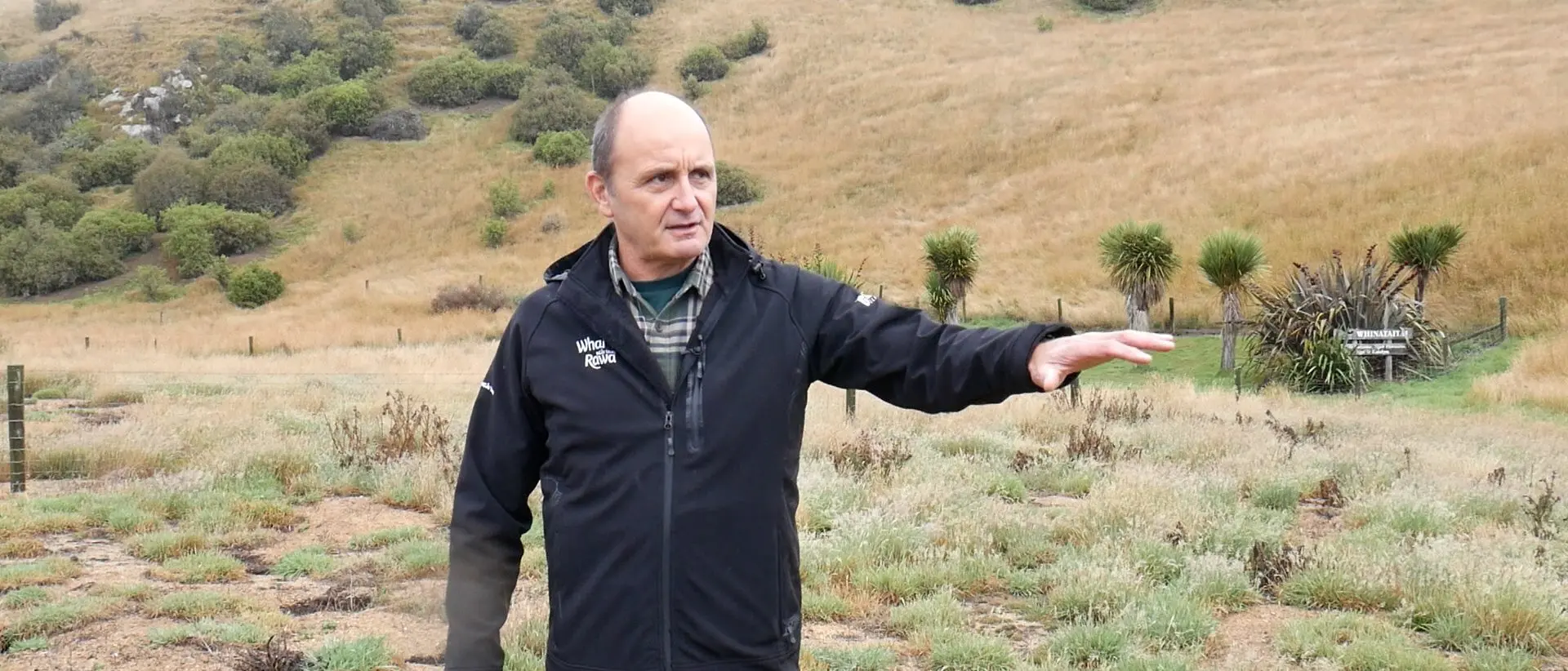
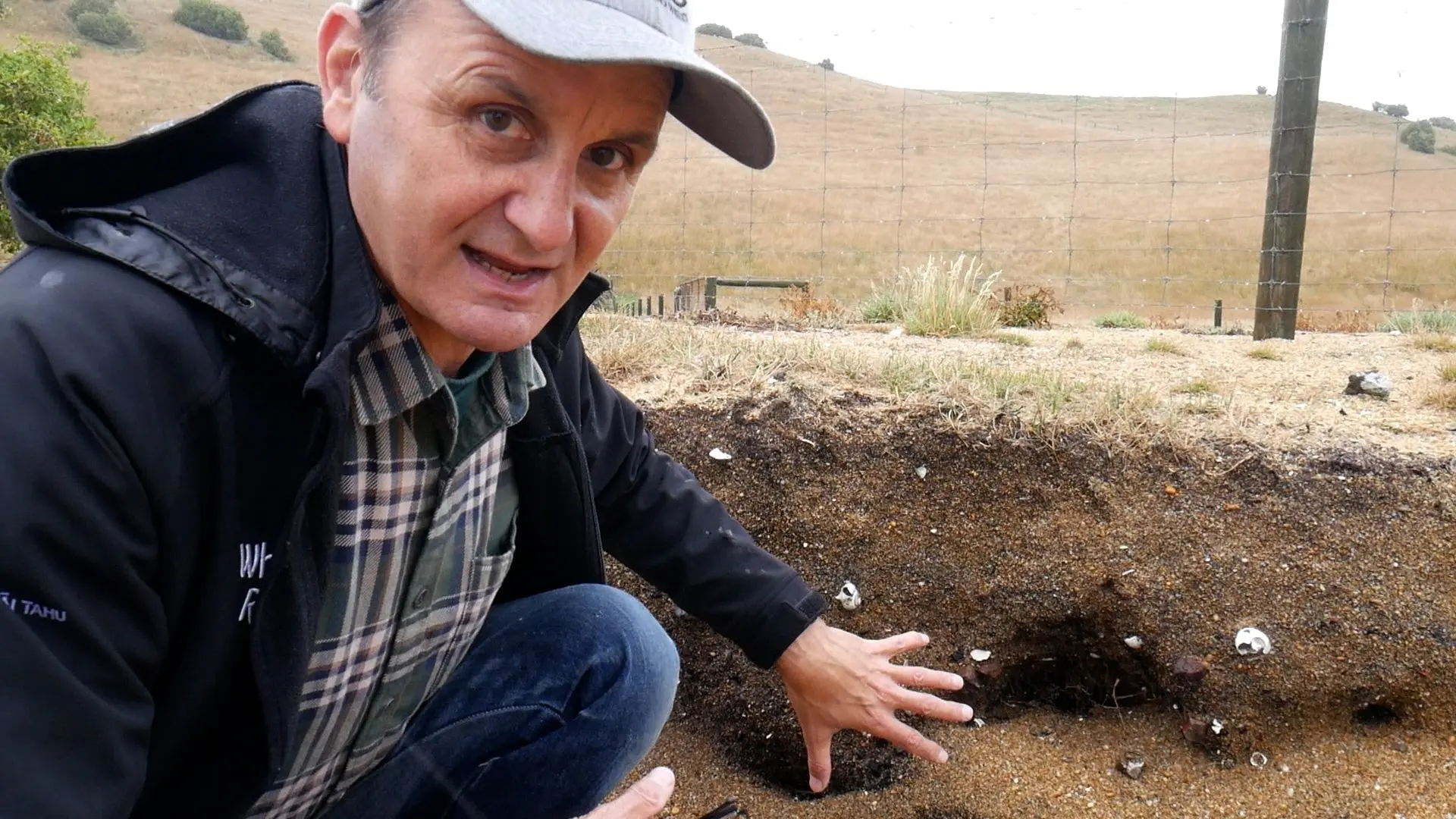
Gerard O’Regan crouches at the high water mark and examines the dark stained sand draining from the eroding bank.
His practised eye reads the signs and zeroes in on the evidence of his tīpuna, their lifeways.
Newly exposed shell and bone talk of the meal eaten here so many years ago, lying still among the hangi stones used in the cooking. Here too are slithers of agate, a local stone prized for the sharp edge it brought to the work of cutting or scraping.
It is the ancient cooking fire that has left its giveaway dark charcoal mark on Moeraki’s otherwise golden sand, fanning out from the bank down to the waterline.
Indeed, its signature is written at regular intervals along Tūtakahikura, this beach, confirming the importance of the settlement, its antiquity and long-standing.
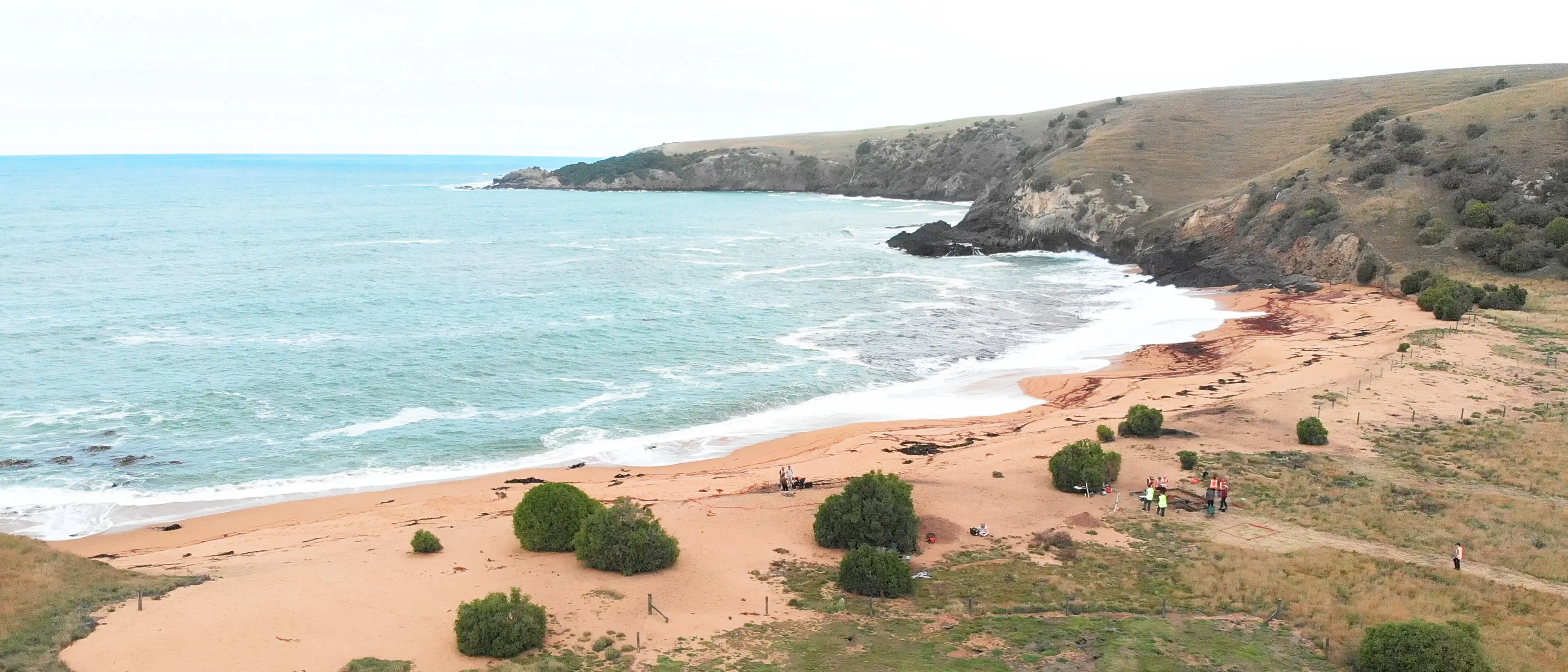
Dr O’Regan, an archaeologist and curator Māori at Tūhura Otago Museum, has been helping lead digs here with Te Rūnanga o Moeraki in recent years, peeling back the layers of history that lie on the peninsula.
Tūtakahikura has much to say, it’s material riches confirming the kōrero captured in the whakapapa of the rūnanga.
These tohu (signs) bring the past viscerally to life.
For O’Regan they trace personal history, family history.
‘‘Ko Uenuku te whare e tū mai i te mātārae nei o Moeraki,’’ he says by way of introduction.
His whare, his marae stands here on the Moeraki peninsula.
‘‘Ko Tahu Potiki te whare i tū i te taha o Te Ara a Kiwa, kei Awarua.’’
His whakapapa also connects him to Awarua, on Foveaux Strait — the pathway followed centuries ago by the great navigator Kiwa.
‘‘Ko Teitei, ko Hinekino Te Horo, ōku tāua, mai i tēnei kāika o tātou o Kāi Tahu Whānui.
‘‘Nō reira, tēnei te mihi, tēnei te mihi. I’m Gerard O’Regan.’’
By naming the two kuia from whom he is descended, Teitei and Hinekino Te Horo, O’Regan captures some important history linked to this place.
‘‘My two tāua who came to Moeraki, one was Teitei.
‘‘She came from down in the Foveaux Strait. She came up here and married one of the whalers,’’ he says.
‘‘In coming up here and marrying the whaler Haberfield, she was actually revisiting the footprints of her tipuna, Taoka, whose pā was over at Kātaki Point there. My other tāua from Moeraki was Hinekino Te Horo. She was one of the ones who came south from the Kaiapoi area, from the Canterbury area, in the time of the Ngāti Toa raids by Te Rauparaha.’’
These two movements, from north and south in about the 1830s, represent important strands in the Moeraki story.
Tūtakahikura has witnessed it all, both continuity and change in the years since, among the latter is the addition of a second name for the beach.
These days, it’s often called Barracouta Bay, for good reason.
Barracouta was of huge industrial importance to local Māori in the time of early Pākehā contact and before that in our pre-European period, O’Regan says.
‘‘The reason barracouta was so significant was because you could catch it in great quantities, in season when it was schooling.’’
It was then split open and dried in the sun.
‘‘So, you could catch it easily and preserve it easily, in quantity, and therefore makā, or barracouta, always had a significance to our old people.’’
The old name, Tūtakahikura has less prosaic origins.
‘‘Our understanding is that Tūtakahikura was one of the tūpuna of the Āraiteuru waka.
Our upoko rūnanga, David Higgins, suggests that he thinks Tūtakahikura was a wahine associated with the waka.’’
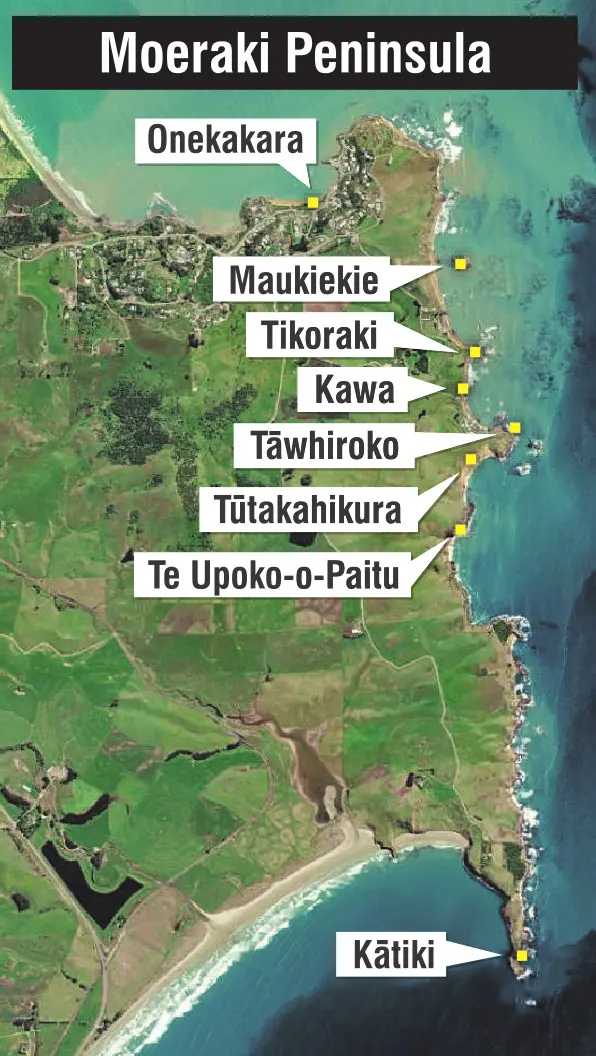
Today, Tūtakahikura is the name for both the beachfront and the bay, and is surrounded by a long list of other names attached to various features.
Rocks sitting just offshore carry the names Tūtemakohu, a reference to another ancestor, and Tokaatara.
The point at the northeastern end of the bay is the rocky headland of Tāwhiroko. At it’s base lies Hikipuku, an urupā.
Just in behind the beach is Whinataitai, one of the names applied to the urupā that lies there.
To the north is Kawa, another urupā but also the name of a small creek and the little beach behind which a collection of cribs are nestled.
It was the location of Moeraki’s old kāik and the original home of its historic church.
‘‘So, within the space of a few hundred metres, we’ve got multiple placenames pertaining to our old people’s occupation,’’ O’Regan says.
‘‘Some of the place names reference different layers of our history in this landscape. And that helps us, I think, relate also to the different layers of history we see coming through in the archaeological footprint that our old people have left here.
‘‘This area, this whole area here, while it was the important kāika, or kāik, the settlement led by Tiramōrehu from the 1830s, at the same time it was a place where we know from the archaeology there has been much earlier occupation.
‘‘We see evidence of pre-European occupation here through little pieces of agate, some of which is found up here on top of this hill,’’ he says, indicating nearby higher ground.
‘‘It was a local stone source that was being used, but at the same time our old people were also bringing in stone from elsewhere.
‘‘We have found tools made out of pounamu from the West Coast, pounamu brought here from Te Tai Poutini, the West Coast, or potentially from up in the Otago sources, up by Whakatipu.’’
Such finds lie beside the more humble evidence of everyday lives, the hangi stones and the charcoal. But this evidence also pulls powerfully on the imagination, sending it spinning back through time.
‘‘The black charcoal stain in the sand is also a reminder that at some point in time, various of our old people, can’t put a name to necessarily all of them, but various of them have been here and stopped here and occupied this place and left their footprints,’’ O’Regan says.
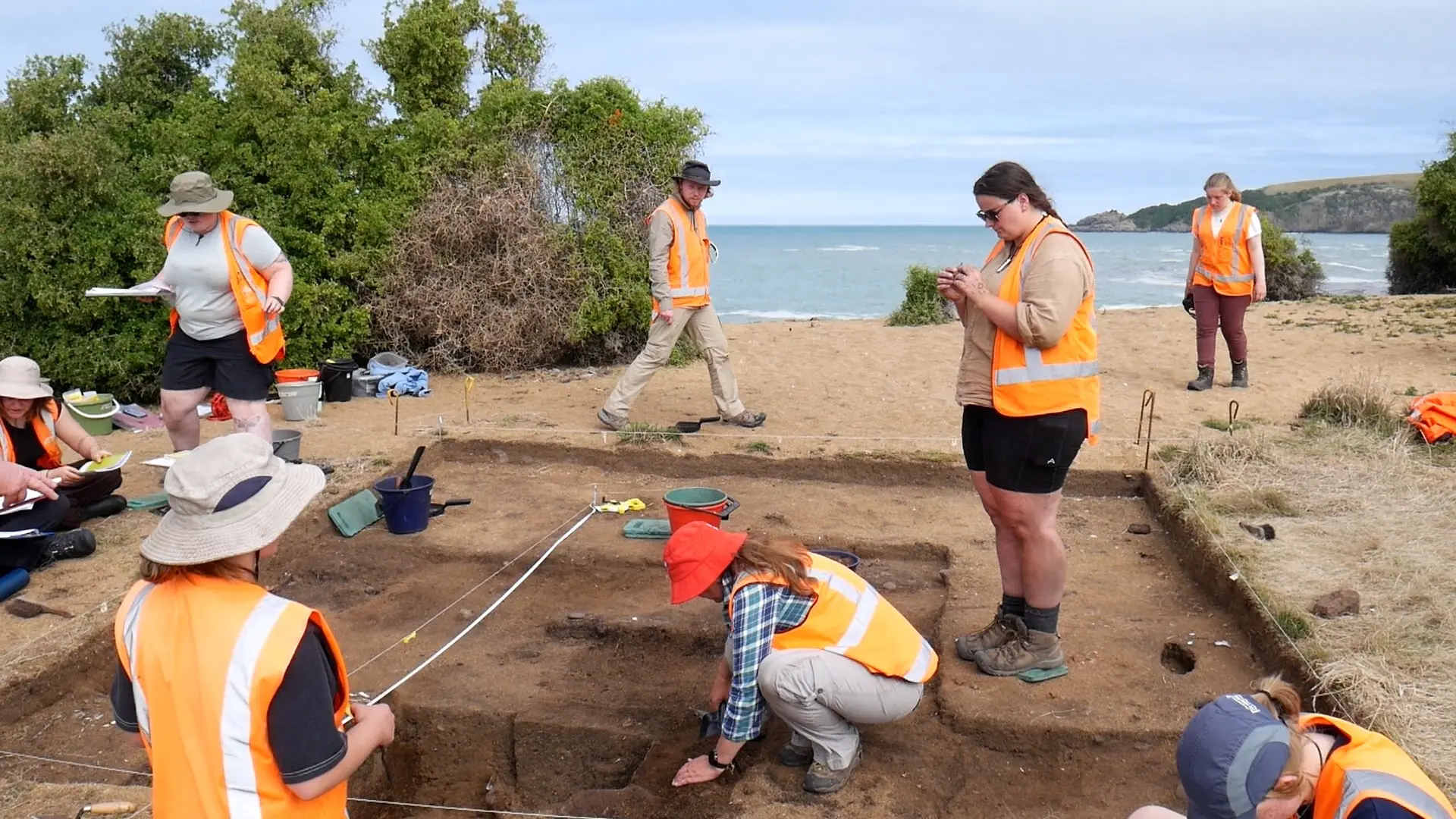
Moeraki is dotted with such archaeological sites.
‘‘We talk of them as archaeological sites because there is archaeological evidence. To us they’re wahi tūpuna, they’re ancestral places.
‘‘The archaeological evidence is only one part of it.’’
The rūnanga’s recent finds paint pictures both revealing and intriguing.
One, a penny from about the time of Matiaha Tiramōrehu’s arrival at Moeraki, had a hole punched in it. The implication is that it was worn as jewellery.
‘‘It’s not so much the dollar value of it, but rather the ornamental value of it. Somebody has worn that and it’s been significant to people.’’
As these finds lie layered in the earth, they create a stepped pathway back through time, from one to the next, repopulating the locations with everyday detail.
‘‘And when we think about our place names and applying our place names and those different layers of history in our place names, that actually gives a greater embodiment to how we engage with that heritage,’’ O’Regan says.
‘‘The archaeology gives us a very tangible way of connecting to our old people and thinking and exploring what might have been their lifeways here. By using our place names, by using our traditional taunaha (naming), then we end up with a bit of a more comfortable embodiment of the work we’re doing with the physical heritage.’’
All of this sits within the overarching narratives that lie on the land here. The name Tūtakahikura connects the bay to Puketapu, Maukatere, Mauka Atua and other tipuna of the Āraiteuru waka - to the waka’s ocean-spanning epic tale. And, at the same time, it offers to those who care the opportunity to hold its traces in their hand.
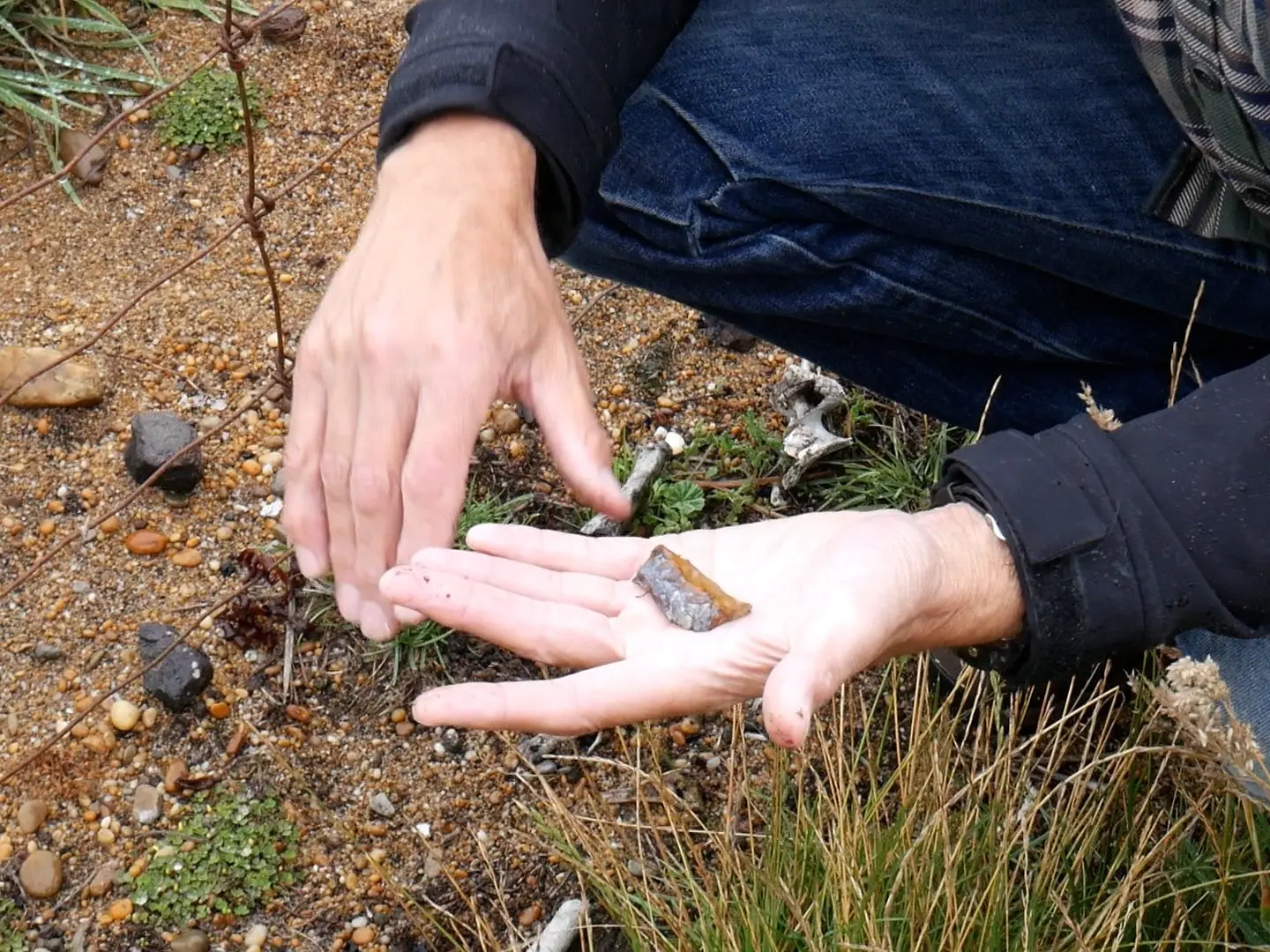
O’Regan says when working in a museum setting, if someone gives you a taonga, as with any heirloom, you hold that taonga. And the more you hold it, the more it enriches you. The more it enriches you, the more you want to learn about it. And the virtuous cycle continues.
It is the active process of treasuring, he says.
‘‘So, rather than thinking just about the thing as a treasure, it’s actually the process of treasuring which keeps that treasure held firm and protected and handed down generationally, or intergenerationally.
‘‘And that is the same with using our place names. If we don’t use our place names, if we don’t reinforce them, that’s when they get dropped, that’s when they get forgotten.
‘‘But the more that we look at Whinataitai and we wonder what the meaning of it is, the more that we use it, the more that we try to learn about it, even if we don’t ever get to a strong definitive answer, we’re still holding it, treasuring it, and it is therefore enriching our connection and our experience of these places. And that’s something that’s really important to do, especially when we talk about places that are of archaeological interest.
‘‘In the past, it’s been very easy, over the last hundred years, for the archaeological narratives to dominate the stories of place and the significance of place.
‘‘But using and applying and thinking about our traditional place names with our archaeological sites actually reminds us and reinforces to, not just us, but to the archaeologists, to the archaeological students we have working here, and to the wider community, that the archaeology is one dimension of a history, of a heritage. It’s the totality of that which is what we need to carry forwards and make sure is there for the future generations.’’
