
PHOTO

I’m always experimenting with what it is possible to forage, grow and eat. Usually this leads to a satisfactory result, but not always. Anything is edible once.
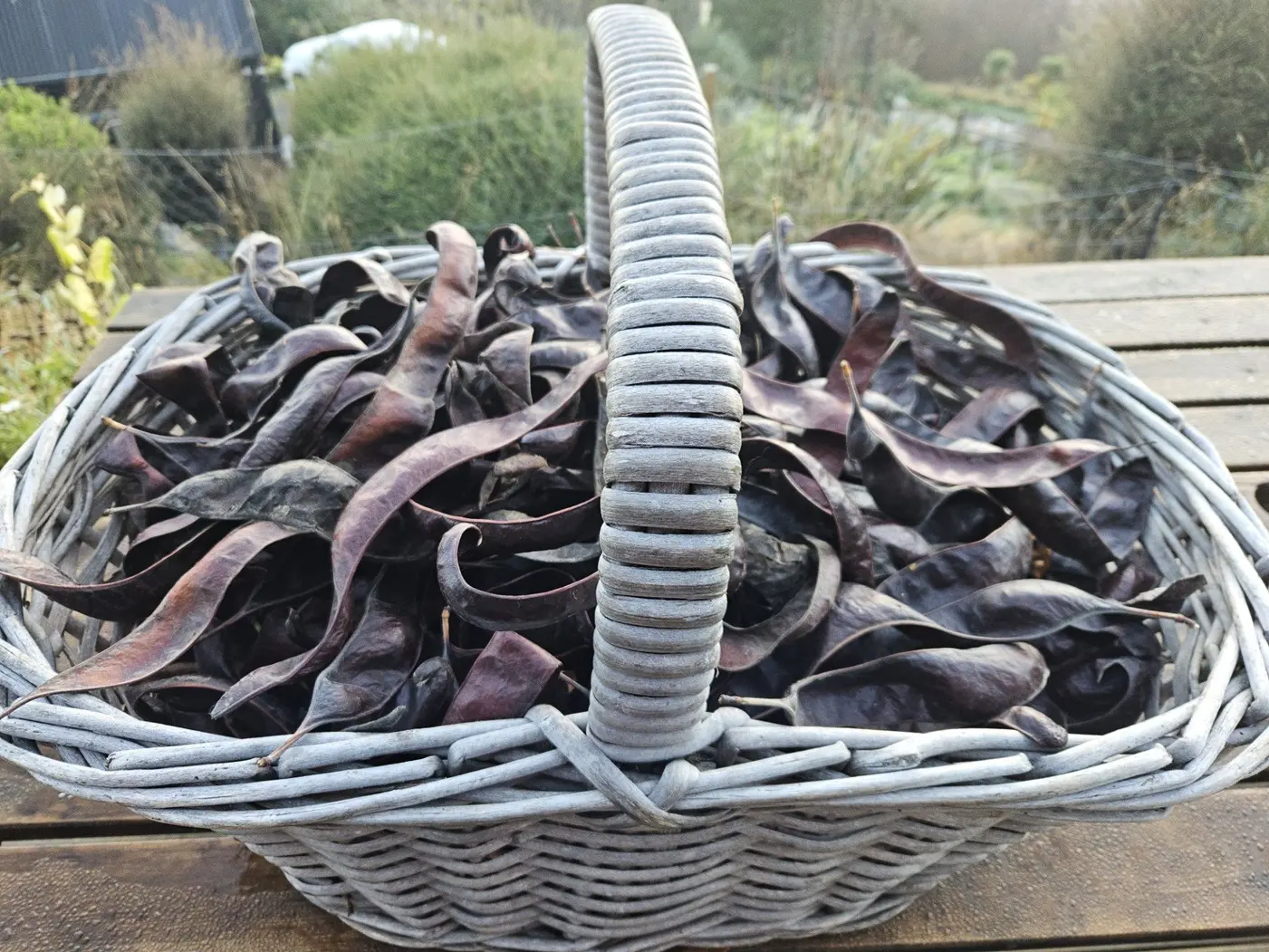
I was walking around Clyde with friends and came across some beautiful long reddish brown pods lying under a tree with fine feathery leaves. The pods and tree looked vaguely familiar, so with the help of a plant identification app I confirmed that they were honey locust pods. It is very important to be sure you don’t have black locust pods as they are a totally different plant and toxic. Honey locust pods are 30-45cm long, while black locust pods are 7-10cm long.
The honey locust is a member of the pea family and is (apparently) edible. My father planted some on our farm at Chatto Creek as a supplementary stock food. The trees fix nitrogen, like a giant clover, and drop pods in autumn, just when pasture growth is slowing. The pods are nutritious and calorie dense and a mature tree can drop up to 400kg of pods in a season. The pods lie around for months allowing stock to forage at will for a long period.
It’s possible to grow 50 trees to a hectare of land and still have grass growing under the dappled canopy, as the leaves are small and don’t smother grass when they fall, plenty of light can still get through to let the grass grow. Though frost tender when they are young, the trees soon become very hardy and tolerant of drought and extreme heat. The wood is hard, dense and rot resistant, and can be used for anything from fence posts to furniture.
It sounds like the perfect tree doesn’t it? There are a couple of down sides, it can spread but this is controllable, and the original variety has vicious thorns but this has been solved by breeding a thornless variety called gleditsia triacanthos v. inermis.
So, my friend and I picked a basket full of pods and went off to do some more research into how humans could prepare them for eating. The young green pods contain a sticky sweet sap which was used by Native Americans (the tree originates in North America) as a sweetening agent. I did not get to experiment with this, but I might look into it next summer.
The mature pods can be ground into a powder and used for baking, and the very hard seeds can be roasted and ground and used as a rich chocolatey coffee substitute.
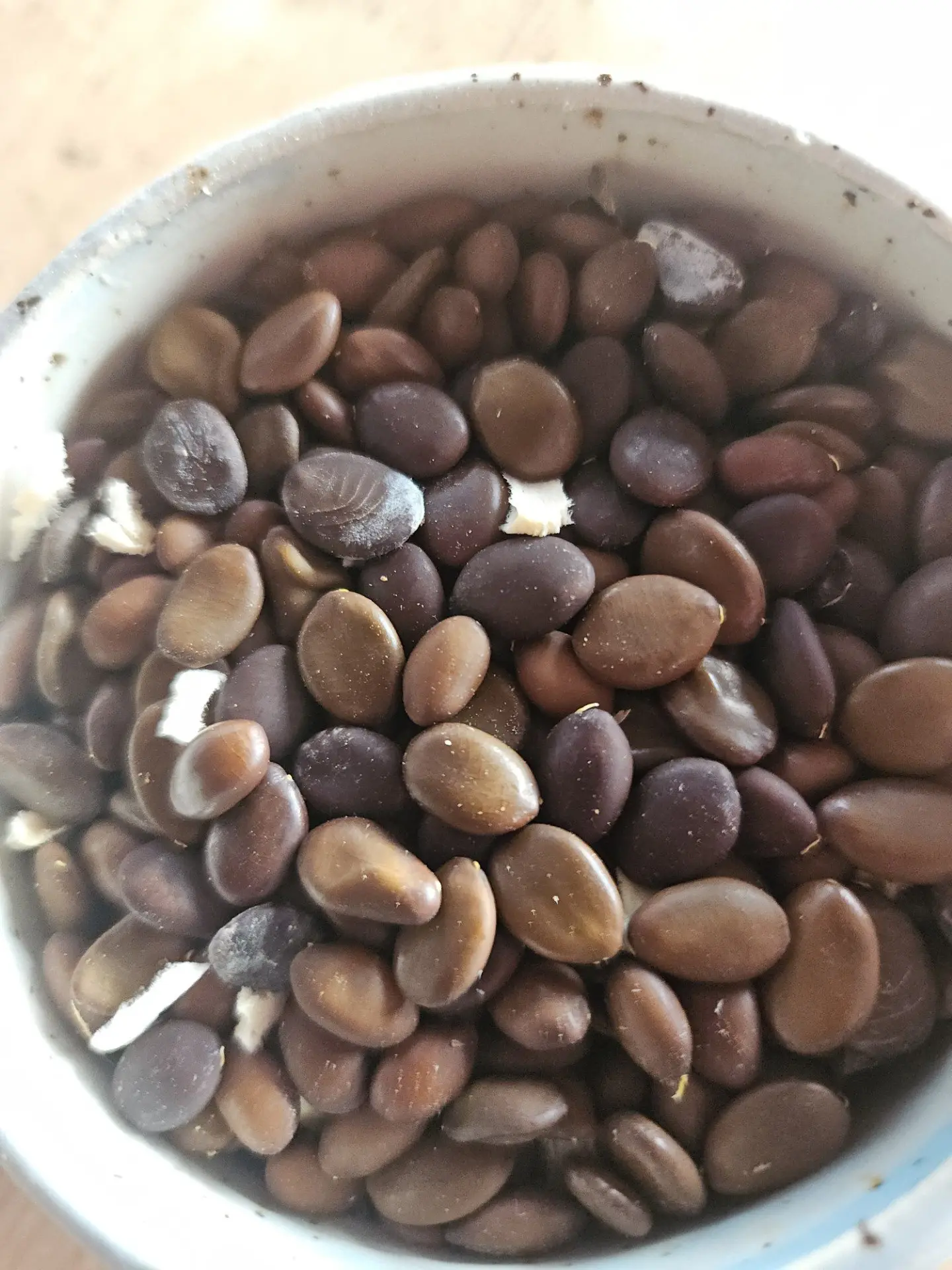
We got pretty excited about these reports. I spent hours trying to get the seeds out of the pods. The easiest way was to put the very well dried pods into a pillow case and bash them with a mallet, then pick out the hard rounded seeds,
We tried roasting the seeds in a popcorn maker, grinding them in a coffee grinder, and then making the "coffee" in an espresso pot. The result was a total disappointment, bland and gluggy. I had another go at this and roasted the seeds a lot longer, and then boiled the grounds in a pot with some water, it worked a little better, but was not especially nice.
Then I had a go at making the smashed pods into flour. The remains of the now seedless pods were put in a blender and ground, and then sieved to remove all the fibrous bits. I watched a clip on YouTube of a man making this flour, he tasted a spoonful of the raw powder and declared it to be sweet and tasty, but with a minty sensation at the back of his throat. The clip stopped at this point and I now know why.
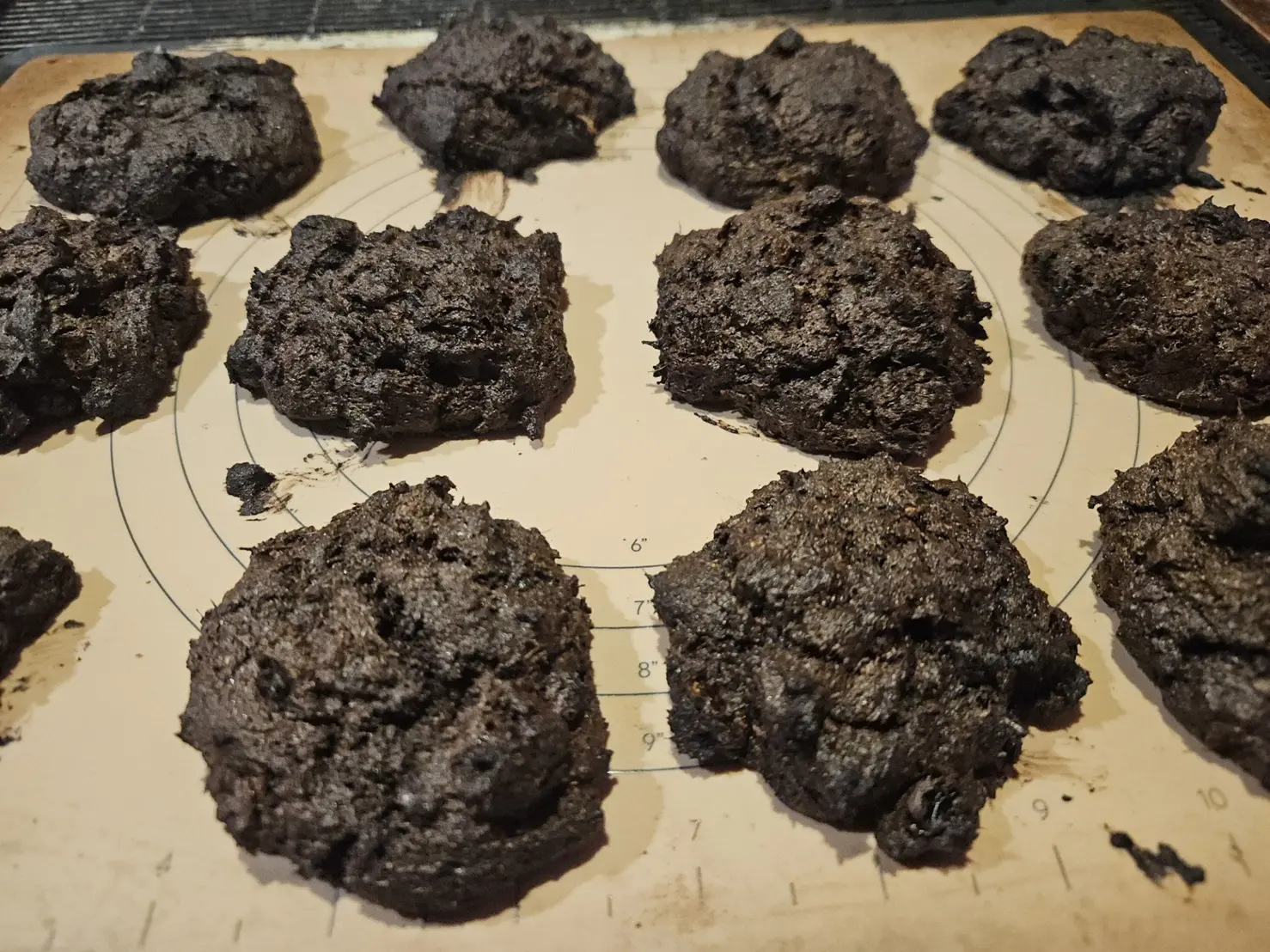
I baked a batch of biscuits using ½ a cup of the flour. They worked well, I had a bite and they tasted OK, but then this awful bitter flavour got on to my tongue and would not go away. It was vile. Even after drinking copious amounts of water and eating other food the horrible taste stayed for a couple of hours. So, now I know, these random YouTube people are not going to delete a perfectly good video clip if it turns out to be bad information.
Apparently, you should use less than 1 tablespoon of the flour mixed with regular flour. I’m not game to try eating it again though, and I can’t see the point of doing all that work for one tablespoon of flour.
Honey locust sounds great for cows, sheep, horses and pigs, but for humans ... not so much. Do plenty of research before you eat anything you have foraged. Be sure you have the correct plant and correct preparation instructions, and don’t believe everything you see on the internet. I should have known better.
Hilary Rowley is a frugal, foraging foodie from Waitati. Each week in this column writers address issues of sustainability.