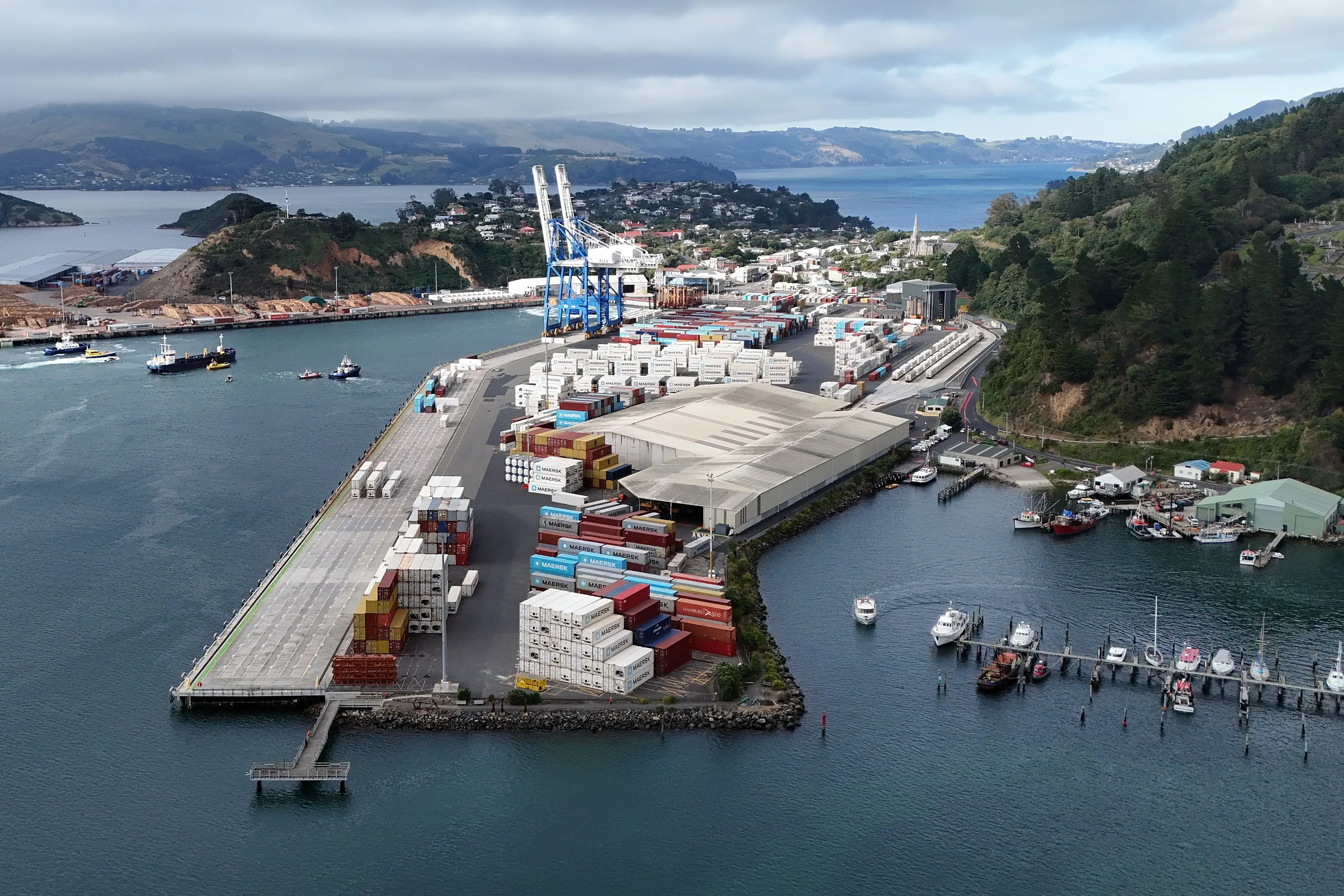
Without Port Otago, a financial hole worth more than $150 million could be created in the Otago economy within a year, a report says. The estimated economic contribution of the lower South Island’s primary export port was detailed in the company’s statement of corporate intent for the next three financial years. The 17-page document will be tabled at an Otago Regional Council meeting next week where Port Otago will confirm its plan to deliver a combined $60m in dividends over the three-year period. The New Zealand Institute of Economic Research was commissioned to quantify what it would mean for the local economy if Port Otago could not operate for a year, the document said. The resulting report showed “significant negative economic impacts at a national and regional level”. With no economic contribution from Port Otago for 12 months, GDP could drop by $154m in Otago, $38m in Southland and $118m in the rest of the country. The report estimated Port Otago contributed $61m to the Otago economy through its export and import trade activities, during the 12 months to June 2023. The company’s GDP contribution also grew at an average rate of 7% between June 2012 and June 2023. Port Otago chief executive Kevin Winders said the report was commissioned in light of the Covid-19 pandemic to look at the impact on Otago if the company had to similarly shut down for a year. “We engaged them because they were the experts and they went through that process, and that was the answer.” The company had four streams of business — the container terminal, its bulk business, cruise ship tourism and its property portfolio — and it was always a challenge to have all four going well at once. But when economic conditions were conducive to that happening, the company would be able to deliver a good result for the people of Otago and a potentially higher dividend, Mr Winders said. There had been a good container result this year and bulk business had been very solid on the back of windblown forestry impacts, as well as some additional volume as timber was recovered. While Port Chalmers was set to be the busiest port in New Zealand for cruise ships in the coming season, Mr Winders said it was still down about 30% on pre-pandemic levels. The company was working hard to build that business back up again. “We are looking forward to the economy picking up post-election and ultimately that would drive more business for our property division in the North Island. “It just takes the economy and global events to get in a settled position and we’ve got a greater opportunity to deliver value over time.” Also on the horizon was Port Otago’s jointly proposed Southern Link inland port with Dynes Transport, which is progressing through the Fast-track Approvals Act process. Mr Winders said the project would not play a significant role over the next three years, but had a “material role” in the company’s future for the next two decades. “We’re clearly limited on space to grow for our customers. “While our business is building, we’ve probably got enough capacity to get us through the next couple of years, but then we do need land-side space to be able to look after the growth we’re seeing coming from our region and outside.” Stage one of the project — if approved — would hopefully be completed within the next two years, Mr Winders said. The document said Port Otago was targeting dividends to the council of $20m per year for the next three financial years. It previously paid annual dividends of $14m, $16m and $18m in the 2022/23, 2023/24 and 2024/25 financial years respectively. Port Otago also employed about 330 people and paid $43.7m in wages and salaries during the 2025/26 financial year, the document said. tim.scott@odt.co.nz