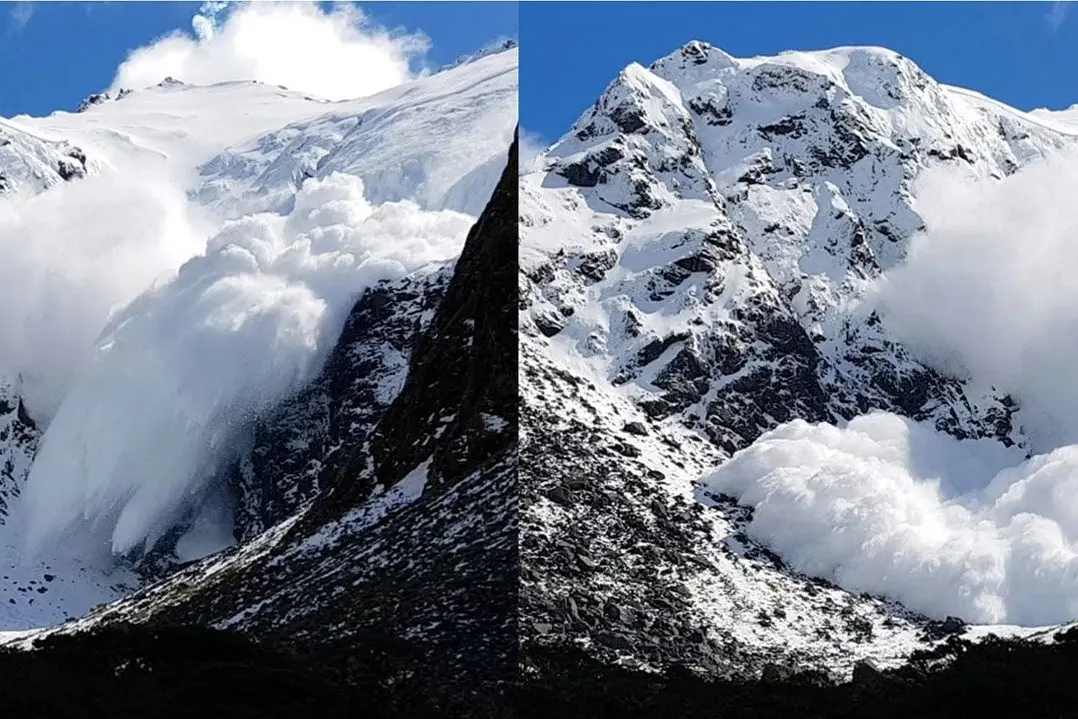
Backcountry users are being warned of avalanche danger in alpine areas following multiple avalanche events in the South Island recently. New Zealand Mountain Safety Council (MSC) chief executive Mike Daisley said there had been reports of six avalanches, observed in Arthur’s Pass, the Craigieburn Range, Ōhau, the Aoraki/Mt Cook region and the Aspiring and Fiordland National Parks, during the past weekend. Given the MetService forecast was for more snow to low levels across the South Island this weekend, he urged anyone heading into the alpine backcountry to check the avalanche forecast before they go. He said no-one was caught in last weekend’s avalanches. Five of them occurred naturally, and one was triggered by a dog. A snowstorm, that crossed the South Island last Thursday and Friday, delivered a lot of fresh snow, causing an increase in avalanche activity, he said. While it was a “normal occurrence” throughout winter, last weekend was a timely reminder for backcountry users to “stay vigilant”. “MSC reminds anyone heading out, to check the avalanche forecast and public observations, and carry avalanche rescue equipment and know how to use it. “This includes an avalanche transceiver, shovel and probe.” Forecasters use public observations, alpine industry observations, present snow conditions and weather data, to produce accurate avalanche forecasts. At the moment, the avalanche forecast is “moderate” for Arthur’s Pass, the Craigieburn Range, the Aoraki/Mt Cook region and the Aspiring and Fiordland National Parks. However, there would be “heightened avalanche conditions” on specific terrain features. “Evaluate snow and terrain carefully; identify features of concern.” In the Ōhau and Queenstown areas, the forecast avalanche danger was low. “Loose wet avalanche activity is expected to increase as temperatures rise, with warming conditions likely to weaken the surface snowpack. “Watch for unstable snow on isolated terrain features.” Mr Daisley said the avalanche forecast was an important planning tool, but it was only one part of the decision-making process. “When in the mountains, backcountry users need to make informed decisions, based on the specific terrain conditions they encounter on the day, as well as how these change throughout their trip. “We want everyone heading into the backcountry to have a great winter, and give back to the community by reporting their observations.” john.lewis@odt.co.nz