
PHOTO
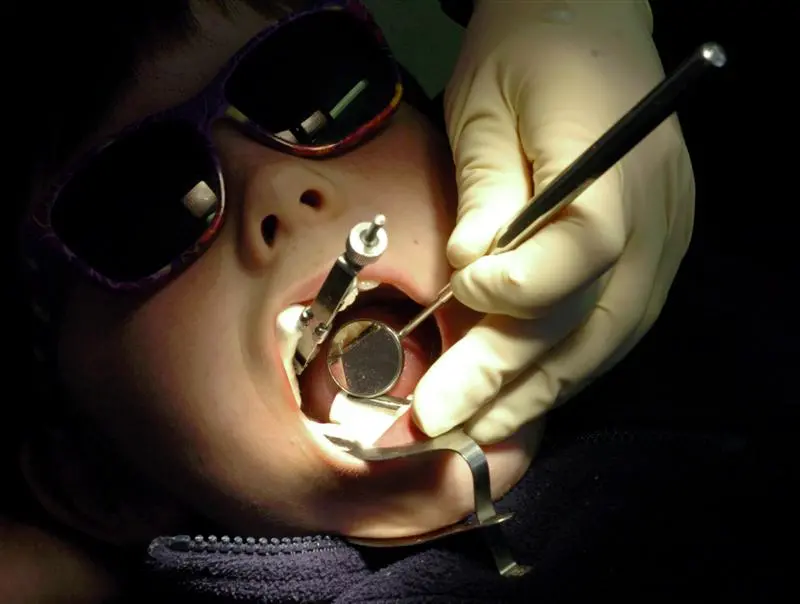
A clinic within the University of Otago's School of Dentistry and two extra mobile clinics have been added to the mix of services to be provided by the Otago District Health Board's revamped school dental service.
The changes were made after concerns were raised by some in the school community about access to clinics, travelling time and whether pupils in low socioeconomic groups would be well catered for.
The Ministry of Health and the University of Otago's faculty of dentistry reviewed the board's almost $5 million proposals to reform the school service over the next three years and together came up with the new arrangement.
Announcing the changes, board chief executive Brian Rousseau said the three-chair dental school clinic would address concerns about North Dunedin children having to travel to other hub clinics.
The move also meant that the board had enough money tow double the number of double-chair mobile clinics from two to four, serving an expected 17 sites.
The revised plan will involve seven fixed clinics, compared with eight under the previous plan.
Under the previous arrangement, Alexandra and Cromwell would each have a one-chair fixed clinic, but with the extra mobile capacity it was considered one of the sites could be served by a mobile and the other designated as a two-chair fixed clinic.
Discussions were continuing as to which town would have the fixed clinic.
The advantage of a two-chair clinic was that more extensive treatment could be offered, such as sedation, because the second chair could be used for recovery purposes.
Otago District Health Board project manager for the introduction of changes to clinics, Graham Bugler, did not wish to specify sites for the fixed clinics, apart from the School of Dentistry one, at this stage, because agreements had yet to be signed with the relevant schools.
The first of the new facilities are expected to open next year, and when the scheme is fully introduced it will replace the existing 85 chairs offered in about 60 clinics.
In recent years, school dental clinics have been gradually removed from service as they have failed to meet current standards.
One of the most outspoken critics of the changes announced earlier, Otago Primary Principals Association president Steve Hayward said he was pleased to see some of the issues relating to access had been addressed, but he still had reservations.
The board and the ministry had listened to some of the concerns, but it remained to be seen how much flexibility there would be in the system for parents who would be required to accompany their children to check-ups and who might be unable to take time off work for this.
The board sees benefits in parents visiting with their children.
Parental consent for treatment can be given on the spot and parents can be given information about oral health and tooth decay prevention.
It is expected parents will be able to book appointments to suit their family's schedules and the clinics, which will cover preschoolers, as well as primary school pupils, will be open eight hours a day, 47 weeks a year.
Public Service Association organiser Julie Morton said many issues were still to be worked through with members.
The board had indicated the number of full-time equivalent positions (FTE) for dental therapists would be 15, along with two health promoters, and it was envisaged that reaching this number from the current 22 FTEs would involve natural attrition and people changing their working hours, rather than redundancy.
All the same, members were understandably nervous about changes, particularly those relating to their existing terms and conditions, and it was vital the board kept in close communication with them, she said.
In a statement, the dean of the faculty of dentistry, Prof Gregory Seymour, said that under the proposal, the North Dunedin hub would be run by faculty staff and provide further training opportunities for undergraduate and postgraduate students in dentistry and oral health.
"We already provide a comprehensive oral health service to several schools in Dunedin, and this new arrangement would involve an extension of that.
Providing more training opportunities for our students and increasing access and treatment options in the north of the city are two clear benefits of this arrangement."
Parents who may not wish supervised dental or dental therapy students to be involved in their children's care will be given the opportunity to have care at the nearest alternative clinic.
School dental service
How the province will be covered, according to planning so far:
Dunedin South: 4-chair fixed clinic.
Dunedin North: 3-chair fixed clinic (University of Otago School of Dentistry).
Mosgiel: 2-chair fixed clinic.
Oamaru: 2-chair fixed clinic.
Balclutha: 1-chair fixed clinic.
Wanaka: 1-chair fixed clinic.
Alexandra: 1-chair fixed clinic or mobile clinic site (to be confirmed).
Cromwell: 1-chair fixed clinic or mobile clinic site (to be confirmed).
Mobile clinics. -Omarama, Kurow, Palmerston, Waikouaiti, Port Chalmers, Peninsula-Portobello, Middlemarch, Ranfurly, Omakau, Roxburgh, Lawrence, Clutha Valley, Owaka, Milton, Kaitangata.
- One extra mobile site in Dunedin, on a spot yet to be chosen.
- All clinics or mobile sites have to be on Ministry of Education, district health board or Ministry of Health land.
- 95% of Otago's population will live within 30 minutes of a clinic or mobile site; most closer.
- Clinics will offer "four-handed dentistry" where each dental therapist will work with a chair-side assistant.
Source: Otago District Health Board