
PHOTO
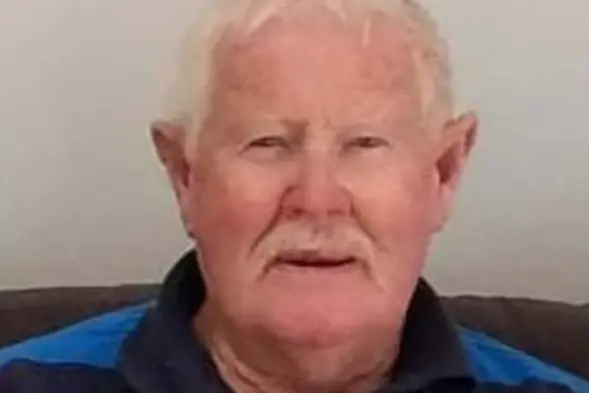
Kenneth Cotter was standing next to his campervan with the door open when he jiggled the gear stick, thinking the vehicle wasn’t in gear.
But it was, and the campervan "bunny hopped" forward before hitting the side of a house and crushing the 78-year-old.
Cotter had spent the day at his daughter’s home where the vehicle had been parked in the backyard.
His daughter jumped in the campervan and hit reverse, freeing him before emergency services arrived at the scene.
He was taken to Whakatāne Hospital where he died four days later as a result of his injuries.

Now, details of his death have featured in the Chief Coroner’s Recommendations Recap, which was released this week and contains summaries of coronial recommendations and comments made between October 1 and December 31, 2025.
Coroner Rachael Schmidt-McCleave ruled Cotter’s death was a "tragic and unique accident".
In her findings, she said when Cotter started the campervan on December 2, 2021, it began bunny hopping towards him while he was still holding on to the driver’s door.
As the campervan moved forward, it brushed up beside the house, driving into a tree next to the building. The tree stopped the vehicle, pinning Cotter between the house and the driver’s door.
Ambulance staff at the scene noted he was unable to take deep breaths because of severe back pain and he was taken to hospital.
On December 5, hospital staff identified a developing sequence of intestinal paralysis and a plan was made to insert a nasogastric tube if he deteriorated.
He suffered from worsening abdominal swelling overnight with four failed attempts by staff at inserting a tube.
By morning, a tube had been inserted but within 45 minutes he had deteriorated.
His daughter was by his side and noticed he was uncomfortable and moved him to the side of the hospital bed where he sat leaning against a bedside table.
She noticed his eyes rolled to the back of his head and called for help, but staff were unable to revive him.
The coroner said Cotter’s daughter questioned some aspects of his medical care.
She wanted to know why he wasn’t operated on when it appeared treatments were not working; why he was moved from the high dependency unit (HDU) to the general ward, then moved back to the HDU; why he wasn’t sedated for insertion of the tube; and why he wasn’t placed on a ventilator.
Whakatāne Hospital staff told the coroner that the doctor directly responsible for Cotter’s care was no longer working there.
A review of medical notes showed the patient was moved out of HDU on the morning of December 5.
Although he was still unwell, he seemed to be better in the afternoon.
However, his condition deteriorated about 1.30am on December 6 and he was moved back to HDU at 4am.
An on-call general surgeon who saw him that morning told the coroner that Cotter had suffered significant pelvic and spinal injuries, which had resulted in a haematoma.
The doctor said with those types of injuries, patients tended to develop ileus, a disruption of intestinal movement, where the bowel muscles stop contracting, causing a build-up of food and gas.
He said treatment generally involved decompression of the intestine with drainage and supportive therapy, including hydration with IV fluid.
There was no definitive operative treatment for ileus and operations could potentially worsen it, he said.
He said the tube aimed to remove fluids in the stomach, which would allow fluid in the intestine to flow back through the stomach and drain through the tube.
Recovery was often a slow, spontaneous process over time, which required watchful waiting with supportive therapy, he said.
He didn’t know who had attempted the tube placements but understood Cotter hadn’t wanted them.
Tubes were usually placed without sedation and required co-operation to insert, he said.
In some patients, sedation was an option but needed to be in a controlled environment because sedation could affect respiratory control, with a high risk of choking, he said.
He understood Cotter had chronic obstructive pulmonary disease, a progressive, long-term lung disease that blocks airflow and makes breathing difficult.
Sedation would have caused significant respiratory issues and difficulties, he said.
The doctor said Cotter didn’t require ventilator support as, before the cardiac event, there was no indication of the need to ventilate him.
Coroner Schmidt-McCleave found Cotter died from respiratory failure because of intestinal blockage caused by the accident.
The coroner recommended people check the gear stick of a vehicle to confirm it is in or out of gear before turning the vehicle on.
She also recommended vehicles such as campervans be parked in flat, clear, spacious and stable areas, away from hills or ledges where they could roll forwards or backwards.