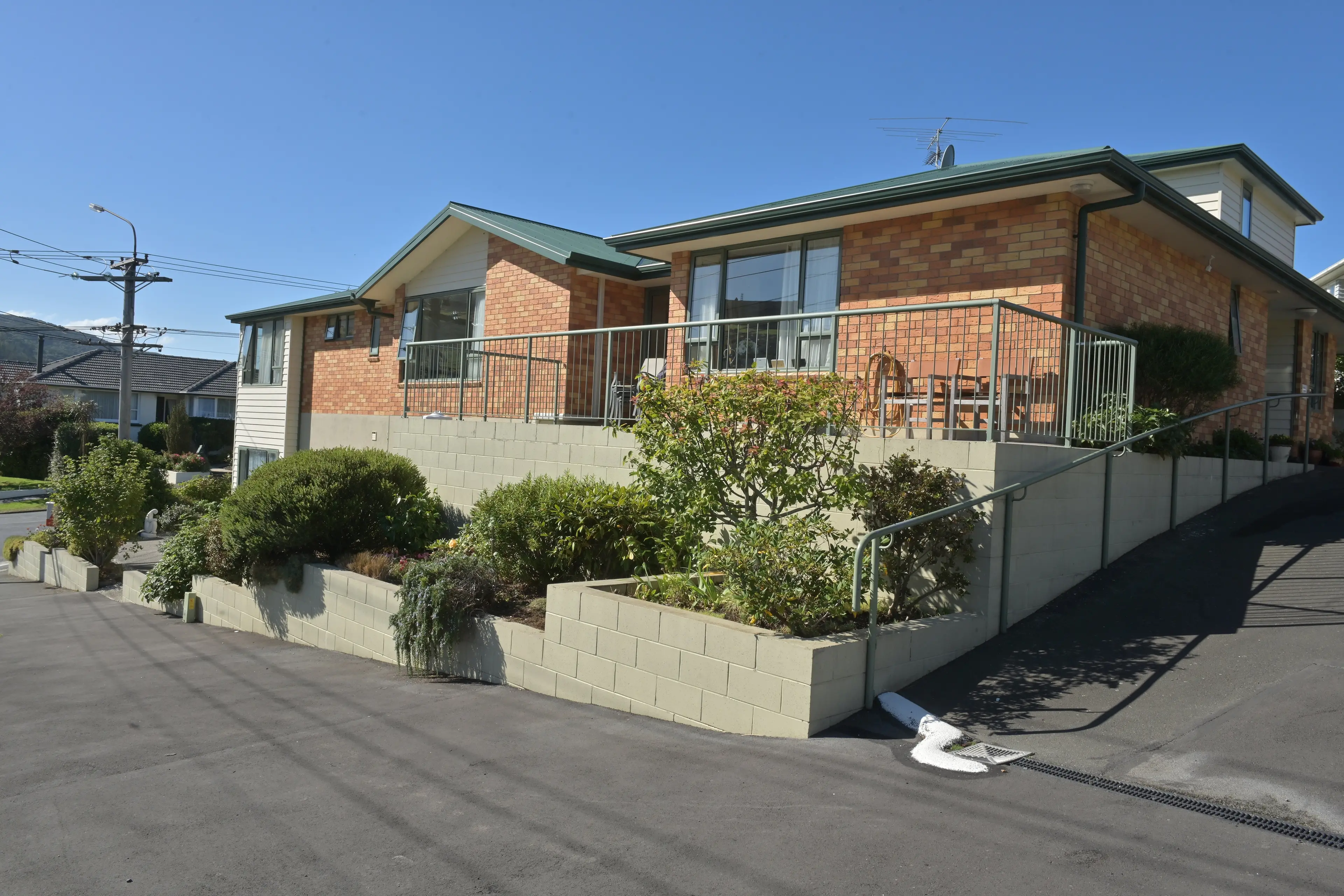
Invercargill’s housing stock is poorly suited to the city’s ageing population, the city’s mayor says. Invercargill Mayor Tom Campbell said many seniors were “trapped” in older three- to four-bedroom houses, built in the 1950s and 1960s, which had large and difficult-to-manage sections. “The second problem is that the resale value of them is actually much less than the cost of getting into a smaller, modern unit — and that lies at the heart of the problem.” The inability to downsize was creating a housing bottleneck. “It’s a circular issue that affects every generation.” While it was not council’s role to build houses, it recognised it was responsible for ensuring suitable land was available by adjusting the district plan to reflect modern housing needs by ensuring there was ample land available for new housing developments. [Missing Credit]Invercargill Mayor Tom Campbell says as the city approaches 27% of its population being over 65 by 2054, it needs to find a workable housing solution for its senior residents. Photo: Allied Media files The council’s planning rules and district plan should reflect what people needed at the present time, “rather than what people needed 50 years ago”, he said. “What they need now is often smaller sections, smaller houses, apartments maybe in the city, low-rise apartments … those sorts of things which are just not available here.” Statistics NZ projected as the city’s population moved towards a total population of more than 73,000 residents by 2054, it also expected 27% (19,422) of city residents would be over the age of 65. Mr Campbell said he hoped changes to the district plan would encourage private developers to build smaller properties. “All the rules at the moment encourage people to either build bigger units or else go to the outskirts of the city and build very large and expensive houses.” Developers were also more incentivised to build larger properties to make money, he said. However, he believed there was ample land available, but the city needed smaller housing options. “Rather than keep pushing out the boundaries of the city, we’d much rather see more housing being built in the city, and even apartments being built in the centre of the city to bring life back into the city. “The city really wants these problems resolved.” Mr Campbell said he would like the Abbeyfield housing model, which steering groups plan, to establish in the city. “I think its a great model and its a great way of reducing the costs for people … and loneliness that people feel as they move into a home on their own. “It’s a model we would support. “If we get an approach from a group that was looking to put up that kind of social development, we would definitely be listening to their propositions. The Abbeyfield model would suit some people much better than council accommodation, he said. SuppliedAbbeyfield steering committee member Lynley McKerrow is excited about the prospects of developing an Abbeyfield development in Invercargill. Photo: Allied Media files Senior advocate Lynley McKerrow announced in July a steering group had been created to initiate an Abbeyfield development in Invercargill, where independent seniors would share a family-style home with private rooms but community kitchen and living areas. Residents would pay a weekly fee to the locally operated not-for-profit incorporated society to cover accommodation, prepared meals, electricity, internet and other living costs. The group visited the Queenstown development on Tuesday. “We found out lots of good information … we are really excited.” New developments were projects started by a local steering group, rather than being driven by a national office. The current four-member steering group had already identified potential property options. But growing its steering committee members and skills as well as officially achieving Abbeyfields NZ affiliation was the first move, she said. There are 194 residents living in 16 Abbeyfield houses nationwide.