
PHOTO
Nature can be gentle, nature can be kind. Nature can stop people in their tracks with its astonishing beauty and its jaw-dropping charm.
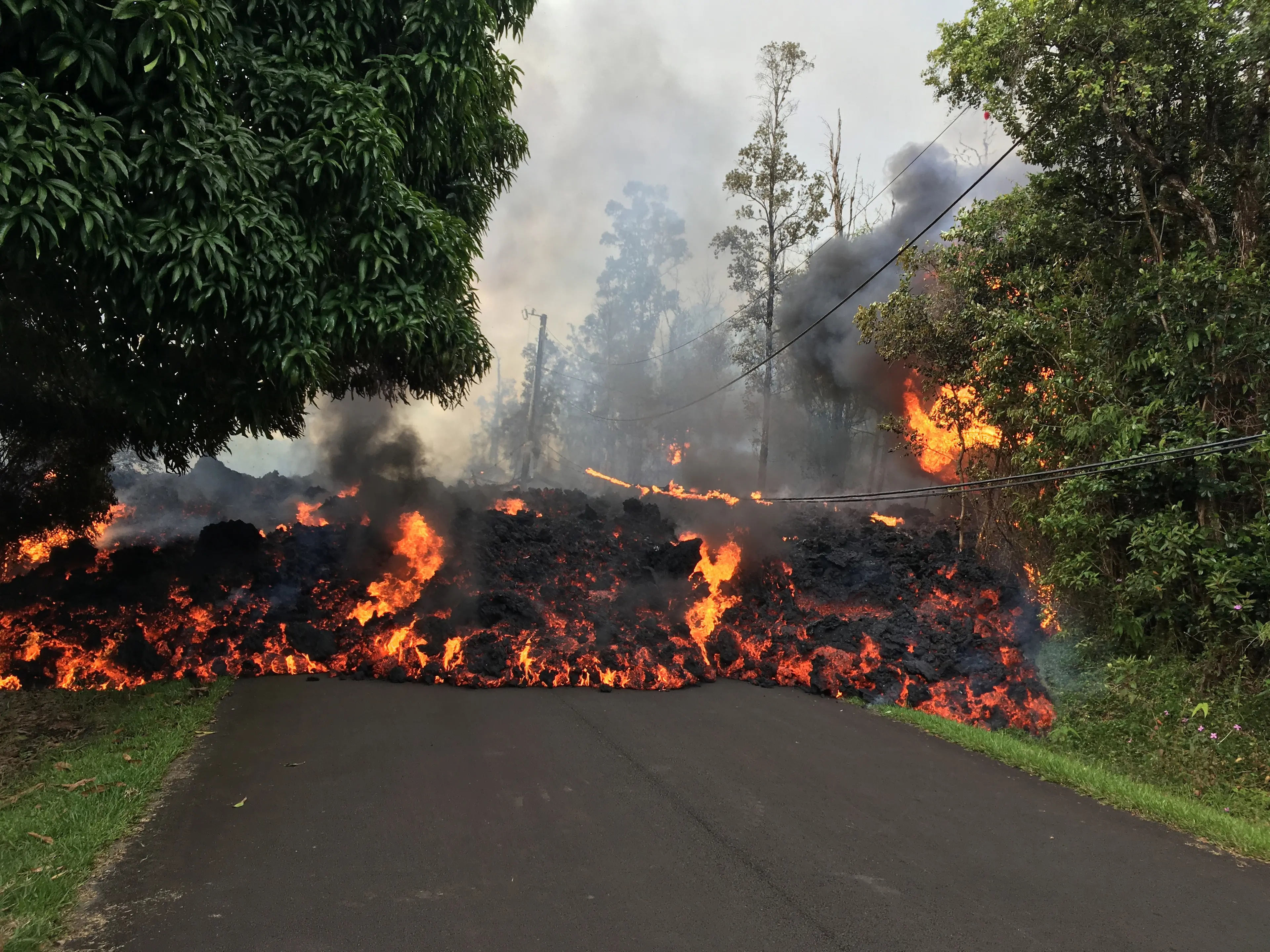
But as we know, it is not all cuddly pandas, fluffy ducks and trickling waterfalls. Nature, unfortunately, has another side - a ferocious side. Wild animals kill one another, hillsides collapse, earthquakes rip open the ground. Erupting volcanoes fill the sky with ash and send rivers of lava across the human-modified landscape, as we are witnessing now in Hawaii.
We can anthropomorphise about nature's "cruel streak" or its "destructive power". But while what is happening in the United States' Pacific Ocean outpost may be destructive to human endeavours, it is actually constructive, in terms of building the planet on which we live. It is simply Earth doing what it has done for many billions of years.
The latest eruption on the eastern side of Big Island has been under way for about a week, accompanied by earth tremors, the largest of which, at magnitude 6.9, was Hawaii's strongest in more than 40 years.
Lava has been bubbling out or spurting up through fissures in the ground around the residential area of Pahoa, forcing evacuations and destroying several dozen houses. Kilauea, the volcano responsible, is the island chain's most active and, according to the United States Geological Survey, has been erupting continuously since 1983.
Volcanologists consider the current eruption normal for Kilauea, although they say the ejection of lava in the middle of where people live has come as something of a surprise.
Hawaii sits atop what is called a "hot spot" in the centre of the Pacific crustal plate, where the liquid magma - which becomes known as lava once it is above ground level - rises closer to the surface than in surrounding locations.
While the lava destroys everything it touches, having an internal temperature of up to 1200degC, its movement is sluggish, allowing time for evacuations and other emergency responses. But it is not just lava residents have to worry about - toxic gases are being released from the vents, sulphur dioxide chief among them.
Hawaii is about 7000km from New Zealand, enough distance to make events there seem a world away and of only peripheral interest here. However, both island groups share a common home on the Pacific Plate, even if Hawaii sits above a hot spot in the middle of the plate and New Zealand straddles the edge of it on the "ring of fire", a line of active earthquake faults and volcanoes around the Pacific Ocean rim.
The eruption of Kilauea provides New Zealanders with a valuable reminder of our vulnerability to volcanic activity. It is not beyond the bounds of possibility that the scenes from Big Island may be repeated one day on the streets of our largest city.
Scientists have been studying the Auckland volcanic field, which covers about 360 square kilometres below the city and is made up of more than 50 separate volcanoes. The largest eruption of these, Rangitoto, was also the most recent, only 600 years ago.
While the good news for Aucklanders is none of these 50-odd cones are expected to come to life again, the bad news is a hot spot of magma is only 100km below Auckland and new volcanoes could easily form and erupt.
The central North Island's "volcanic plateau", which is slowly getting larger as the crust stretches and thins in that area, is also capable of large, disruptive, or damaging, eruptions, as is Mt Taranaki. And there is the super-volcano below Lake Taupo - previous eruptions from the magma chamber only about 6km below the lake-bottom rank as two of the world's most violent eruptions in recent geological history.
We should not be complacent. The Hawaiian eruption is a wake-up call for New Zealanders to always be prepared.