
PHOTO
There was a time when New Zealand agonised over whether an American warship should be allowed to enter one of our harbours.
The debate consumed the country. Families argued around dinner tables. Governments rose and fell. Our anti-nuclear policy became part of how we saw ourselves and how the world saw us.
Whether you agreed with it or not, one thing was undeniable. We had the conversation.
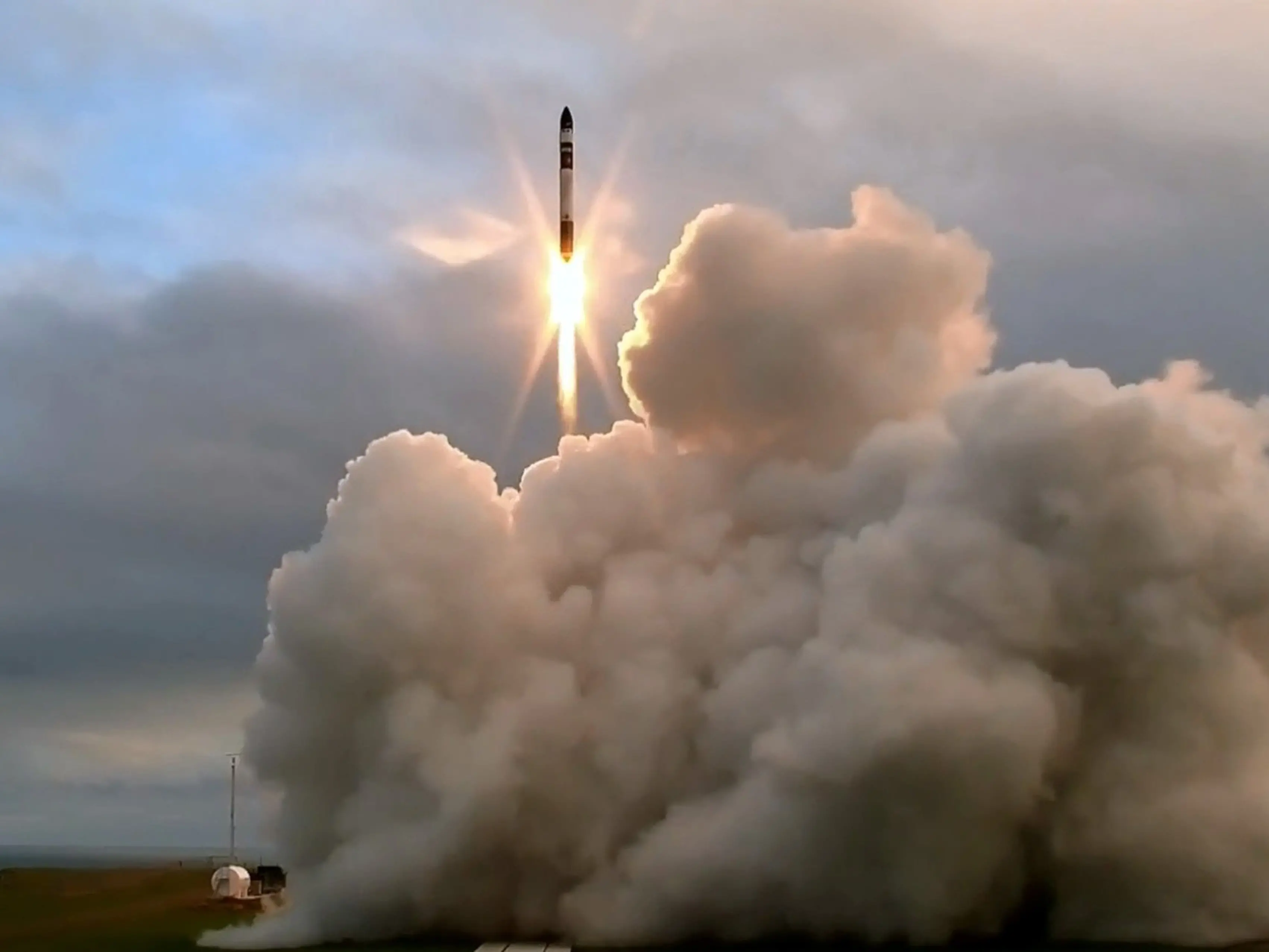
This is why a social media post from Rocket Lab last week caught my attention: ‘‘The Space Force called, and we launched.’’
According to the company, less than 17 hours elapsed between receiving the request and launching a payload from Launch Complex 1 on Mahia Peninsula.
It wasn’t simply another successful launch. It was a demonstration of a new capability: responsive access to space for the United States Space Force.
From an engineering perspective, it’s astonishing.
Preparing a launch vehicle, integrating a payload, completing the countless safety and regulatory checks, and then successfully launching within 16 hours is an extraordinary technical achievement.
Sir Peter Beck and the Rocket Lab team have built something that few people would have believed possible 20 years ago, and New Zealand can rightly feel proud that such a company was created here.
But admiration and unease are not mutually exclusive.
Reading those words, I found myself wondering whether we’ve quietly crossed a threshold.
Not legally. Not commercially. Politically.
Space has changed.
When I first became involved in astronomy, space was largely about exploration. Satellites helped us forecast the weather, study the Earth, navigate around the world, and explore the solar system.
Military satellites certainly existed, but they were largely out of sight and out of mind.
Today, the picture is very different.
Communications, navigation, intelligence gathering, missile warning, cybersecurity and battlefield awareness all depend on satellites. The ability to replace one quickly if it fails or is destroyed has become strategically important.
That is exactly the capability Rocket Lab has demonstrated.
None of this is a criticism of Rocket Lab.
The company has never hidden the fact that defence customers form part of its business. It operates in accordance with New Zealand law and under licences issued by the New Zealand government.
There is no suggestion that it has done anything improper.
My question is a different one.
Have we, as a country, really stopped to consider what this means?
If launches from New Zealand become an integral part of another nation’s military space capability, does that alter how the world sees us?
Does it change our understanding of an independent foreign policy?
In a future conflict, might New Zealand be viewed differently because of the role our launch facilities play?
Perhaps the answer to all of those questions is no.
Perhaps the economic, scientific and technological benefits far outweigh any strategic concerns.
Perhaps this is simply the price, and the privilege, of being home to one of the world’s most innovative space companies.
But these are questions that deserve public discussion.
Forty years ago, we debated whether foreign warships should enter our ports.
Today, rockets carrying military payloads leave our shores.
One issue belongs to the 20th century, the other to the 21st. Yet both address the same question.
What sort of country do we want New Zealand to be?
• Ian Griffin is director of Tūhura Otago Museum. This article has been written in a personal capacity.