

We are the second-most biodiverse country in the world, but you probably only know us for our drugs.
We are home to the Amazon rainforest, Andes mountains and the Caribbean coast, but you probably only know us for our violence.
We cultivate and grow some of the best coffee that you love to drink, but you probably know us for one man.
We are home to authors, athletes, and artists that you adore. Our people and our culture is as diverse as our landscapes, but you probably know us from that Netflix series.
In the past years we have changed and revolutionised as much as we like to move our hips when we dance salsa.
But you probably didn’t know that. Or anything about us.
Today I call Colombia my new home. For the foreseeable future at least.
And because I’m going there in large part to be a journalist, I thought it would make sense to write a piece on why you don’t know anything about Colombia.
And me neither, really. And so this can be be a journey of learning we can do together.
Over the past few months I have had many conversations with people wherein I’ve mentioned that I will be going to live in Colombia. And almost without exception, the response goes something like this: "it’s very dangerous there, no?", "ahh, you’re going to go sell drugs?", "why on earth would you want to go somewhere like that?" — or various takes on anything to do with violence, drug trafficking and danger.
Recently, though, I have been taken aback at how consistent these ideas about Colombia are in my circles. Circles I would consider open-minded. Aside from these ideas, the only other common denominator shared by these people is that they haven’t visited Colombia. Which of course makes sense.
It is especially true for us in New Zealand that we feel comfortable with what we know, and uncomfortable with that which we do not know. Besides, the easiest way to do away with the unknown is to label it with negative sweeping statements that rationalise why we would never want to know it.
Or dare visit. And for most of us, this probably isn’t a problem. There are 195 other countries out there, and doing away with one because of what we’ve heard about it — true or not — is no great loss. Right?
Well, I am here, however, to propose there is a loss; a grave and grand one at that. One where we fail to see the world for what it is. Instead we have our world shaped by miscellaneous stories we heard on the news and seen in Hollywood films. (And are these really plausible sources to shape the way we see the world?)
So why not, therefore, together see Colombia for a bit more of what Colombia is?
Diverse does not begin to grasp what Colombia is. With its 50 million inhabitants, Colombia is home to hundreds of indigenous communities and native languages, alongside its most widely spoken language, Spanish.
Bogota, its capital of eight million people, lies at over 2600m altitude, making it one of the highest capitals in the world.
Bogota is also home to over 30 universities and functions as a major hub for all things concerning the Latin American world.
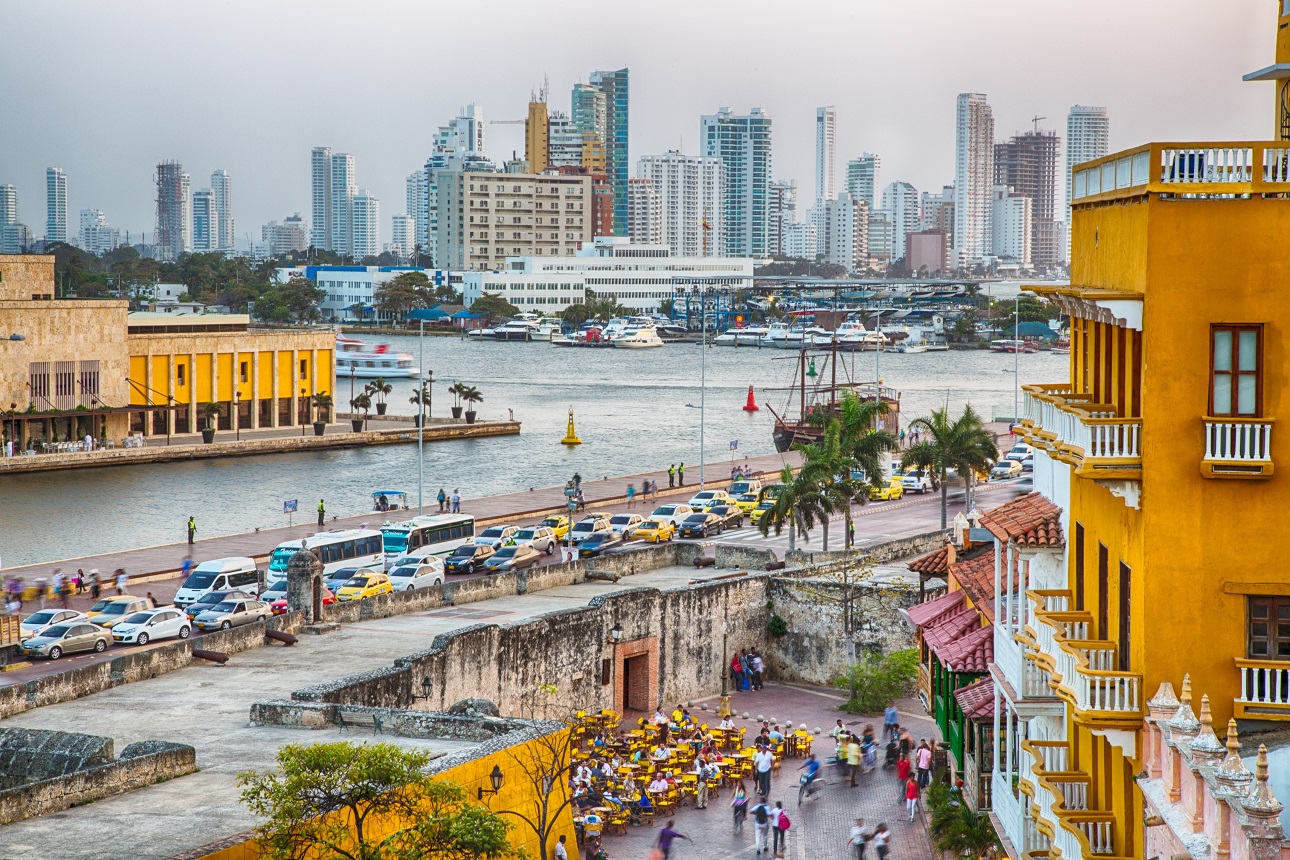
However, seldom is Bogota the first choice as a tourist destination, beaten out by the likes of Medellin and Cartagena, two cities with almost unwavering warm temperatures and natural beauty. These cities boast a charismatic and colourful culture that often manifests when life is lived outside and in the hot sun.
Sometimes referred to as being mega-diverse, Colombia is the second-most biodiverse country on earth. It is also home to the greatest variety of bird and butterfly species anywhere in the world.
Ought that not excite us Kiwis, being the bird-loving nation we are?
With the snow-topped Andes mountains lining its centre, the white sandy beaches of the Caribbean coast meandering its north, and the Amazonian rainforest colourising its south, Colombia has it all.
Or at least it has a lot of it with respect to topography and climate.
And any biogeologist will tell you that with such radically different landscapes, combined with its equatorial temperatures, it is understandable as to why Colombia is so biodiverse.
But of course, Colombia is not all sunshine and rainbow-coloured birds.
In its tumultuous history, Colombia has certainly gone its way in earning the stereotypes it now holds. Or at least that was true 10 years ago.
Just as Germany revolutionised itself after the Nazi era, and you, too, after your antics at high school, the Colombia of today is far from what it used to be.
Maybe the most significant example of this is Colombia’s "el acuerdo de paz" — a peace agreement — that was signed in 2016 ending a five-decades-long civil conflict.
What’s more, the Colombia of today has its very first socially progressive president, Gustavo Petro.
However, like anywhere, politics is not easy in Colombia. Petro has an immense job to try to convince his both incredibly poor, and traditionally conservative, Catholic nation that his social welfare policies will bring about real change for the over 30% of Colombians who live below the poverty line.
That is, while also trying to protect a large portion of the lungs of the world — the Amazon —and stay out of controversy (a task seldom succeeded by Colombian leaders).
My twofold hope with this article is that it firstly reminds you that not everything is as it seems. And secondly, that it encourages us to search for seeing things as they are, not for as we passively inherited them to be.
If you are interested in learning more on Colombian culture and life, I can recommend Gabriel Garcia Marquez’s novel One Hundred Years of Solitude, and asking your local barista where the best coffee beans in the world are from.
- Former Dunedin resident Tim O’Farrell is studying for a master’s of journalism in Colombia.


