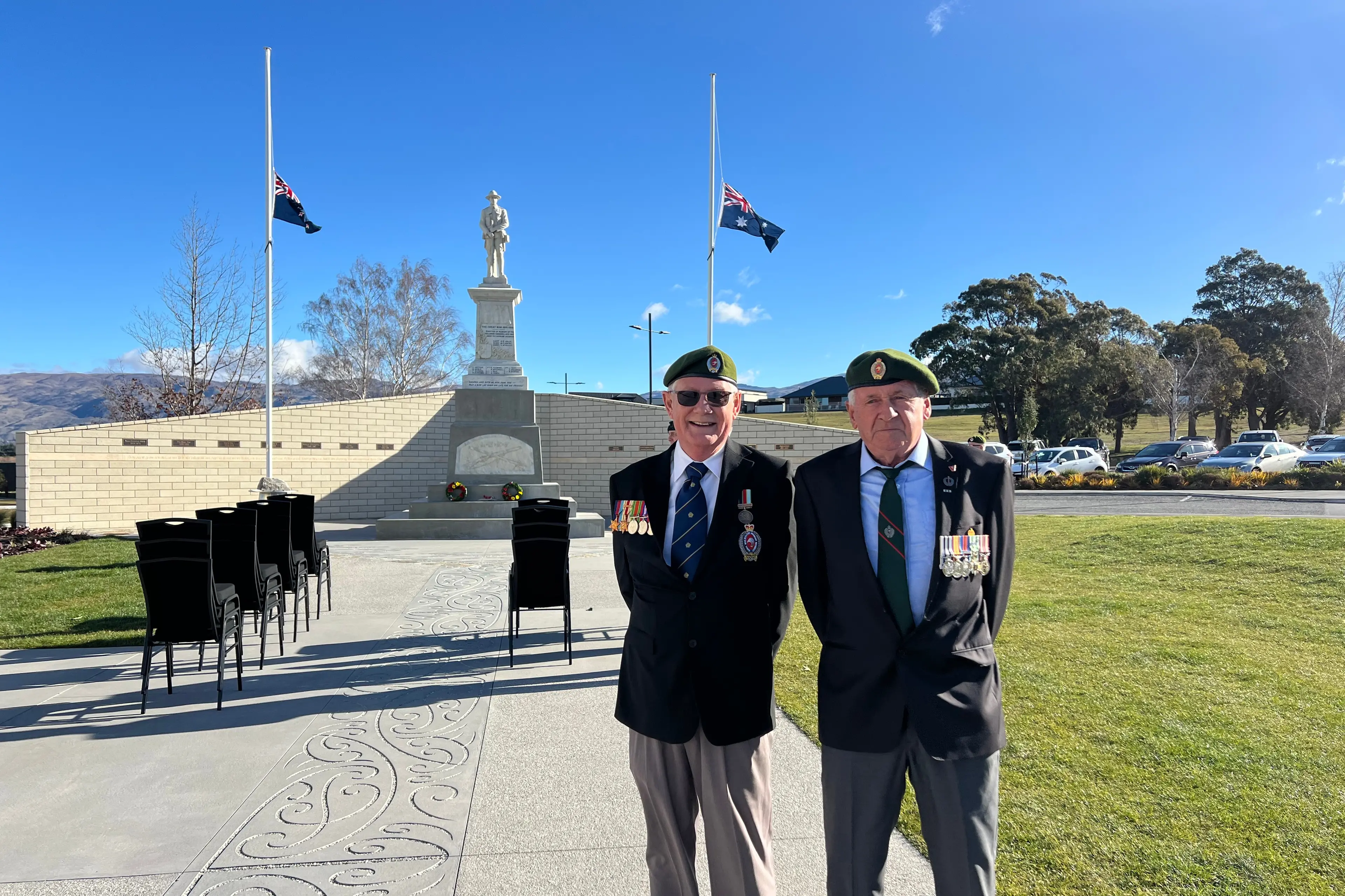
At 77 years old, Vietnam War veteran Lewis Pagan stood at the Cromwell War Memorial Gardens during Tuesday’s service and lay down a wreath. It was the first time in his life he had been asked to do so, let alone to acknowledge a war that New Zealand for decades wanted soldiers to “put away their medals and forget about”. The Cromwell service, attended by RSA members, veterans, current serving personnel, families and community, marked the 60th anniversary of the Battle of Long Tan, one of the defining battles of the Vietnam War for Anzac forces. For Mr Pagan, a Cromwell local and former private who served in the New Zealand army during the Vietnam War, laying the wreath was a small act that meant more than many would ever understand. Mr Pagan said he was fortunate he was stationed at another base at the time but remembered how significant the battle was. He remembered the men caught in a rubber plantation — “not a good place to be at all.” AAPIMAGE**TO GO WITH FEATURE SLUGGED LONG TAN** A supplied photo of an Australian soldiers during the battle of Long Tan in Vietnam on Aug. 18, 1966. The battle was the bloodiest if not the biggest battle of Australia's involvement in Vietnam. (AAP Image/Courtesy of the Australian War Memorial) NO ARCHIVING, EDITORIAL USE ONLY On August 18, 1966, 108 outnumbered Australian and New Zealand soldiers of D Company, 6th Battalion, Royal Australian Regiment, faced an assault by more than 2000 Viet Cong and North Vietnamese troops in a mud-soaked rubber plantation. Their survival hinged on New Zealand’s 161 Field Battery, Royal New Zealand Artillery, which fired over 1000 rounds in three hours from Nui Dat base under monsoon conditions to hold the line until relief arrived. The battle claimed 18 Australian lives and left 24 wounded. Cromwell RSA president Peter Svensson said the anniversary carried growing weight each year. And honouring the Vietnam War veterans became “more important because they are getting older, and we have lost a number of them recently, and we need to acknowledge the sacrifices they made”. Mr Pagan arrived in Vietnam in 1969 and served for just over a year. He joined the army the moment he was old enough, “as soon as I could”, he said, having wanted to be a solider since he was a boy. [Missing Credit]A young Lewis Pagan pictured during his service in Vietnam, where he served as a private with Whiskey Company (W3). Photo: Carys Trotter Growing up in the South Island, in Winton, Mr Pagan was the eldest of four and was just 19 when he arrived in Vietnam. His arrival followed six months of intensive training preparing the soldiers for the tropical conditions and the reality of jungle warfare. His training included time in New Zealand, Fiji and Malaya, learning military skills as well as bushcraft, survival, navigating jungle terrain for days at a time, learning to ration, and hand signals. “We were well-trained and good soldiers. “But you can’t give anyone an idea of what it will be like, what war will actually be like.” He served in the Whiskey Company (W3), based mainly at Nui Dat base in Vietnam. He said the enemy had dubbed the Kiwis “grey ghosts” for their stealth in the jungle. For his platoon, Mr Pagan said they were all “just such good mates”. He said snakes were a part of everyday life, you were always wary of them in the jungle, and the wildlife around. But the moments when it would all go quiet were the moments soldiers dreaded. “It always meant something wasn’t right somewhere, that something was going to happen.” Flying back through Singapore for their stand-down period after serving, soldiers were warned protesters would be waiting. “We expected it, but not for how bad it was to get,” he said. The returning soldiers were met with protesters opposed to the divisive conflict. Each soldier then found their own way home with where they had returned from barely mentioned again. “You were basically told to take your uniform off, fold it up, put it away, get on with it — and never mention it again. “To put away your medals and forget about it.” Many also came home bearing an unseen cost of the conflict. Soldiers, including Mr Pagan, were exposed to Agent Orange, a deadly herbicide sprayed to clear the vegetation in the jungle. Its effects can surface decades after exposure, and pass through to generations. It was another part of the war Mr Pagan said people did not want to know about, even doctors did not wish to speak of it. There was no support system waiting for the returning soldiers, no acknowledgement, no compensation for decades. For years there was little public recognition that Vietnam had been a war at all. Mr Pagan recalled walking into community and military venues with his comrades and being told to turn around and leave. They were treated coldly by many close friends and community members. “That was one of the worst parts, and when you would hear it wasn’t a real war. “We lost lots of very good men over there. “I lost good mates. “We didn’t all get to come home.” “There were lots of suicides. It was horrible. “We were alienated,” he said. Still, Mr Pagan said, one group stood apart, the veterans of World War 1 and 2. “They were some of the kindest ones around,” he said, the veterans showing genuine understanding and compassion for the returning Vietnam servicemen, having lived through their own version of combat and its aftermath. “At the end of the day, we were just boys,” Mr Pagan said. “We weren’t baby killers, no matter what they tell you.” On Tuesday, Mr Svensson acknowledged the treatment Vietnam veterans faced when they returned home as a painful chapter in New Zealand’s history. “It was a sad indictment on the NZ community when they shunned the veterans on their return from Vietnam. “They didn’t understand the trials the veterans faced, and instead of embracing them, they judged them,” Mr Svensson said. For Mr Pagan, what mattered most now was what came next. Mr Pagan has been married to his wife Kath for 54 years now. The couple met two years after he came home from Vietnam. They have three children, 11 grandchildren and 2 great-grandchildren. Mrs Pagan said she was very proud of her husband, for what he had done, and for coming to the service. For a long time, Mr Pagan said it was just Vietnam war veterans looking after one another, and that there was a still a long way to go, but support from others had come a long way too. Tuesday’s ceremony and recognition had once seemed unthinkable. “Today was good. It was very good,” he said. carys.trotter@alliedmedia.co.nz