PHOTO
A climber spent three hours battling to the top of Otago’s highest peak believing his companion had plummeted to his death.
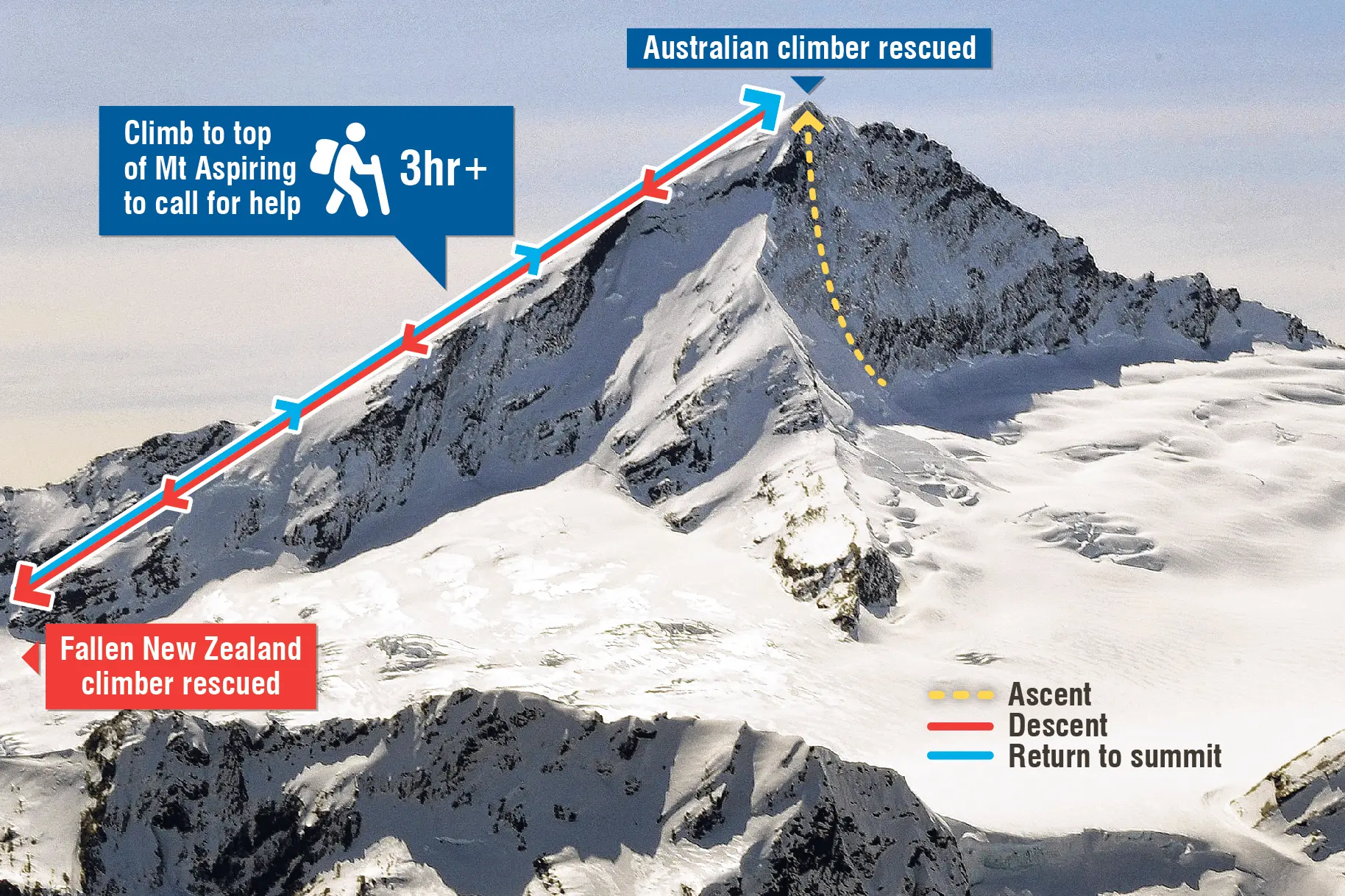
The duo, an Australian and a New Zealander, were descending the west face of Mt Aspiring near Queenstown on Tuesday after earlier reaching the summit when the New Zealander fell 200m down the cliff face into a crevasse, Helicopters Otago chief executive Graeme Gale said.
“It was a significant fall, and potentially unsurvivable.”
The fallen climber had the pair’s personal locator beacon (PLB) — a small portable emergency device used to transmit a distress signal and precise GPS coordinates to rescue authorities via satellite.
This meant his Australian climbing partner had to return to the summit to get cell service and call for help.
About midnight, police received the call and promptly looped in Helicopters Otago and the Wakatipu Search and Rescue alpine cliff rescue volunteers to help coordinate a rescue.
The Australian climber did not believe his climbing partner could have survived the fall — and neither did the rescue team, who believed they were searching for a body.
“This was serious stuff … it was the middle of the night, they’re in night-vision goggles, and there’s pretty high winds and clouds starting to come in.
“There was a lot of factors that made it very challenging,” Mr Gale said.
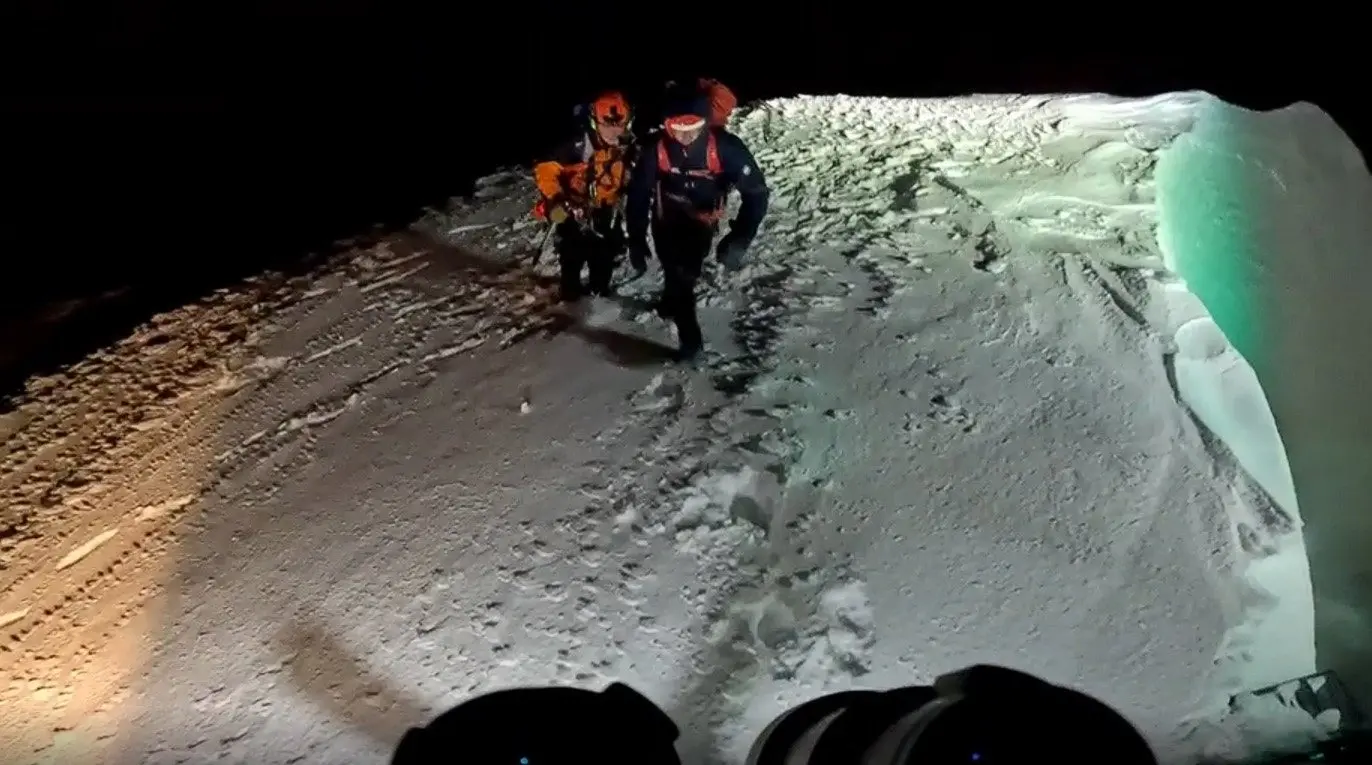
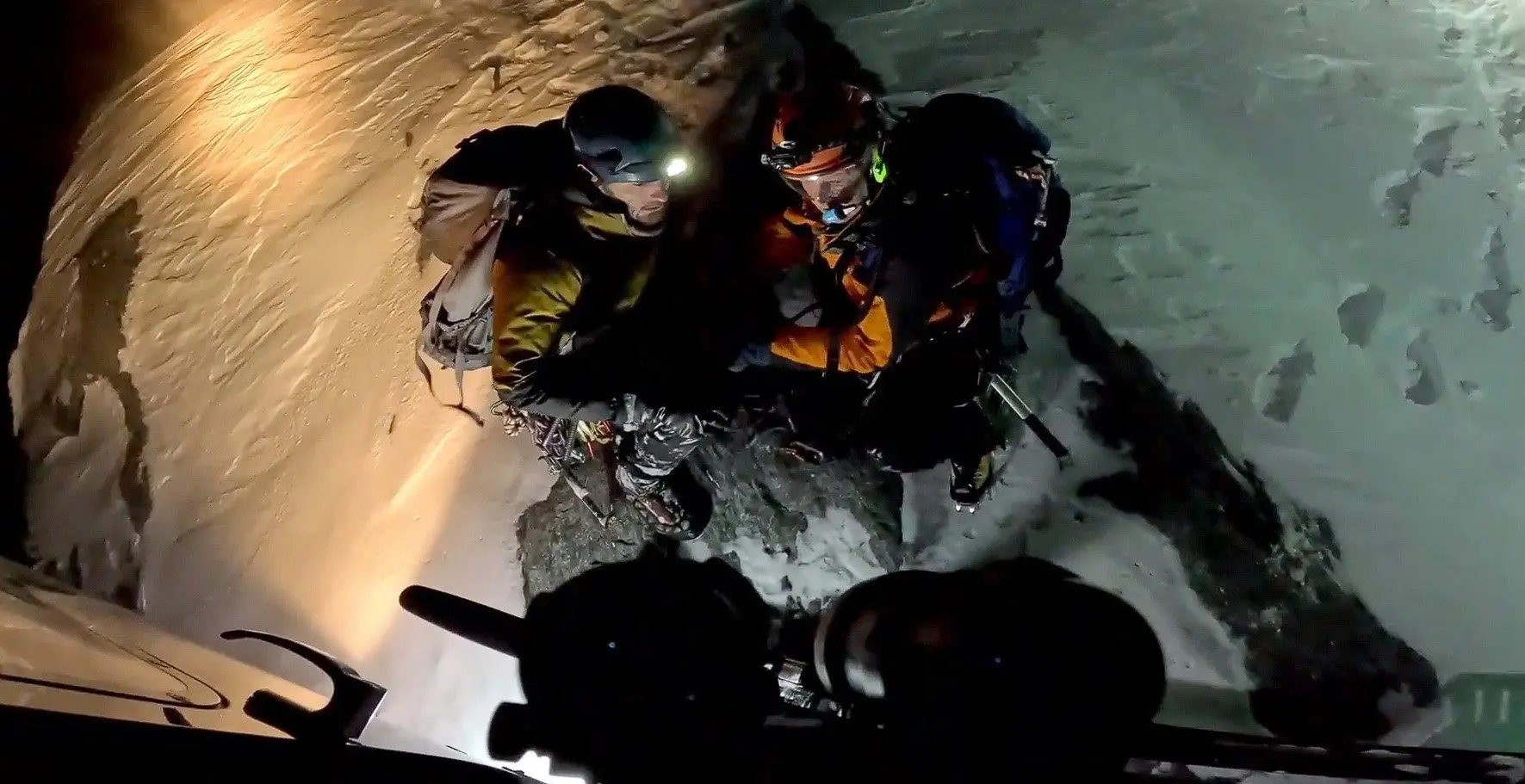
As the team in the helicopter — which included a pilot, a senior paramedic and an alpine specialist — were heading to rescue the man from the peak, they saw a light from below but “didn’t think a lot of it at the time”.
They managed to rescue the first climber and, when they went to investigate the mysterious light, discovered a sight that made their hearts leap.
“It turned out that it [the light] was actually the climber who had fallen hours before … he was actually on his feet.”
Surprisingly, the man had come away from the fall with a broken ankle and had possibly been unconscious for a time.
Half an hour after being plucked from the crevasse, he was in the Queenstown Lakes District Hospital.
Mr Gale said it was an “amazing result”.
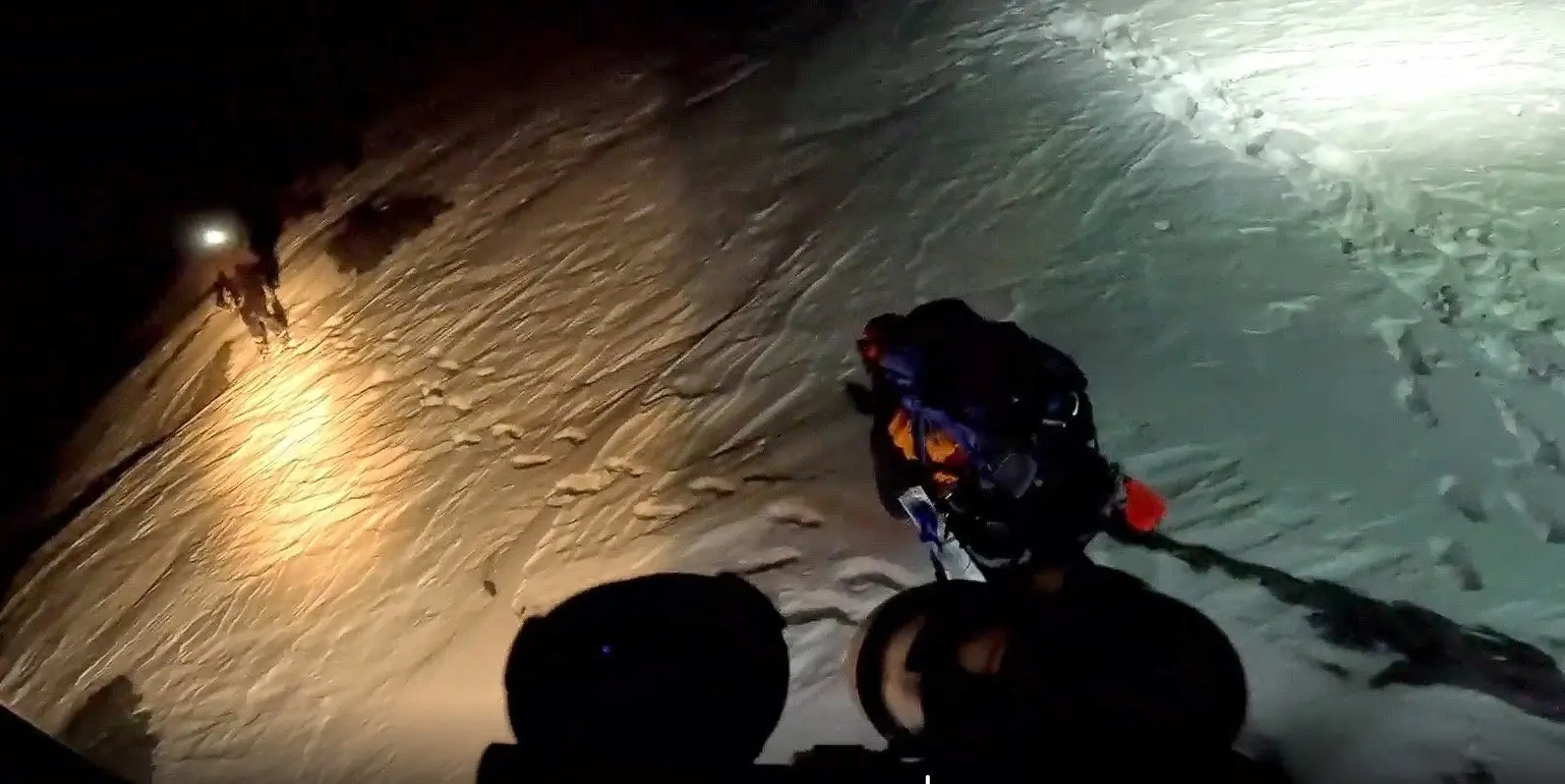
“For something that sounded absolutely tragic when we were going to it … fantastic job, fantastic outcome.
“To survive that was phenomenal really.”
The rescue was all down to the “great work” from the team in the air, the volunteers on the ground, the coordination centre and everyone else involved who worked for about three hours in the middle of the night to rescue the two men.
“Credit to the guys, the training, and all the other bits that go on in the background. “
The rescue involved a lot of pre-planning done fast, and huge cross-agency support between police, Helicopters Otago and the Wakatipu Search and Rescue volunteers.
“It’s not a scenic flight we’re going on. It needs some serious planning, equipment and teamwork.”
Helicopters Otago alpine specialist Jono Gillian was in the helicopter as part of the rescue team.
He said it was dark with about 20 knots of wind, and a wind chill of about 10˚C.
“Considering the fact that we were going in there under the premise that we may be looking for a deceased subject … to arrive on scene and find that there was actually two persons both alive was very uplifting.”
Mr Gillian thanked police and the Wakatipu Search and Rescue alpine cliff rescue volunteers, who had come in the middle of a winter night to support the rescue.
“That’s really important … I can’t understate enough how important the relationship with volunteers is in making this kind of stuff happen.
“At the end of the day, it was me getting out of the helicopter and grabbing these guys, but I’m not willing to do that without the support and the safety network that is afforded with their help.”
laine.priestley@odt.co.nz