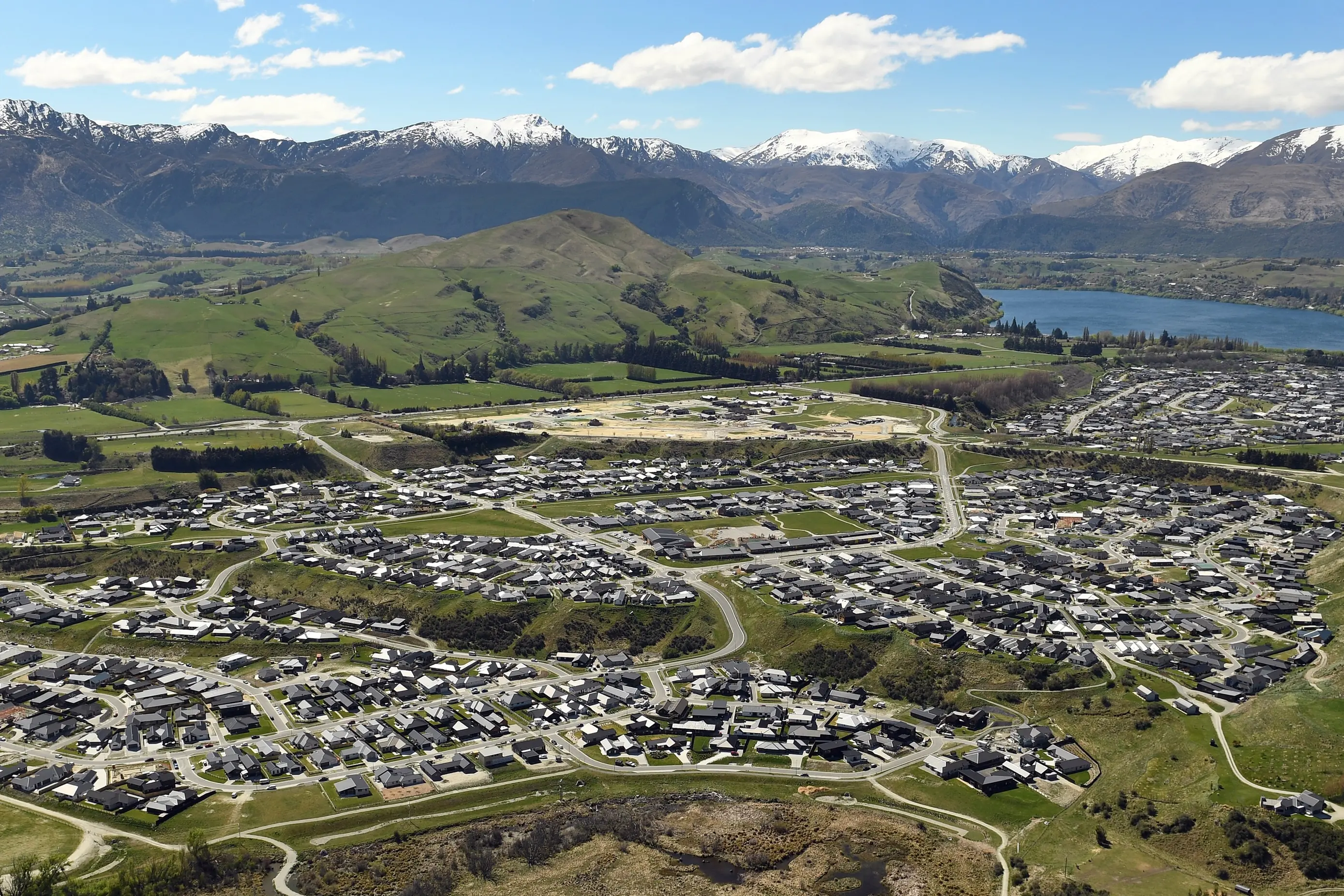
Many of the strict rules on rural housing development in Queenstown are being weakened in legislation replacing the Resource Management Act (RMA). Two new laws, which a select committee reported back on this week after 3000-plus public submissions, are now proceeding to their second reading with the intention they will be passed by September 24. Local planning consultant Carey Vivian said Section 14 of the Planning Bill opened the way for a lot more housing in Queenstown’s rural areas. “It states councils must disregard effects on the landscape if the landscape is not ‘outstanding’, such as most of the Whakatipu Basin floor, and not an area with high natural character, such as the Gibbston valley. “It also says views from private property must also be disregarded. “Say someone wants to build a house in the Whakatipu Basin somewhere in the rural area, and they propose a house directly in front of someone else’s view of Coronet Peak or whatever, then the legislation says you can’t consider the effect on that person’s view. “And, you know, probably 99% of the battles that have been in the Whakatipu Basin for the last 20 years relate to people’s views.” Mr Vivian said it would be difficult to transition to the new regime as district planning was focused heavily on the effect of landscape and visual amenity values for a long time. “A lot of protection of the Whakatipu Basin in particular may be undone.” He said quite a few developers had sat back waiting for this new legislation — “it’s certainly seen as positive for development”. “I just can’t fathom in 20 years’ time what the Basin will look like, it could be just urban spread throughout it. “If you cover all of our landscapes in housing, then will tourists still want to come here in the future?” Mr Vivian, however, praised the legislation’s change of emphasis from protecting ‘’outstanding natural landscapes’’ to the management of them — “this is positive, in my view, particularly from a biodiversity perspective”. Local Todd Walker lawyer Rosie Hill agreed that much of the district plan was “focused on kind of rural character and landscape effects”. “If you suddenly remove that, that’s going to be quite a big change.” She said there had been an emphasis on “sensitively designed” rural development. “That’s been the product of the district plans over the past decades which have sought to achieve that. “You know, it’s a high test for development in the Basin, and it always has been. “Potentially there are probably other tools to still constrain development which don’t focus just on landscape effects.” Arrowtown-based architect Louise Wright said once the law took effect, “as you’re driving through Dalefield you might see more houses start to crop up on hills and ridge lines and things that previously would have had some level of planning protection over them”. Her understanding was existing rules on the character, appearance and aesthetic qualities of rural housing would also be disregarded. Low-reflectivity darker colours, like greys, browns and greens, had been preferred over light colours, but that might not be the case any longer, Ms Wright said. “There’s a lot of work that goes into these projects in the rural area around landscape assessment, and so with that being out the window, that’s a massive change. “I can say it could give architects a lot more design freedom.” Under the new regime, Queenstown’s district plan will be replaced with a more regional spatial plan more in common with others in the country. Mr Vivian said he understood the transition period for the new legislation started one month after its royal assent and ran till late 2029. “During this time the RMA remains in effect, however during this time councils have to make targeted updates to plans to remove plan provisions relating to effects that are out of scope.” Council planning and development GM David Wallace said it would be inappropriate to comment until they had a full understanding of the amended proposed legislation. At first glance “the overall reform architecture remains unchanged”. “The most relevant changes for Queenstown Lakes District Council are the clarified, but still narrow, treatment of effects under the Planning Bill, stronger recognition of landowner ‘enjoyment of land’, retained regulatory relief provisions, a clearer but limited role for climate adaptation and more flexible environmental limit-setting. “Significant uncertainty remains until the national policy direction, national standards and final transition settings are confirmed.” scoop@scene.co.nz