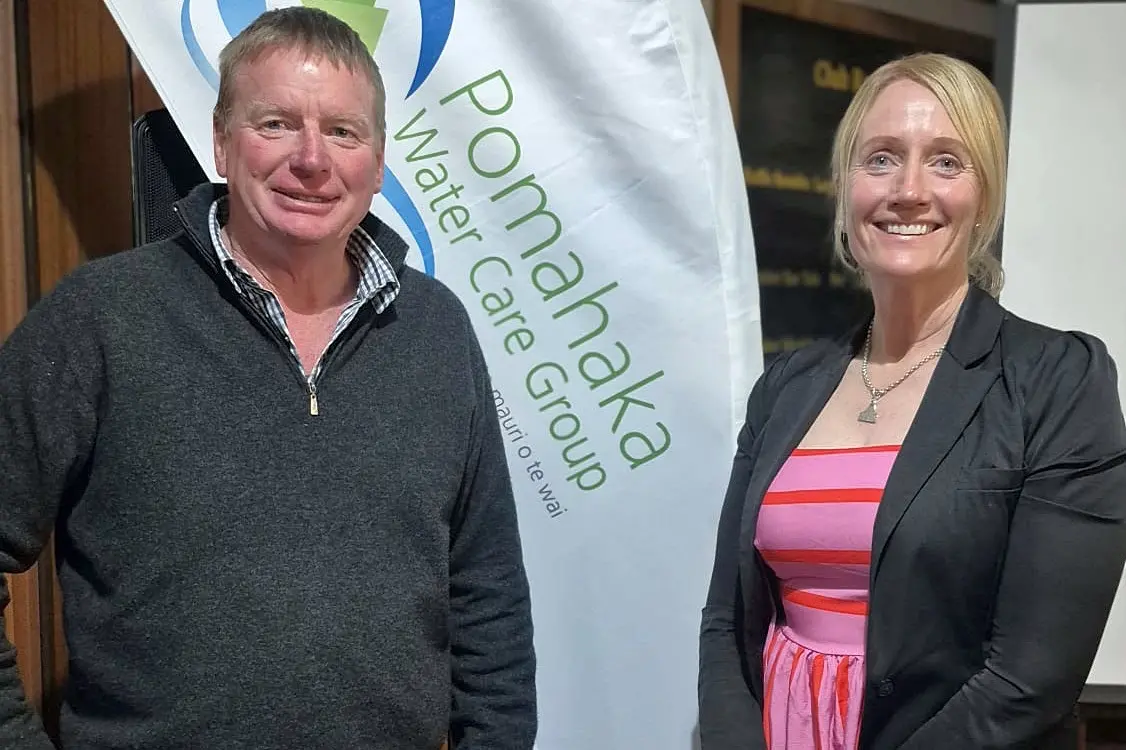
Long-term local commitment works better for the environment than rafts of government regulation, Pomahaka Watercare’s guest speaker said in Tapanui last week. Environmentalist Jane Smith, a North Otago sheep and beef farmer and winner of the 2012 New Zealand Ballance Farm Environment Supreme Award, spoke at the catchment group’s annual meeting last Monday, July 21. ‘‘The best environmental initiatives aren’t driven by regulation, they’re driven by intergenerational effort,’’ she said. ‘‘That’s what we see with catchment groups. It’s not just one or two years or five years, it’s intergenerational. “As a sector, we’ve spent a lot of time and nearly a billion dollars chasing natural methane emissions when that could have been going into biodiversity, for example, something much more measurable and tangible that’s actually going to make a real difference.’’ She said catchment groups succeeded because they worked with farmers’ own interests and methods in taking responsibility for their land, rather than policing them with relentless, regulatory box-ticking and fees. ‘‘I’m known for pushing back at some of the regulations that actually make no sense because I think the best guardians are those whose future livelihood depends on how they are actually running their land.’’ Drawing on her experience with the Ballance Farm Environment Awards and North Otago Sustainable Land Management, Mrs Smith said lasting environmental gains came when improvements in practice were integrated carefully throughout everyday farming rather than a complex, aggressive compliance regime. About 50 people attended the meeting and dinner at the West Otago Town and Country Club, where Mrs Smith also praised her hosts for their range of initiatives that continually proved the efficacy of committed local effort. The Pomahaka Water Care Group is a farmer-led organisation working to improve water quality and environmental health throughout the Pomahaka River catchment through education, information sharing and practical action.