
PHOTO
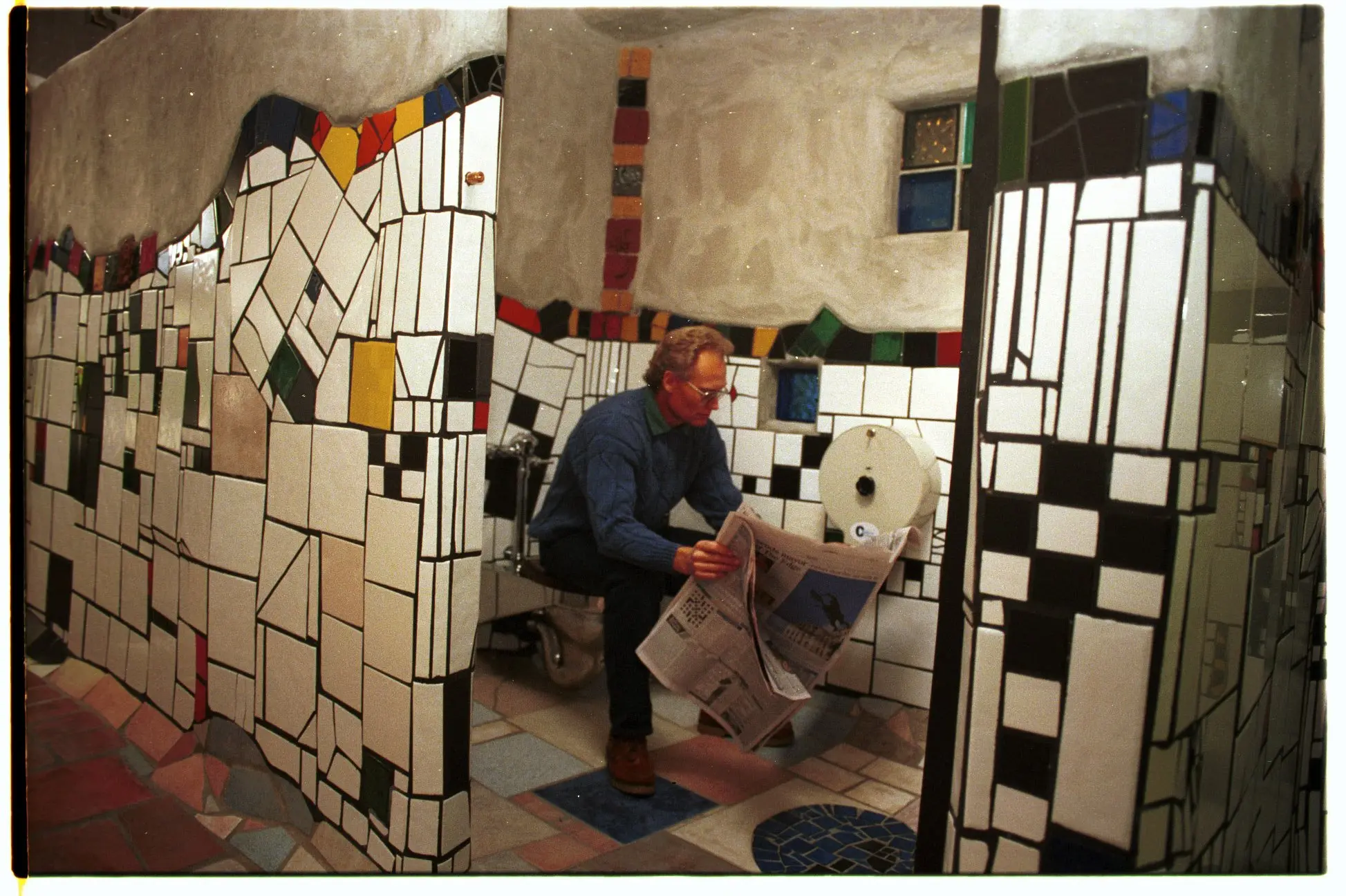
If I put a dollar in my piggy bank every time destination toilets were mentioned for tourism promotion in Lawrence, I would have quite a tidy sum for morning coffee.
I can think of one true destination toilet in New Zealand and that is the Hundertwasser public toilets in Kawakawa.
Perhaps a fitting design for destination toilets for Lawrence could be a gilded pan — a nod to the gold mining history of Lawrence?

The Clutha District Council adopted the Clutha Destination Strategy 2020-30 in August 2022.
One of two prongs of this strategy is the Gabriel’s Gully Visitor Experience Plan which focuses on the development of the heritage and recreation visitor experience around Gabriel’s Gully, Blue Spur and the Chinese Camp.
The underlying theme is the discovery of gold.
The Grey’s Dam area is a historic reserve in the Gabriel’s Gully area and an important part of the gold mining heritage.
It is an archaeological site (established pre-1900 and protected under the Historic Places Act 1993) originally constructed as a vital water source for the Otago gold rush.
Administered by the Department of Conservation (Doc), the area is now partially closed (since March 2026) due to flash flood risk, should the upstream heritage Otago Dam fail.
Closure is expected to last a minimum of one year for visitor safety, while repairs and assessments are under way to meet safety regulations.
But then, what happens next?
Heritage is considered by many to be the holy grail in Lawrence.
Many dedicated souls work hard to preserve heritage buildings.
I will put to you that heritage is more than the hardware — the bricks and mortar of individual buildings.
Heritage is about the underlying social history, culture and tradition.
I recall many a happy and nostalgic conversation I had with the late Dr Jim Ng, talking about Chinese cultural festivals and celebrations, as occurred at the Lawrence Chinese Camp to celebrate Chinese New Year or other cultural occasions.
These celebrations bring heritage to life.
World Heritage Sites are places recognised by Unesco as having "outstanding universal value".
They are either natural or cultural sites, or a combination of both, and are deemed significant for their historic, artistic or scientific importance.
Can we think even bigger than and beyond the Gabriel’s Gully Visitor Experience Plan and investigate the feasibility of applying for Unesco World Heritage Status for Gabriel’s Gully and its hinterland?
The process of applying to be listed as a World Heritage Site is administered by Doc.
I believe it is worth pursuing.
It will not be easy, or quick, but the long-term benefits of recognition will be worth the hard work.