PHOTO
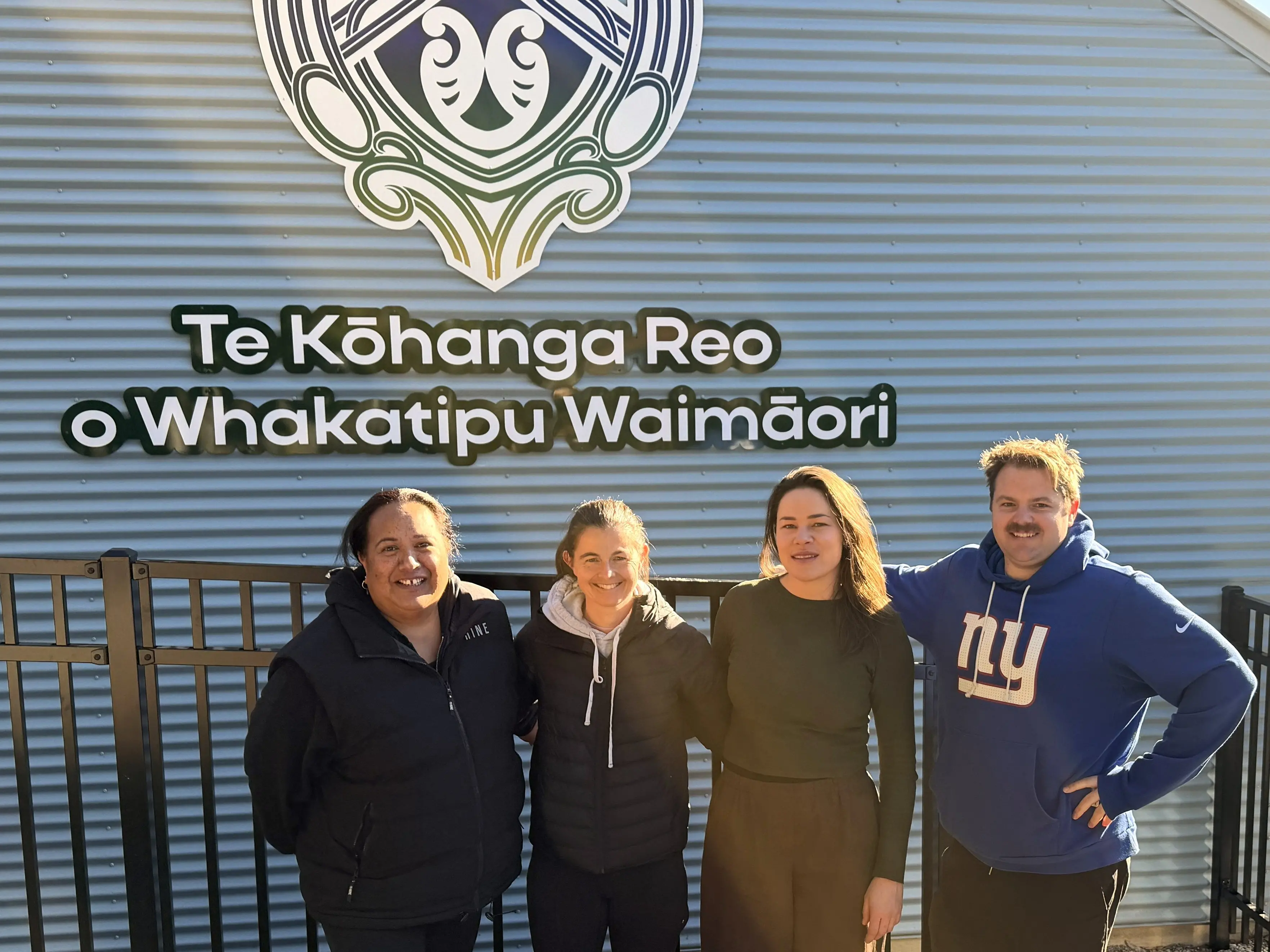
The five-year dream of a small group of families will come true in August when the first kōhanga reo in the Whakatipu in 30 years officially opens.
"There were many, many nights and hui when we thought it would never go ahead, and we were just going to give up," whānau co-chairman Brendon McIntosh says.
Members of the local Māori Women’s Welfare League — some of whom were involved with the previous kōhanga reo — have been instrumental in pushing them along, McIntosh says.
"They kept turning up to hui and motivated us to keep going, so we’re kind of doing it for them, too."
However, the children of the six families who’ve been instrumental in getting Te Kōhanga Reo o Whakatipu Waimāori off the ground are about to head off to primary school.
"So we’re looking for new whānau to come and get involved", he says.
"We’ve laid the platform and got the teachers here, now we need the next wave of babies to come through."
It was officially approved as a kōhanga reo, in which children aged from birth to 6 gain total immersion in te reo Māori and tikanga Māori, last year, making it the only one in the Southern Lakes and Central Otago region.
Enrolments are open to families of any ethnic or cultural background, but they need to be committed to embracing the language and everything that goes with it, he says.
"They have to be on their own te reo journey."
Many whānau wrongly think they have to be fluent te reo speakers to get involved.
"That puts a lot of whānau off, but it’s not their fault they’ve lost their language — this is our way to help re-indigenise the Whakatipu Basin."
The kōhanga reo has a long-term lease of a classroom block at Arrowtown School, where the group has been running a bilingual play group, Te Puna Ako o Tahuna, for the past few years.
A fit-out of its interior and outdoor area, to meet Ministry of Education requirements, started last month and is expected to be completed by the end of next month.
Te Kōhanga Reo National Trust paid for 75% of the project’s $1.3 million cost, with the balance coming from grants from the Central Lakes Trust, Queenstown council’s community fund and other donors.
McIntosh says three kaiako (teachers) have been training for the past four years, while another three are in the early stages of training.