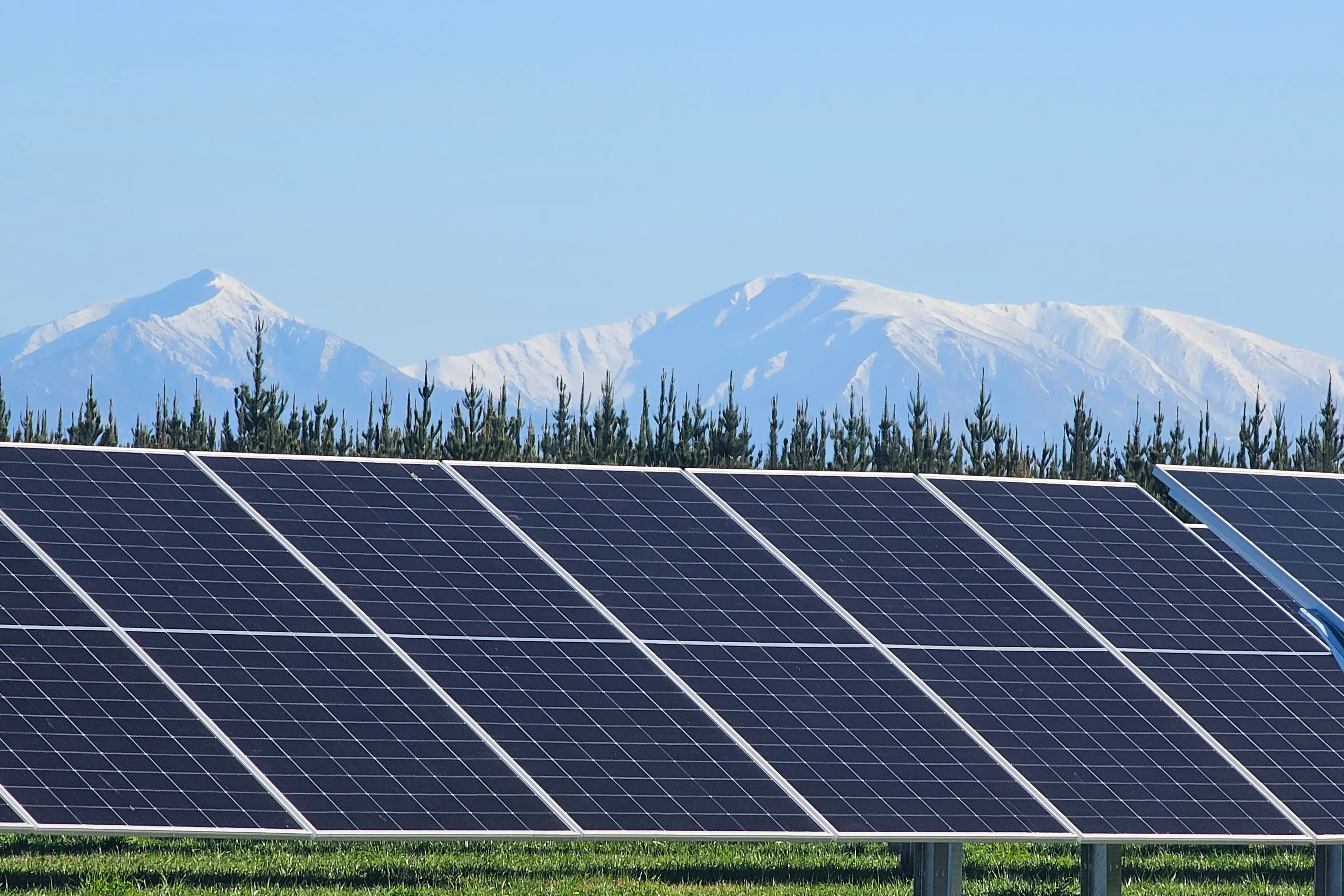
A new Canterbury solar farm costing $50 million is being plugged in to generate electricity for 6000 homes as another massive project in the MacKenzie Country nears approval. The 49,000 panel Clandeboye complex generating 27.7 megawatts (MW) on 42 hectares of former dairying land just north of Temuka is Lodestone Energy’s first completed solar farm in the South Island. The site is also the first large-scale solar farm to be connected to the Alpine Energy network. So far the major solar generator and developer has five solar farms operating throughout the country with plans to scale this up to 20 sites by 2032. They include a consented site under development in Dunsandel to produce 80 gigawatts a year, another Mt Somers site and a major180MW to 220MW project on 320ha at Haldon Station in the Mackenzie Basin. Lodestone began generating solar power at Clandeboye this week with inverters being commissioned to run at full power likely by the end of next week. Managing director Gary Holden said solar-driven power would go into the grid at the location to displace power coming from another source. “Clandeboye is a little bit smaller than our average, but we are trying to do projects of this size. This is an ideal size and we see a solar farm in every community eventually as there are a lot of population centres around 20,000 people.’’ The solar farm has been installed without battery storage, but is fitted so this can be added on over the next five years. He said solar battery storage would eventually increase to add to hydro water storage, which acted as a “huge battery’’. The solar farm took a year to build, at one stage employing about 70 people, and the site is leased from a farmer. About 3700 native plants have gone into its boundary and, under the lease, the land will transition from cattle to sheep grazing to keep it productive. The Haldon Station project is going through the Government’s fast tracked programme to speed up approvals for major projects, while the two smaller Canterbury projects are in a more straightforward consenting process. Mr Holden said they were near the end of the process for Haldon. "We have got a draft decision to go ahead with Haldon and it needs to go through its final steps. That fast tracked process looked at it intensely in a six month process, but we are through it and it will be the first one in the region to get through that.’’ He said a timeline had yet to be set for the large project, five or six times larger than Clandeboye, and it could take a year to two years to flesh out commercial details. Haldon would become the largest solar farm in Lodestone’s portfolio, he said. "We’ve got a plan to do about 20 sites by 2032 so we are certainly continuing to work on others.’’ A new venture in central Hawke’s Bay started this month and will become Lodestone’s first solar farm selling power output to local towns. Mr Holden said that would be a breakthrough moment for the company and industry. He said New Zealand was under-utilised in solar and it was only a matter of time before solar farms were scattered throughout the country in flat, sunny places near people. “Five years ago there was nobody doing large scale solar and we were the first and it was novel and we had to explain how it all worked. Certainly now it’s a well travelled path ... and there is a lot of acceptance.’’ He said the company planned to sell solar power to homes, apartments and shops, but encouraged people to put their own solar on rooftops and farm and utility sheds to generate more renewable energy. ‘’We are just fans that this low cost power can make a big difference.’’ Solar farms were capital-intensive projects financed like a corporation with a component of debt and equity to get a return for shareholders and without a payback approach as they were 35-year projects, he said. Solar panels can last within this timeframe if well maintained and drone surveillance is used to detect if panels are getting too hot by thermal scanning. Mr Holden said solar farms brought new sources of renewable energy to the market and were making a meaningful contribution to provide a competitive alternative in the retail market. Alpine Energy chief executive Caroline Ovenstone said the Clandeboye solar farm reflected the growing role renewable generation would play in meeting future electricity needs.