PHOTO
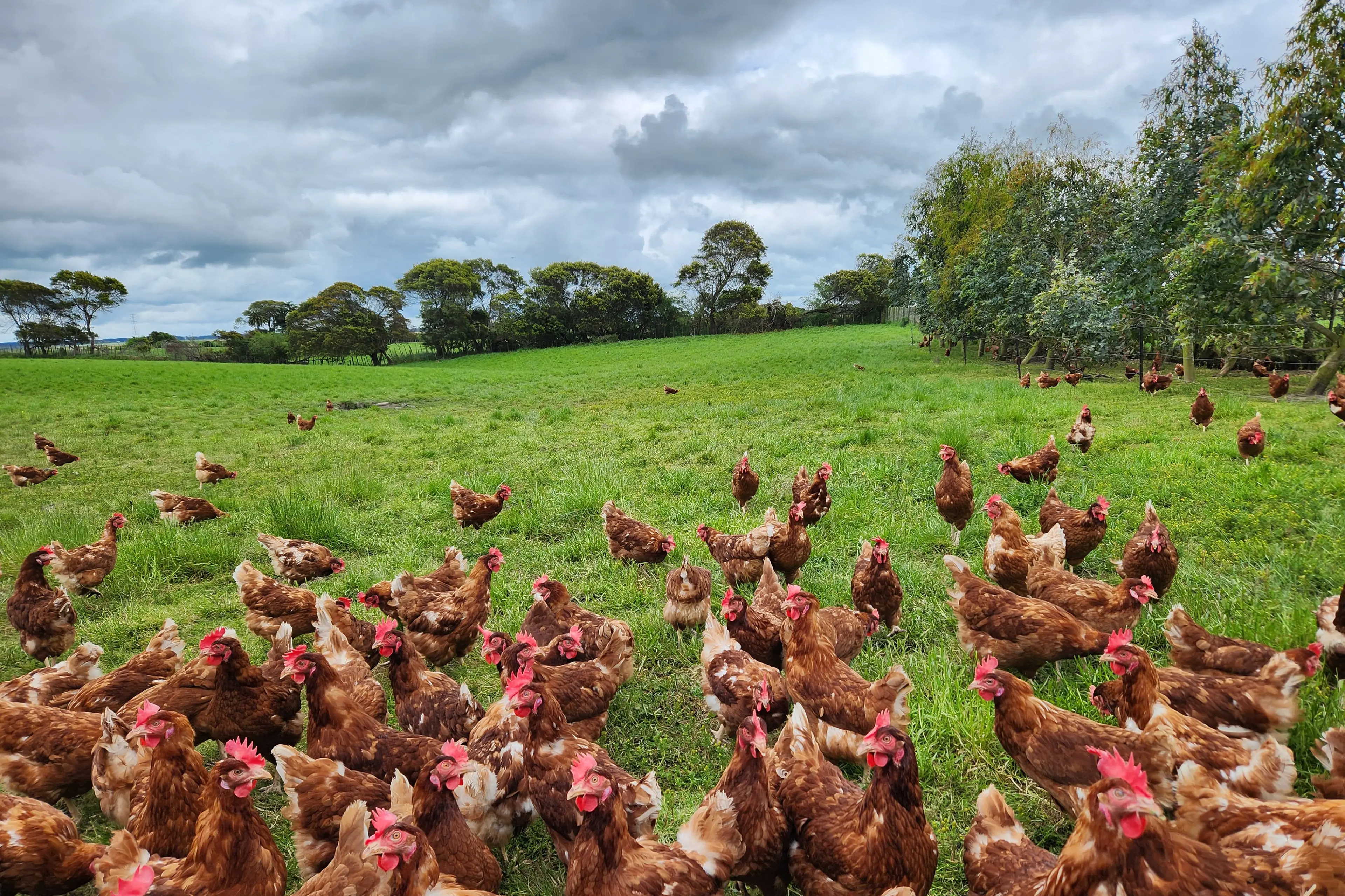
While the threat of bird flu still hangs over the egg industry, the Egg Producers Federation says it's likely free-range chickens will be going in and out of lockdown in coming months.
Hundreds of thousands of hens have been in lockdown as the third case of bird flu was confirmed in a wild bird in New Zealand.
But chairperson of the Egg Producers Federation and Mainland Poultry chief executive, John McKay told Checkpoint they would let half a million of their hens back outside on Wednesday.
McKay said there was now good data out there for farmers to decide the risk level for their birds and whether to let their hens out of temporary lockdown.
Many egg suppliers who have the ability to do so have put their hens into lockdown, restricting their roaming as a precaution to protect them from bird flu, meaning free-ranging was not always possible.
The most recent data McKay had seen showed there was a low risk for chickens, he said, even with the third detection.
"It's in a petrel and it's likely we will continue to find those ocean-going birds occasionally washed up on our shores.
He said Mainland Poultry had decided to prepare its farms on Tuesday for the hens to be let outside on Wednesday morning.
"This is an evolving situation so we will continue to look at it and judge the risk - the welfare of our birds is paramount and the risk is likely to change in the future. As the risk level changes it might be time to bring those birds back in again."
McKay warned it might be something New Zealand had to get used to with free-range farming going forward.
"We are free-range farmers because we want our birds roaming outside and we value that highly and people who buy free-range eggs care deeply about welfare.
For consumers who were worried about whether their eggs were still free-range, McKay said stickers would be be put on Mainland Poultry cartons, next time the birds went into lockdown, alerting potential buyers to the fact the birds were temporarily kept inside.
He said the stickers would very clearly state the eggs had been laid by birds temporarily housed for their own welfare.
"It will be very clear communication... we're also explaining to consumers around New Zealand how we as farmers are looking to manage this risk going forward."