
Footloose traveller finds a foothold

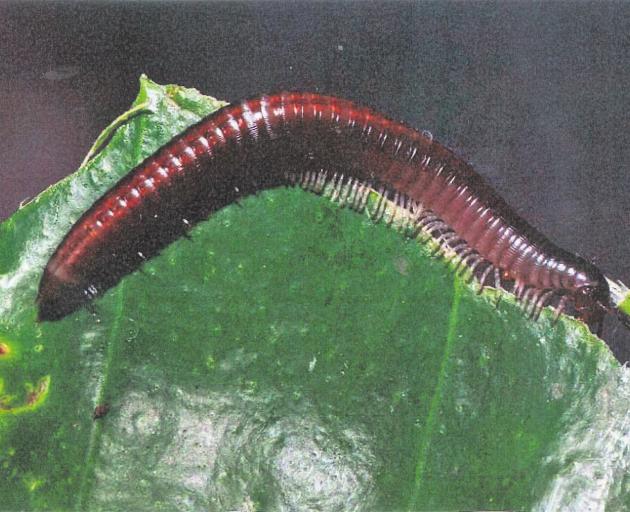
The Portuguese millipede, now spreading in New Zealand. PHOTO: ANDREW WEEKS
An introduced millipede that has been increasing its numbers in Wellington’s south coast, including Ōwhiro Bay, has now taken off and spread further afield. It could eventually extend throughout New Zealand, as became evident when the millipedes were found in shoes, bags, boxes and items of furniture, after having invaded several homes in numbers.

This is the Portuguese millipede Ommatoiulus moreleti, whose adults are almost cylindrical, glossy grey to black, measuring from 40mm-45mm long and in the 10th to 11th stages becoming black, and having 50 body segments. Most segments have two pairs of pale pinkish-white legs. Its defensive behaviour includes coiling into a spiral or thrashing about when poked. It exudes a yellow, strong-smelling fluid when disturbed.

It is mostly nocturnal and prefers cool, humid conditions. In Portugal, it is found in oak and pine forests.
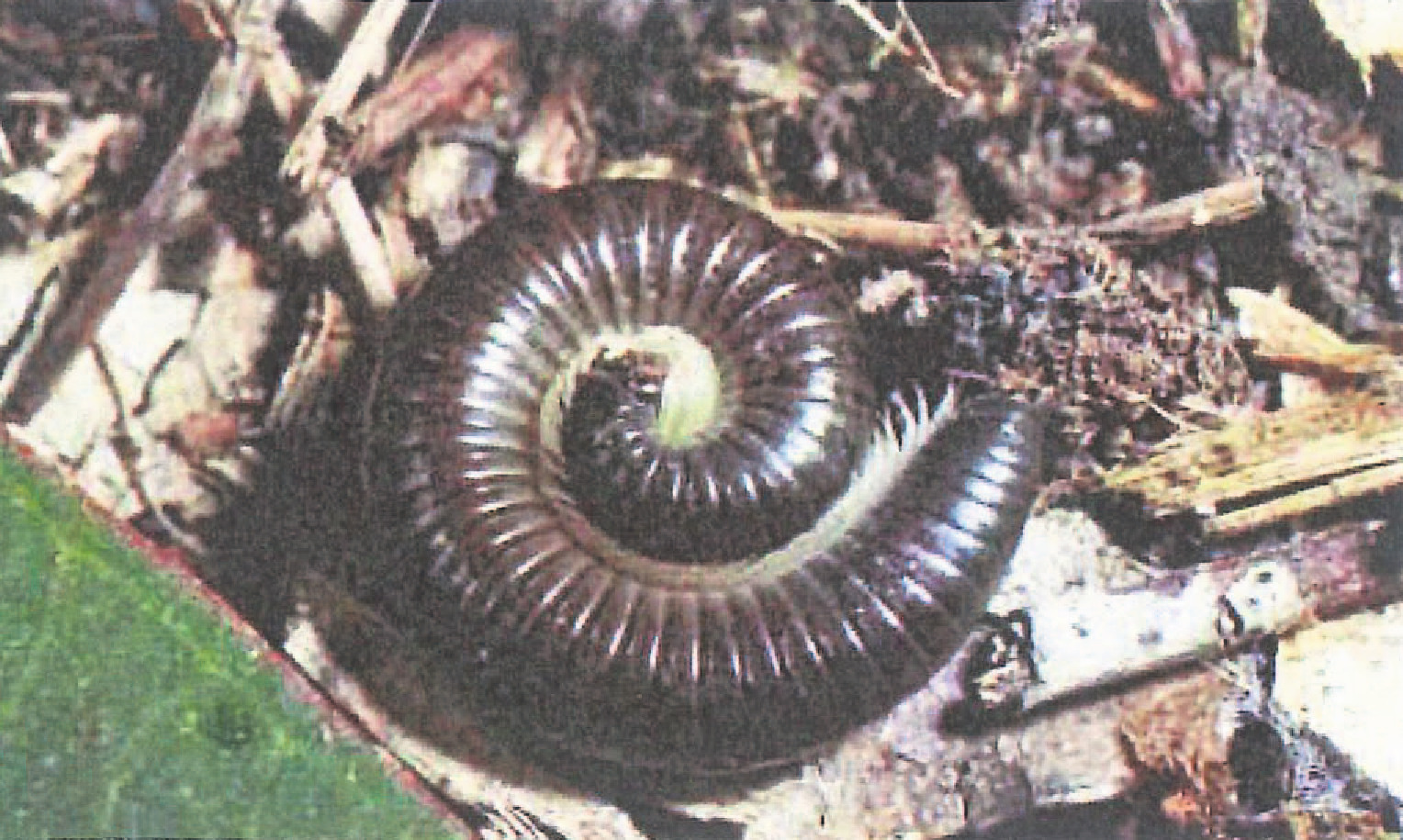
PHOTO: ANDREW WEEKS
PHOTO: ANDREW WEEKS
Native to Europe, O. moreleti was accidentally introduced into Australia in the 1950s and is now a common pest where it occurs in gardens, forest, grassland and agricultural land. It eats moss, decomposing plant and animal matter, leaf litter, fungi and roots. It can become a pest by feeding on seedlings and damaging crops.

A parasitic nematode Rhabditis necromena was released in South Australia during 1988 to help control the Portuguese millipede.

Fortunately, the Portuguese millipede has not threatened indigenous millipedes in Australia or New Zealand.