
PHOTO
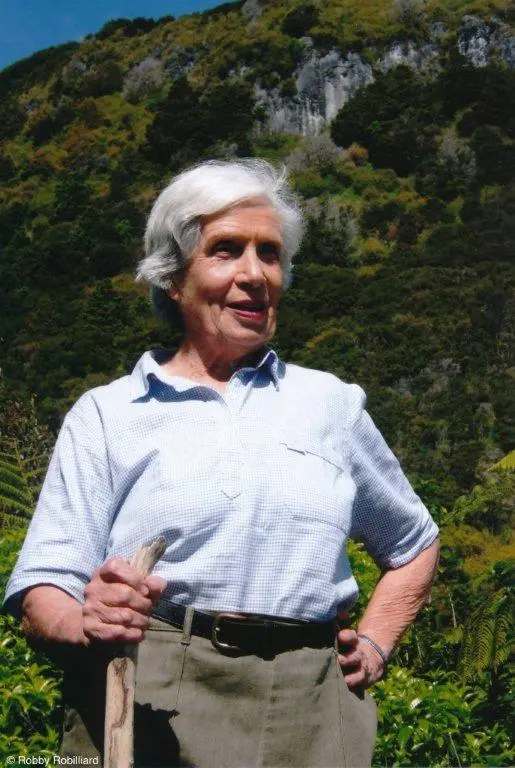
Robin Robilliard credits Ronald Blythe as the prompt for her book and, while Blythe’s Akenfield: Portrait of an English Village is a classic of oral history unlikely to be bettered, she has made a pretty good fist of producing her portrait of life in Golden Bay in the 1900s.
The hill, of course, is Takaka Hill — a daunting barrier to the outside world for those who live in the bay and equally formidable in a spiritual sense to those who left never to return.
Those who have returned, often high achievers elsewhere, provide a special insight into the importance of the place in which we were raised.
It’s mainly those who remained who tell their stories in Behind The Hill. Whereas Blythe used extensive monologues for his subjects to tell their stories, the people behind the hill have their experiences delivered in smaller doses, which is sometimes less effective than a series of longer memories. Nevertheless, the way of life in a remote region last century is well captured. The rural communities have their eccentrics and struggling farmers. Indeed, trying to make a go of things on marginal land is something of a badge of honour and the author shares tales of her own farming challenges. In fact, her recollections are a reminder that she has known her informants for many years, and provide Behind The Hill with an intimacy.
The anecdotes will echo those of baby boomers who lived through the times of large families with small incomes but with unrestricted access to natural playgrounds and often attending one-teacher schools where the pedagogue was either inspirational or doggedly indifferent to scholastic success. From those times come stories of Catholic/Protestant intolerance, heavy drinking by husbands locked into the nonsense of six o’clock closing and the poignant plight of the pregnant unmarried girl. Some subjects reveal family "secrets" that reinforce oral history’s reputation as the recorder of the "soft underbelly of history".
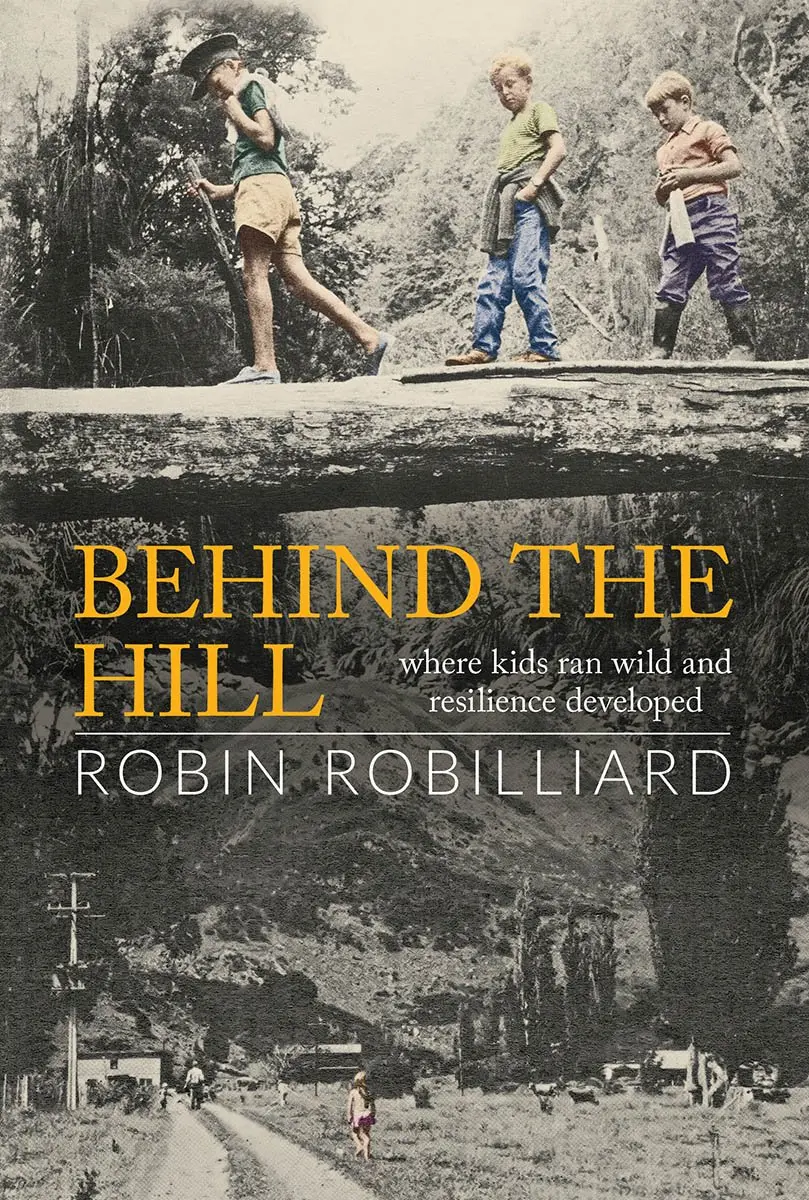
visits almost every corner of Golden Bay. Many of the larger settlements have their own chapter and within these the wide variations in lifestyle — farming, fishing, mining, storekeeping, and many others — come to life.
Most facets of Golden Bay life are covered — from chapters on "Mischief" to "Escaping Conformity" and "Television". While much of the way of life at Golden Bay was just the same in most rural areas, what makes Behind The Hill special is the pervading sense of remoteness and isolation. From this came a fierce loyalty to the bay and to each other. Inevitably, though, the phrase "over the hill" has come to be part of the mindset of Golden Bay’s young people. Long-serving teacher Karen Savage is quoted: "There’s a little voice telling us we don’t want to be hillbillies. We know that we must leave the Bay to work or train, and this challenges us to think over the hill. To prepare for our career."
Thus you will meet Golden Bay people in every corner of the country. To know them more deeply and understand why they seem always to be lamenting that they can’t go back, you should read of their doings, their ancestors and the quirks of life behind the hill, which Robin Robilliard has so movingly captured.
Jim Sullivan is a Patearoa writer