
PHOTO
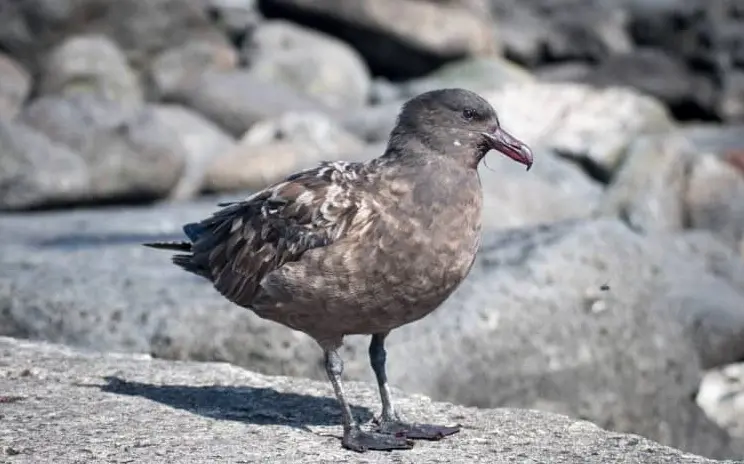
A case of H5 bird flu has been confirmed in New Zealand.
The H5 bird flu strain has been circulating globally, with more than a dozen cases reported in Australia since it was detected there last month.
Biosecurity Minister Andrew Hoggard said a single ocean-going seabird - a brown skua - returned a positive test for H5 bird flu on Wednesday after it was found on Petone beach in Wellington.
It is the first detection in New Zealand.
Hoggard said there was a low health risk to the public, as it rarely affected humans unless there was direct, close, and prolonged contact with large numbers of sick birds.
He said eggs and poultry remained safe to eat.
"There is no evidence of any mass mortality in wildlife or transmission between wild birds in New Zealand. There has been no detection in poultry," he said.
"The situation is being closely monitored, but at this stage there is no evidence of any illness beyond this seabird. We've had people out on Petone beach checking and found no other issues."
They would continue to monitor the beach and surrounding areas, Hoggard said.

"We ask the community to be alert and follow advice about reporting sick or dead birds. It is vital that people do not touch or handle unwell birds."
Hoggard said New Zealand was well prepared to respond to H5 bird flu, and government agencies had been working with industry and councils to protect poultry production, wildlife and communities.
Ministry for Primary Industries (MPI) was testing birds every few days through reports and targeted wildlife surveillance, Hoggard said.
"While there are no detections in poultry, producers are reminded that on-farm biosecurity practices are crucial to protect the health of their flocks."
Australia had not reported any mass mortalities, having only found single sick birds, he said.
"We may see a similar pattern here and we will remain vigilant."
AAP reported on Wednesday afternoon that Australia now has 14 cases across Western Australia, South Australia and NSW.
Hoggard said the Department of Conservation had begun vaccinating 300 core breeding birds from five of the countries most endangered birds - kākāpō, takahē, tchūriwat'/tūturuatu/shore plover, kakī/black stilt and kākāriki karaka/orange-fronted parakeet.
What people can do
If you see three or more sick or dead wild birds in a group, report it immediately to the exotic pest and disease hotline on 0800 80 99 66 from anywhere in New Zealand.
Don’t handle or move the birds. Go to www.mpi.govt.nz/bird-flu to find out more.
Provide as much detail as you can, including:
common name or species of sick or dead bird if known
how many are sick or freshly dead, and the total number of birds present
a GPS reading or other precise location information
photographs and videos of sick and dead birds
how many are sick or freshly dead, and the total number of birds present.
More information about H5 bird flu and the work New Zealand is doing to prepare is available at mpi.govt.nz/hpai
- Allied Media/RNZ