
PHOTO
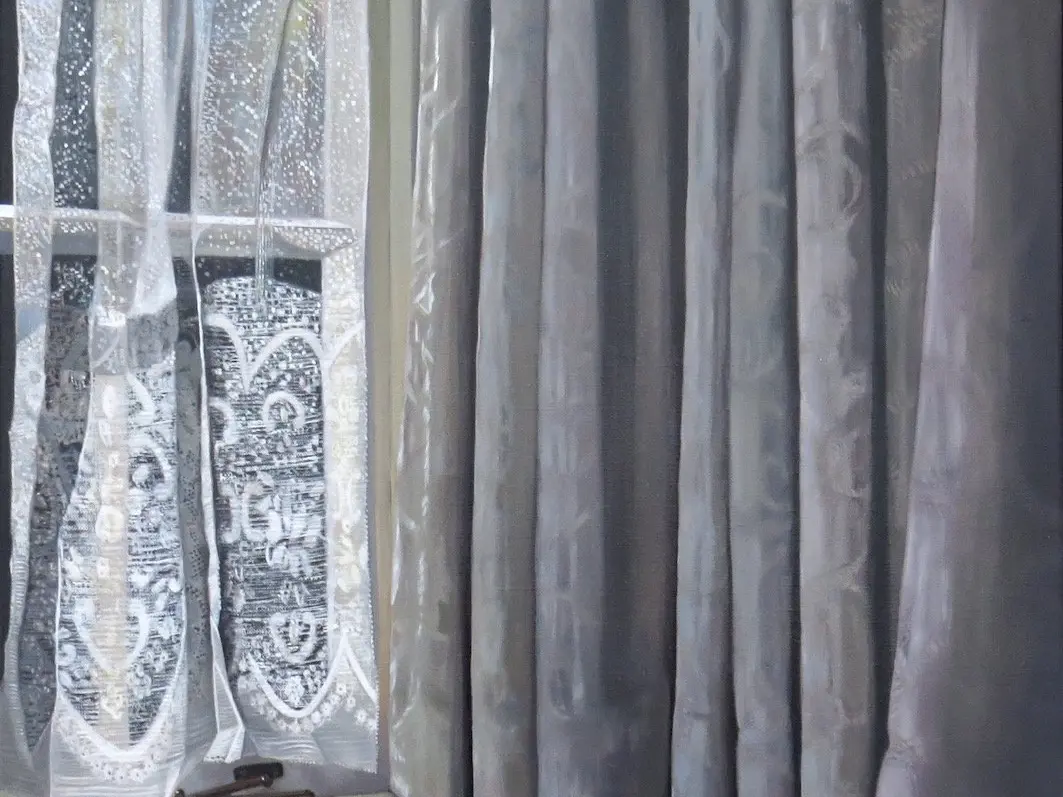
(The Artist’s Room)
The Artist’s Room is showing a joint exhibition by a well-known artist and an artist welcoming her maiden Dunedin exhibition.
The well-known artist is Tyler Kennedy Stent, who has again produced a series of fine candid portraiture studies. Stent’s attention to detail and use of what initially seem unlikely colours make for captivating art, as does his use of watercolour painted in near-impasto opacity. The usually gentle, misty medium becomes as hard as the strongest acrylic in Stent’s hands, and in this exhibition is complemented by two impressive oils, notably the Ophelia-esque Keep Your Head Up, with its young swimmer surrounded by a torrent and torment of shimmering viridescence.
Alongside is work by Wellington artist Hayley Nacey. Nacey presents a series of attractive oils in muted tones focusing on the play of light within a room. A connection is brought with Stent’s swimmer in her Riverbed, an image of an unmade bed, its sheets rising and falling like flowing water. Composition is key in Nacey’s work, with the focus on strong geometries as important as the fields of shadow and sunlight.
The pieces have a pervasive feeling of recollection and memory, and the rooms take on a feeling that is at once calming and claustrophobic, suggesting in equal parts Peter Siddell and Johannes Vermeer.
(Hutch)
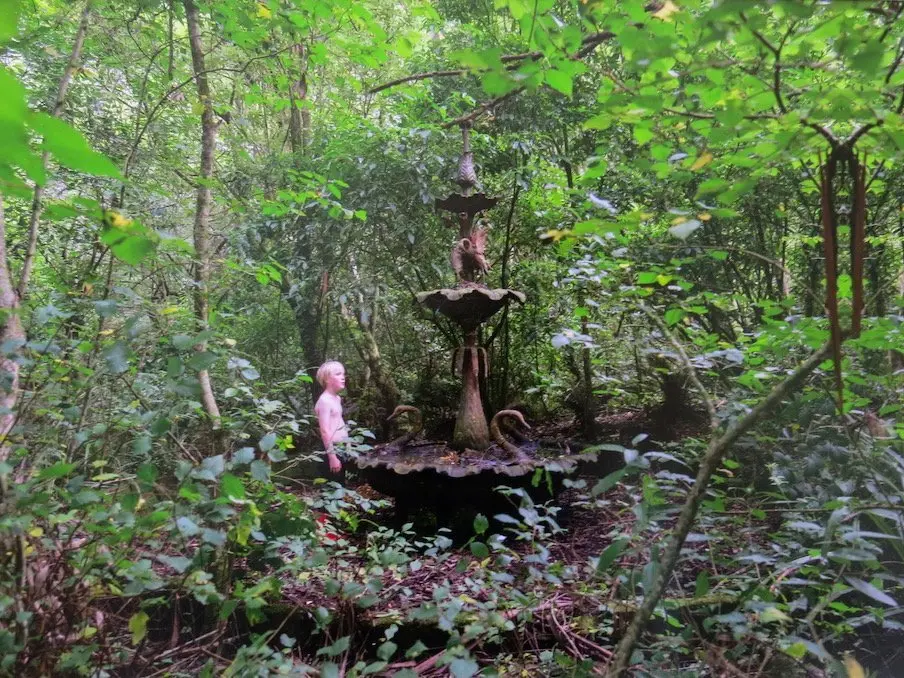
Justin Spiers presents a photographic dreamscape in ‘‘To Die in Song’’, one informed by European fairy tale and focusing on three elements: the forest, a swan and a young boy.
Forests are pervasive features of many fairy tales, representing the unknown, hidden dangers and arguably the darker side of the human psyche. The all-encompassing nature of the thick vegetation removes the protagonists from a sense of grounding, of knowing where they are, creating a liminal space — a place that hovers between worlds and destinations. The uncanniness of the forest is exaggerated further by the occasional use of mirroring, presenting symmetrical sections of forest as endless, inescapable backgrounds.
The use of the motif of the swan, a creature which according to legend dies with its song, adds to the otherworldliness. There is something incredibly alien yet intelligent about the solitary wild bird, and when coupled with the image of a young child (the artist’s son, Frank), that juxtaposition becomes one of open innocent and inscrutable sage.
The photographs are beautifully created, and feature two distinct series, one of them colour images of the entire scene and the other haunting monochromes focusing on the misty figure of the swan. We are shown brooding stills of action about to take place, leaving our imaginations to continue the tale.
(Brett McDowell Gallery)
Suji Park is perhaps best known locally for her small, caricature
figurines, created from minerals and found items embedded in fired clay.
In her latest exhibition, the artist presents several of these works, but the exhibition is dominated by three installation pieces.
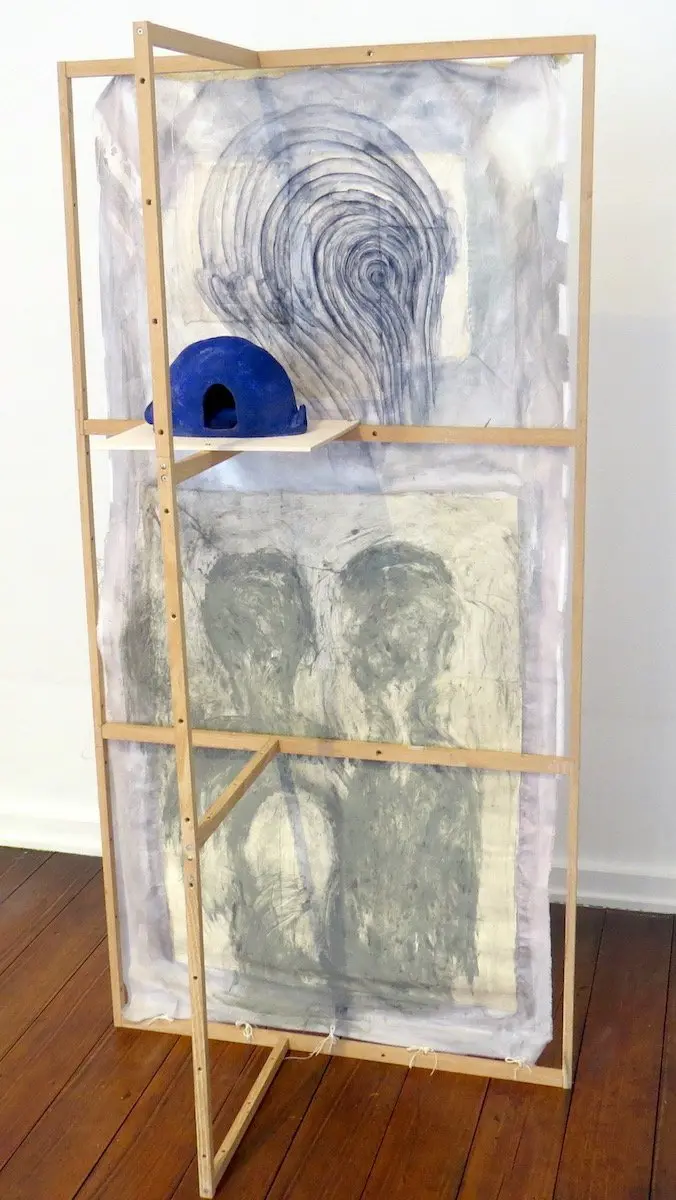
Park’s central works in this exhibition are Scenes 1-3, a group of multimedia assemblages created from traditional Korean paper and fabric stretched over wooden frames, to which have been added fired clay embellishments in the form of statuettes of Philomela, Princess of Athens, and two ‘‘Beatdols’’, distorted growths which mix organic and inorganic features and are festooned with small lights. These latter pieces are part of a longer series of works by the artist, and pun on the word ‘‘doll’’ and on the Korean words for ‘‘light’’ and ‘‘stone’’.
The three scenes form friezes from a play, one telling in symbolic form the Greek myth of Philomela, who had her tongue cut out to prevent her revealing abuse that she had suffered. Park has used this myth as an allegory for the upheaval and shock caused by moving from one culture to another (in the artist’s case, from South Korea to New Zealand), and the simultaneous need to be accepted into the new culture and the difficulty of doing so through differences in language and backgrounds.
- By James Dignan